Utricularia radiata Small
Species sheet, updated on 30/10/2026.
At a glance
| Scientific name | Utricularia radiata John Kunkel Small, Flora of the Southeastern United States: 1090, 1903 |
| Family | Lentibulariaceae |
| Distribution | North America (eastern United States and Canada) |
| Habitat | Lakes, ponds and ditches |
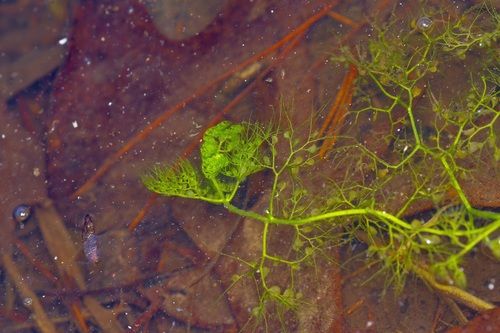
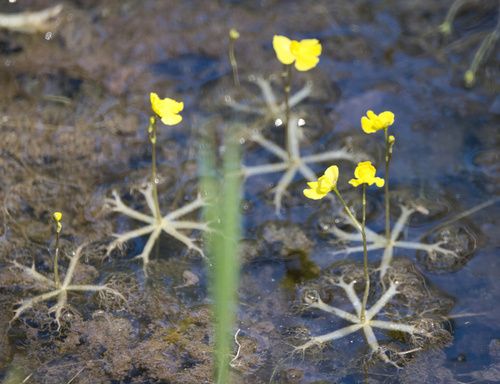
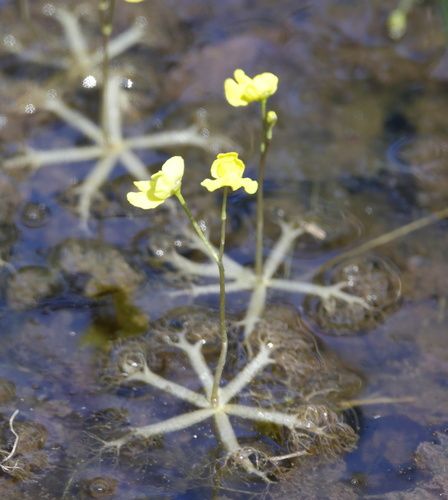
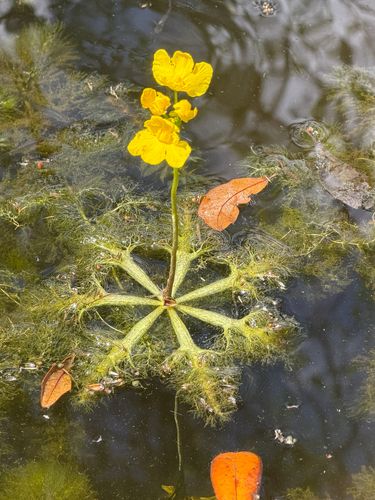
Photos in the wild
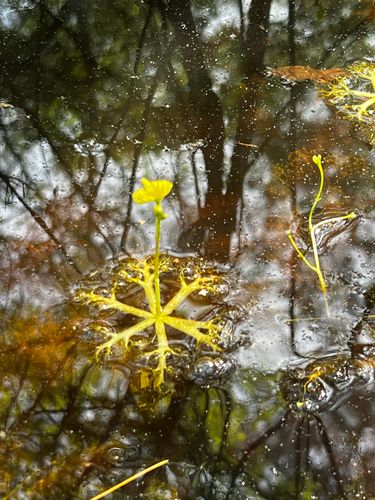
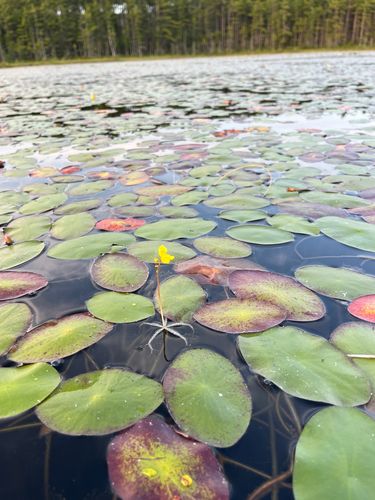
Etymology
- Utricularia: see the genus sheet.
- radiata: from the Latin, “radiating”.
Description (how to recognise it)
- A medium-sized free-floating aquatic bladderwort, up to 30 cm.
- It catches phytoplankton as well as zooplankton.
- In Florida, it flowers mainly in March and April (herbarium specimens).
Distribution
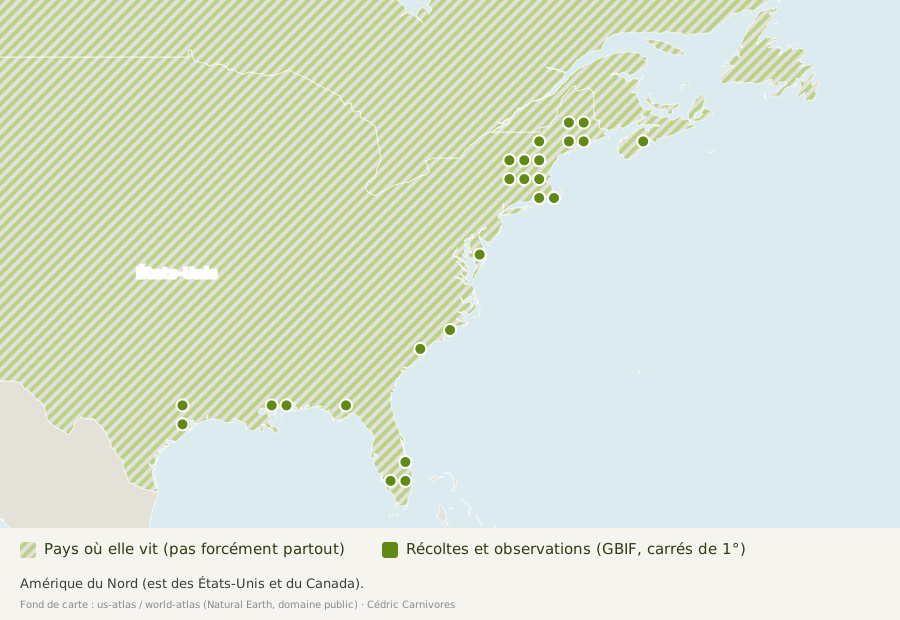
Endemic to North America: eastern United States and eastern Canada (more than 2 500 records in GBIF). According to Kew's world plant list (WCVP), it is native to 28 regions of the world (see the map and the Kew source). In Florida, the University of South Florida herbarium holds 18 collections made between 1956 and 2016 in 14 counties of Florida: Brevard, Collier, Duval, Flagler, Hernando, Hillsborough, Holmes, Jackson, Levy, Miami-Dade, Orange, Pasco, Sumter and Taylor.
Habitat
Lakes, ponds and ditches. In Florida, according to herbarium labels: standing water of wet and marl prairies (up to 25 cm), cypress or tupelo ponds (up to 60 cm), depression marshes, lakes, mosquito ditches. The Atlas classes it among the “obligate wetland” plants.
Natural hybrids
Often confused with the larger U. inflata; U. perversa, from Mexico, is thought to be its closest relative.
Did you know?
In English: “little floating bladderwort” or “small swollen bladderwort”.
Sources
- Wikipedia (English), Utricularia radiata: author, range, habitat, size, prey, English names.
- Wikipedia (English), Utricularia inflata: confusion.
- Wikipedia (English), Utricularia perversa: relationships.
- Kew, World Checklist of Vascular Plants (via GBIF): natural distribution.
- Atlas of Florida Plants (University of South Florida), Utricularia radiata, and its herbarium specimens: status in Florida, counties, habitats, flowering.
- GBIF, Utricularia radiata: author, original publication, countries and localities of herbarium specimens and observations.