Utricularia reflexa Oliv.
Species sheet, updated on 30/10/2026.
At a glance
| Scientific name | Utricularia reflexa Daniel Oliver, Journal of the Linnean Society, Botany 9: 146, 1867 |
| Family | Lentibulariaceae |
| Distribution | Tropical Africa and Madagascar |
Photos in the wild
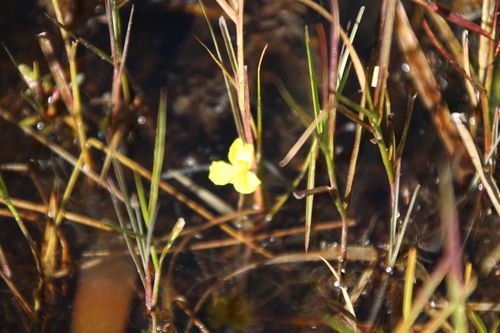
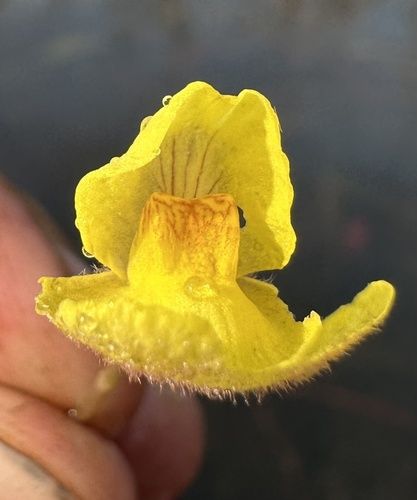
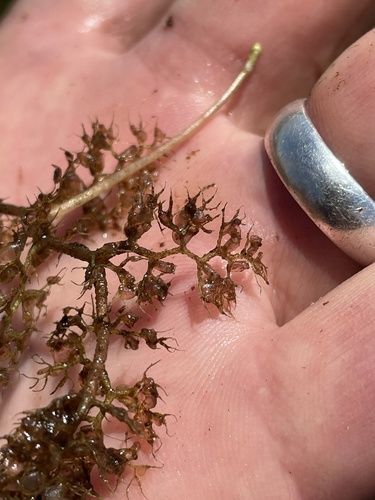
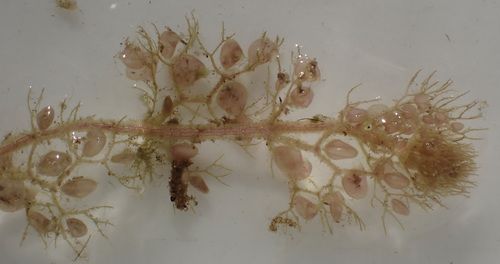
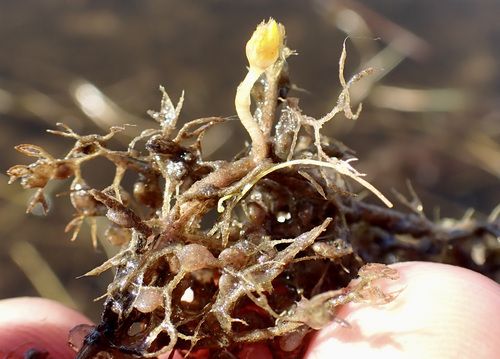
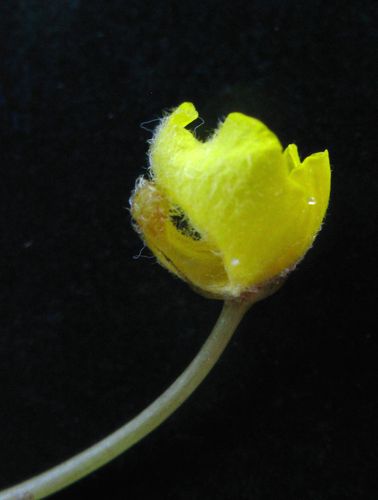
Etymology
- Utricularia: see the genus sheet.
- reflexa: from the Latin, “reflexed, bent backwards”.
Description (how to recognise it)
- A small to medium-sized free-floating aquatic bladderwort.
- According to Stapf (1906): long, branched floating stems, often tangled; leaves 6 to 17 mm, divided into 2 to 5 finely cut segments; up to 8 traps per leaf, up to 4 mm, dark green or purplish.
- Scapes 2.5 to 15 cm, usually with a single yellow flower (up to 9.5 mm); the pedicel, erect at flowering, gradually bends back afterwards (hence the name reflexa); seeds disc-shaped, edged with a wing.
Distribution
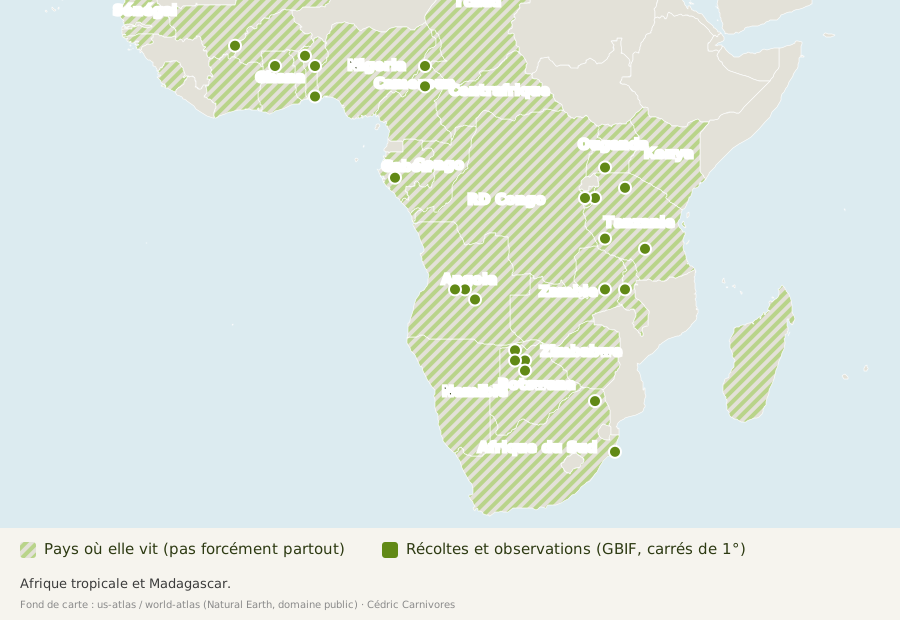
Africa: twenty-five countries, from Senegal and the Gambia to Kenya, Zambia, Zimbabwe and Madagascar (more than 800 records in GBIF). According to Kew's world plant list (WCVP), it is native to 31 regions of the world (see the map and the Kew source).
Habitat
Stapf (1906) cites collections on the muddy banks of a tributary of the Chari (Baguirmi, Chad), in Bahr el-Ghazal (South Sudan), in Uganda (Unyoro), on the shore of Lake Victoria near Bukoba, and in Angola, where Welwitsch saw it in most of the slow-flowing streams of Humpata, at about 1 460 m, “covering large areas”.
Sources
- Wikipedia (English), Utricularia reflexa: author, range, way of life.
- Kew, World Checklist of Vascular Plants (via GBIF): natural distribution.
- Stapf, Flora of Tropical Africa IV.2: Lentibulariaceae, 1906 (archive.org): description, localities and habitats of the specimens (translated from English).
- GBIF, Utricularia reflexa: author, original publication, countries and localities of herbarium specimens and observations.