Utricularia resupinata B. D. Greene ex Bigelow
Species sheet, updated on 30/10/2026.
At a glance
| Scientific name | Utricularia resupinata discovered by Benjamin Daniel Greene, published by Jacob Bigelow (Florula Bostoniensis, 3rd ed.); GBIF cites Hitchcock, 1835 |
| Family | Lentibulariaceae |
| Distribution | Eastern Canada, United States, Central America (and Brazil according to GBIF) |
Photos in the wild
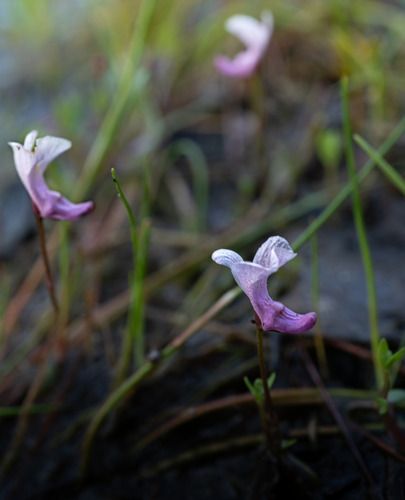
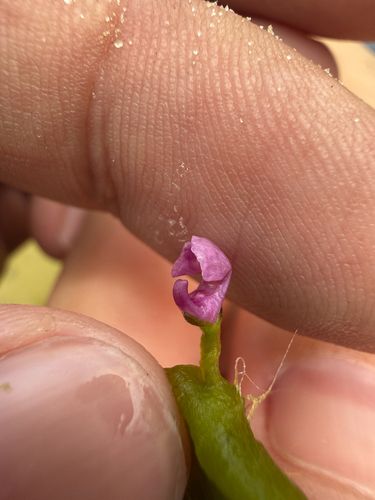
Etymology
- Utricularia: see the genus sheet.
- resupinata: from the Latin, “turned upside down” (probably the flower, not confirmed).
Description (how to recognise it)
- A small perennial, semi-aquatic bladderwort.
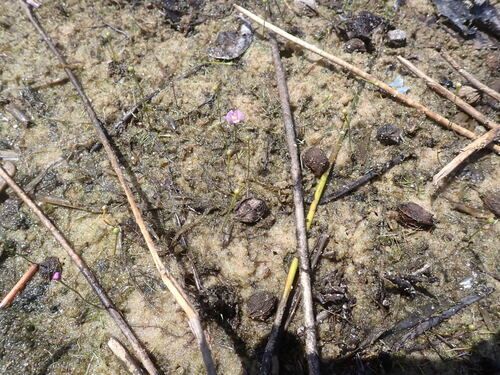
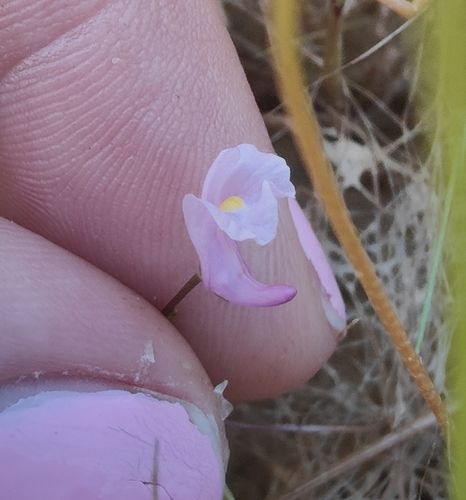
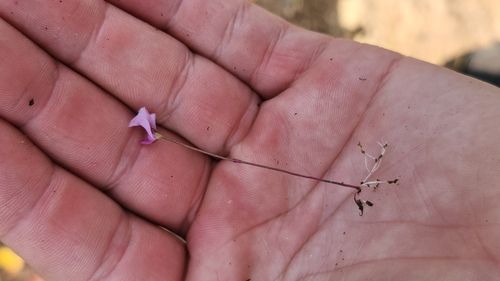
- According to Britton and Brown (1913): slender scape 2.5 to 10 cm tall, lengthening to 15 cm in fruit, with a single flower; the flower is half turned over and set crosswise at the top of the pedicel (hence resupinata); corolla purple, 8 to 13 mm; spur blunt, curved upwards.
- In Florida, it flowers from February to November (herbarium specimens).
Distribution
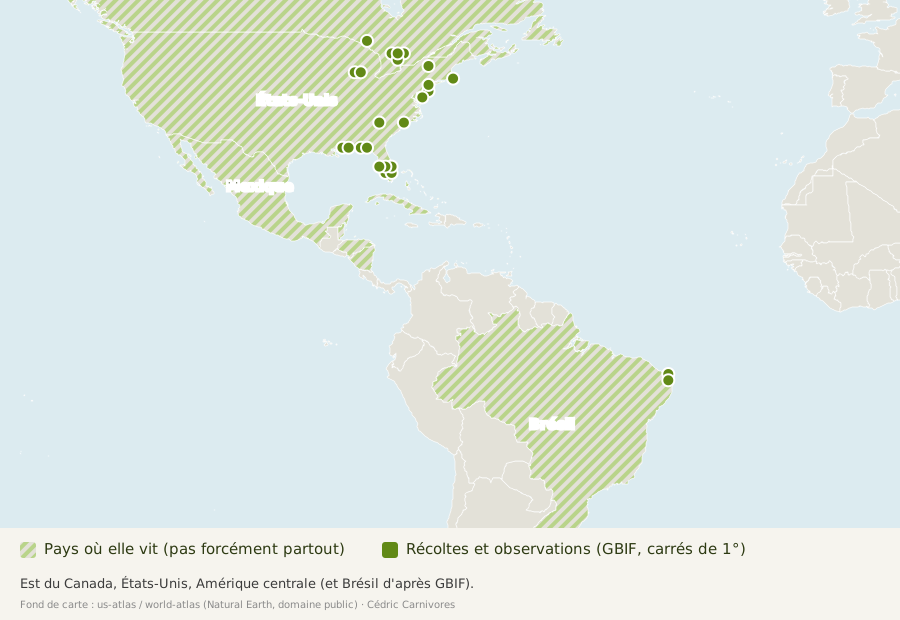
Eastern Canada, United States and Central America (Wikipedia); GBIF also has records in Brazil, Cuba and Mexico. According to Kew's world plant list (WCVP), it is native to 29 regions of the world (see the map and the Kew source). According to the Flora do Brasil (official list of the plants of Brazil), it grows in Brazil in these states: Bahia, Ceará, Maranhão, Rio Grande do Norte and Sergipe. Major biomes: Caatinga and Atlantic Forest. In Florida, the University of South Florida herbarium holds 24 collections made between 1960 and 2023 in 21 counties of Florida: Bay, Broward, Charlotte, Citrus, Collier, Columbia, Hernando, Hillsborough, Lake, Lee, Leon, Martin, Miami-Dade, Okaloosa, Orange, Osceola, Palm Beach, Pinellas, Polk, Wakulla and Walton.
Habitat
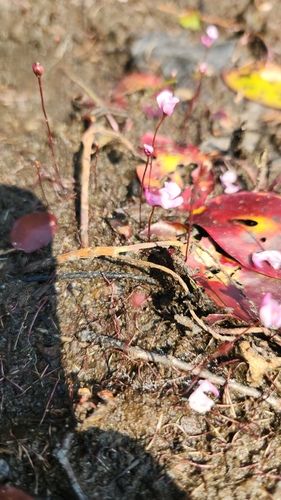
According to the Flora do Brasil: an aquatic or terrestrial plant, in floodplain grasslands and restinga (coastal sand vegetation). Britton and Brown (1913) record it on the shores of ponds and lakes, from New Brunswick to western Ontario and Pennsylvania, and from South Carolina to Florida, “rare and local”; flowering in July-August. In Florida, according to herbarium labels: sandy, silty or peaty shores of lakes and ponds (up to 1 cm of water), lake shores between dunes, wet prairies, flooded wet pinelands, ditches and small water-filled quarries, with U. juncea. The Atlas classes it among the “obligate wetland” plants.
Threats and protection
Threatened or endangered in many of the US states where it grows.
Did you know?
In English: “lavender bladderwort” or “northeastern bladderwort”.
Sources
- Wikipedia (English), Utricularia resupinata: authors, range, way of life, threats, English names.
- Kew, World Checklist of Vascular Plants (via GBIF): natural distribution.
- Flora e Funga do Brasil, official list (via GBIF): states, biomes, endemism, life form and vegetation types in Brazil.
- Britton and Brown, An Illustrated Flora of the Northern United States III, 2nd ed., 1913 (archive.org): description, habitats and range (translated from English).
- Atlas of Florida Plants (University of South Florida), Utricularia resupinata, and its herbarium specimens: status in Florida, counties, habitats, flowering.
- GBIF, Utricularia resupinata: author, original publication, countries and localities of herbarium specimens and observations.