Utricularia spiralis Sm.
Species sheet, updated on 30/10/2026.
At a glance
| Scientific name | Utricularia spiralis James Edward Smith, in Rees, Cyclopaedia 37, 1819 |
| Family | Lentibulariaceae |
| Distribution | Tropical Africa |
| Habitat | Marshes, peaty or sandy soils, up to 1 860 m |
Photos in the wild
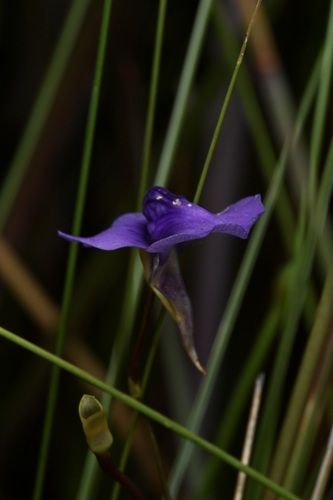
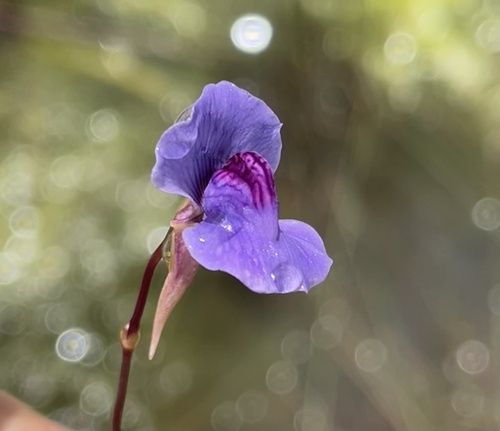
Etymology
- Utricularia: see the genus sheet.
- spiralis: from the Latin, “spiral”.
Description (how to recognise it)
- A medium-sized to large terrestrial bladderwort, probably perennial.
- According to Stapf (1906): a small terrestrial annual; leaves narrowly spatulate, often gone by flowering time; scape up to 30 cm, usually twining around other plants; 2 to 4 flowers 5 to 6 mm long, blue with a white spot on the palate.
Distribution
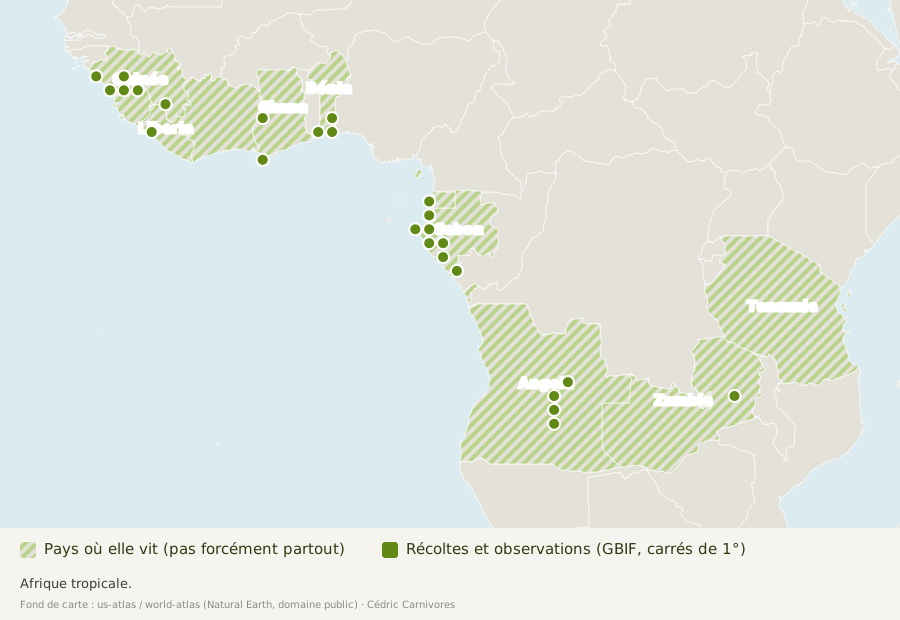
Tropical Africa: Angola, Burundi, Chad, Ivory Coast, DR Congo, Gabon, Guinea, Liberia, Malawi, Sierra Leone, Tanzania and Zambia. According to Kew's world plant list (WCVP), it is native to 16 regions of the world (see the map and the Kew source).
Habitat
Marshes, on peaty or sandy soils, from sea level to 1 860 m. Stapf (1906) cites collections from Sierra Leone (Scarcies valley, near Kitchom) and from Lagos Island (Nigeria).
Sources
- Wikipedia (English), Utricularia spiralis: author, year, range, habitat, altitude.
- Kew, World Checklist of Vascular Plants (via GBIF): natural distribution.
- Stapf, Flora of Tropical Africa IV.2: Lentibulariaceae, 1906 (archive.org): description, localities and habitats of the specimens (translated from English).
- GBIF, Utricularia spiralis: author, original publication, countries and localities of herbarium specimens and observations.