Utricularia striata Le Conte ex Torr.
Species sheet, updated on 30/10/2026.
At a glance
| Scientific name | Utricularia striata named by John Eatton Le Conte, described by John Torrey, Annals of the Lyceum of Natural History of New York 1: 75, 1824 |
| Family | Lentibulariaceae |
| Distribution | Coastal plains of the eastern United States |
Photos in the wild
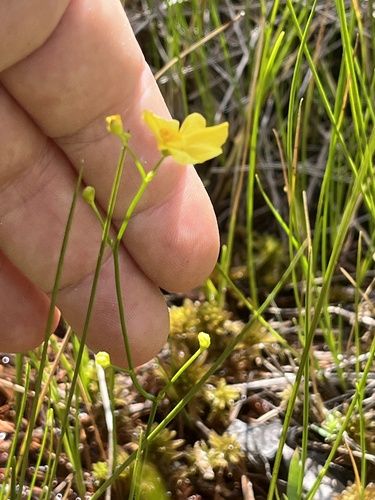
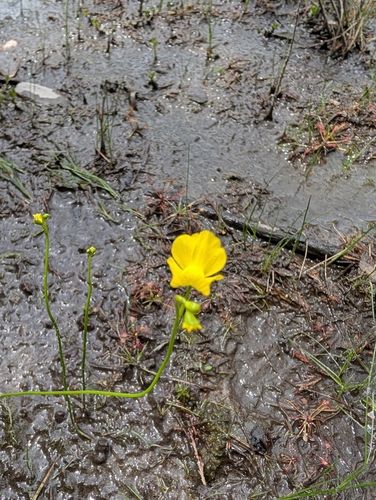
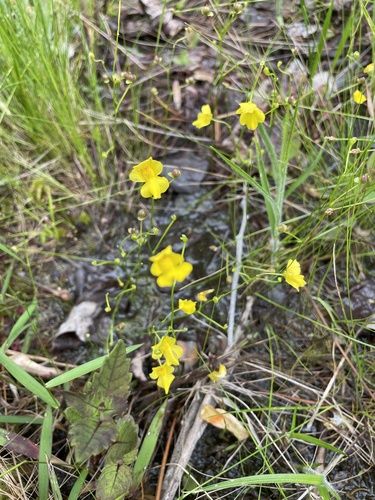
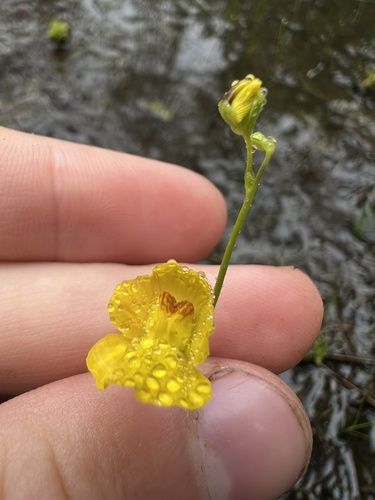

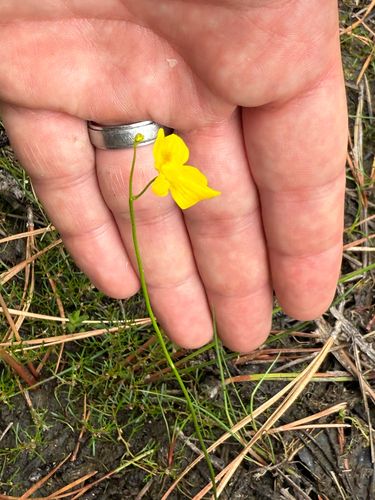
Etymology
- Utricularia: see the genus sheet.
- striata: from the Latin, “striped”.
Description (how to recognise it)
- A medium-sized bladderwort, attached under water.
- According to Britton and Brown (1913): stems creeping on the bottom in shallow water, radiating around the base of the scape; leaves in hair-like segments; scape 10 to 40 cm with 2 to 6 yellow flowers; upper lip broadly triangular, with radiating stripes (hence striata).
Distribution
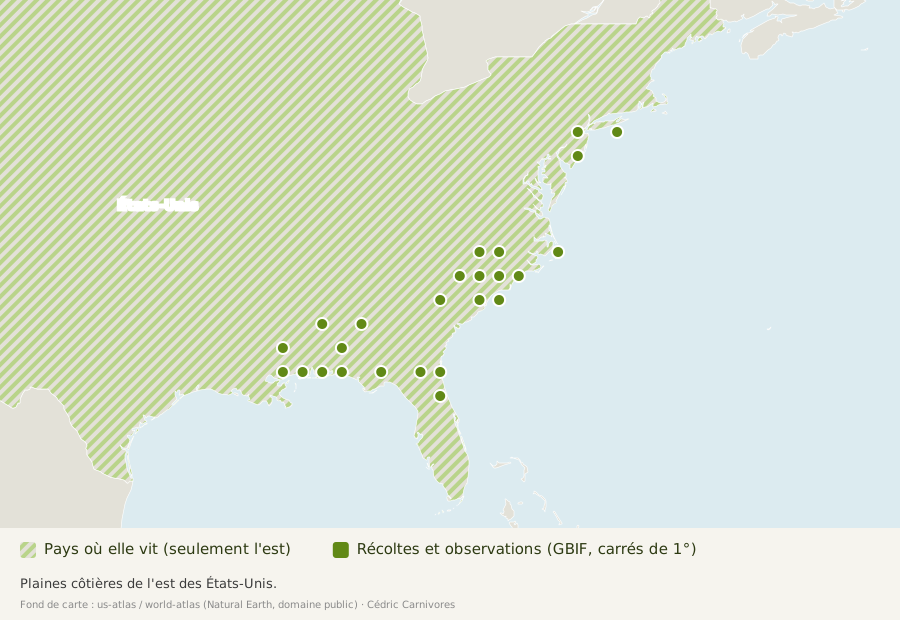
Endemic to the coastal plains of the eastern United States (nearly 600 records in GBIF). According to Kew's world plant list (WCVP), it is native to 15 regions of the world (see the map and the Kew source).
Habitat
Britton and Brown (1913) record it in shallow water, near the coast, from Long Island to Florida and Mississippi; flowering from June to August.
Did you know?
Its English name is “striped bladderwort” (in French utriculaire rayée).
Sources
- Wikipedia (English), Utricularia striata: authors, range, way of life, English name.
- Kew, World Checklist of Vascular Plants (via GBIF): natural distribution.
- Britton and Brown, An Illustrated Flora of the Northern United States III, 2nd ed., 1913 (archive.org): description, habitats and range (translated from English).
- GBIF, Utricularia striata: author, original publication, countries and localities of herbarium specimens and observations.