Utricularia striatula Sm.
Species sheet, updated on 30/10/2026.
At a glance
| Scientific name | Utricularia striatula James Edward Smith, in Rees, Cyclopaedia 37, 1819 |
| Family | Lentibulariaceae |
| Distribution | From tropical Africa to New Guinea |
| Habitat | Wet rocks or tree trunks, up to 3 300 m |
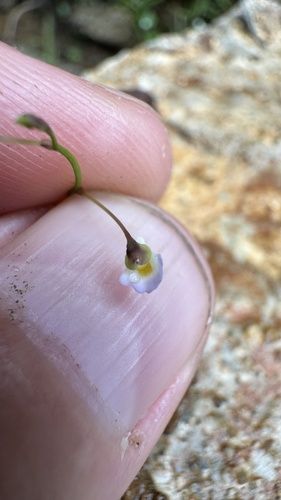
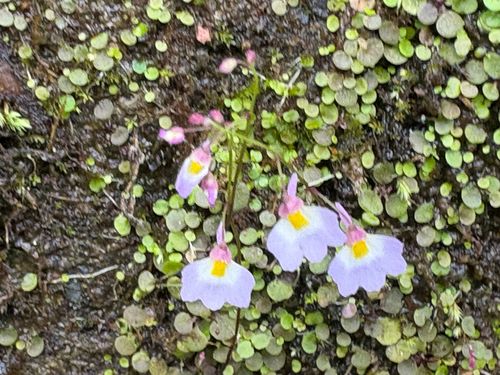
Photos in the wild
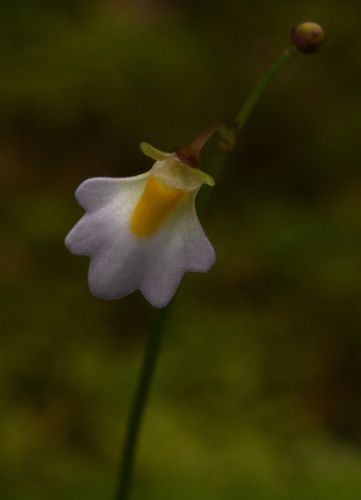
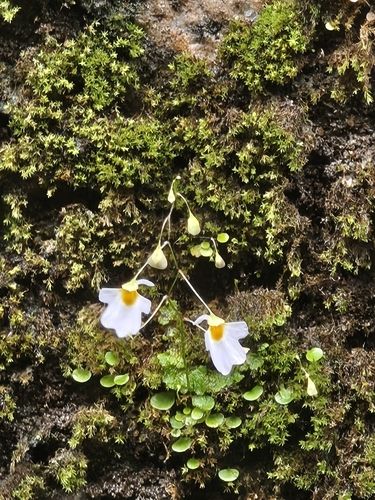
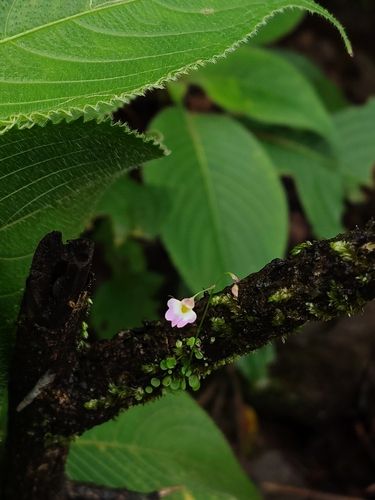
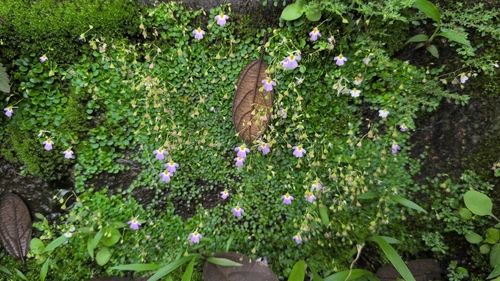
Etymology
- Utricularia: see the genus sheet.
- striatula: from the Latin, “finely striped”.
Description (how to recognise it)
- A small bladderwort that grows on rock or on trees.
- According to Stapf (1906): a dwarf plant; slender creeping stems in moss; leaves round, 2 mm at most; scape 2.5 to 15 cm, with up to 10 pink flowers with a yellow palate, 5 to 6 mm, with the lower lip cut into 5 lobes; seeds covered with small hooks.
Distribution
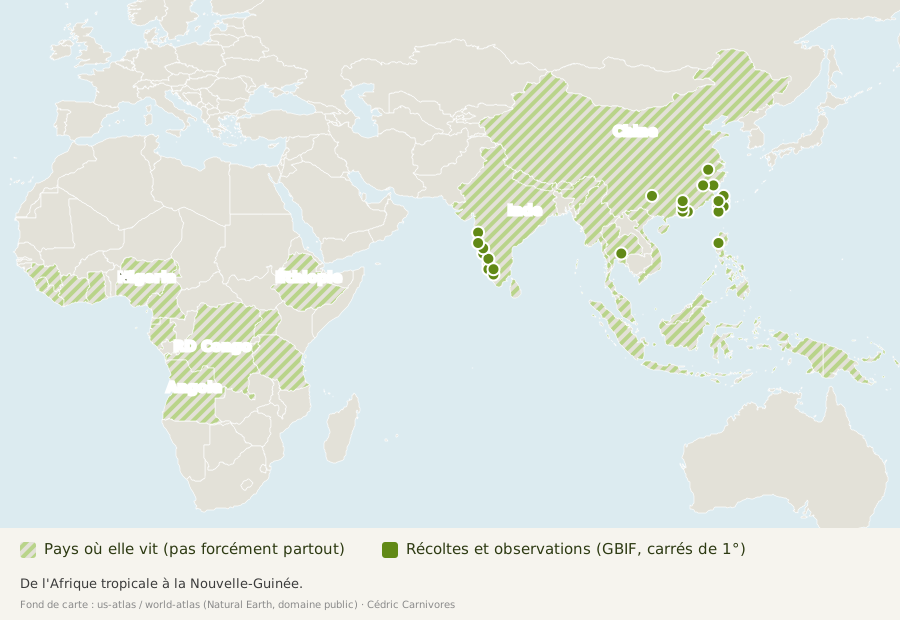
Widespread from tropical Africa to New Guinea, through India, China and Southeast Asia (nearly 1 900 records in GBIF). According to Kew's world plant list (WCVP), it is native to 45 regions of the world (see the map and the Kew source).
Habitat
Wet rocks or tree trunks, from sea level to 3 300 m. Stapf (1906) cites collections from Sierra Leone (near Regent), from Mount Cameroon at about 1 500 m, and near Buea, where it grew as an epiphyte on oil palms at about 950 m; he has no doubt that the plants from Africa and India are the same species.
Sources
- Wikipedia (English), Utricularia striatula: author, year, range, habitat, altitude.
- Kew, World Checklist of Vascular Plants (via GBIF): natural distribution.
- Stapf, Flora of Tropical Africa IV.2: Lentibulariaceae, 1906 (archive.org): description, localities and habitats of the specimens (translated from English).
- GBIF, Utricularia striatula: author, original publication, countries and localities of herbarium specimens and observations.