Utricularia tricolor A. St.-Hil.
Species sheet, updated on 30/10/2026.
At a glance
| Scientific name | Utricularia tricolor Augustin Saint-Hilaire, Voyage dans le district des diamans 2: 418, 1833 |
| Family | Lentibulariaceae |
| Distribution | South America: Argentina, Bolivia, Brazil, Colombia, Paraguay, Uruguay, Venezuela |
Photos in the wild
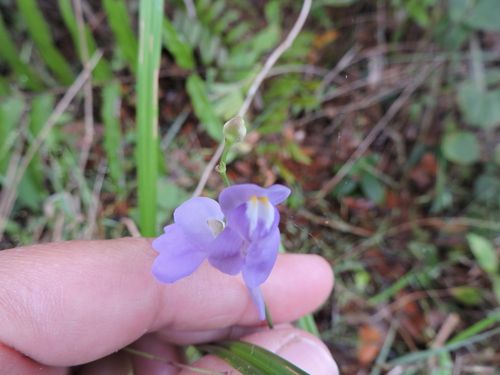
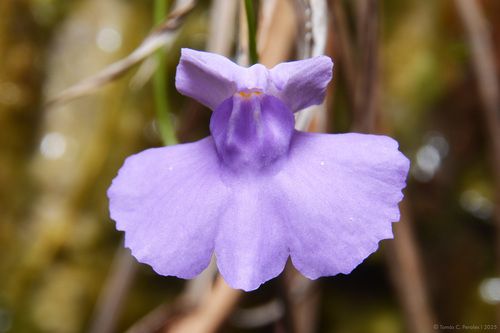
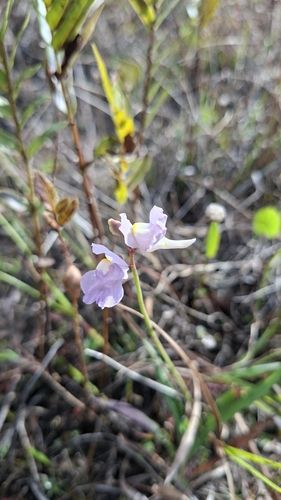
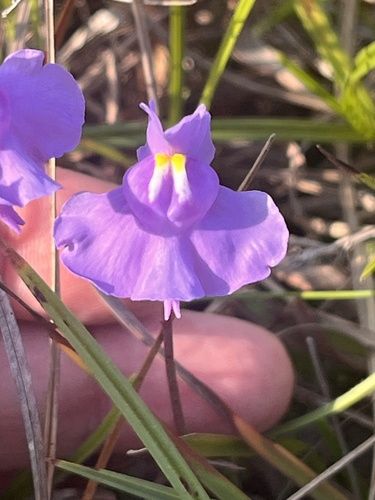
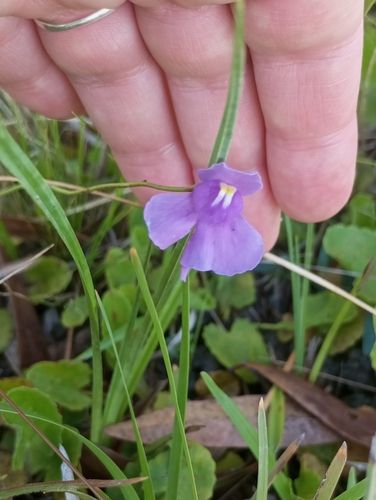
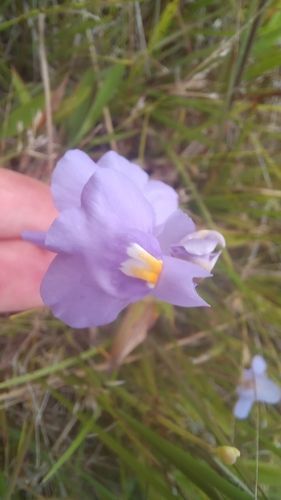
Etymology
- Utricularia: see the genus sheet.
- tricolor: from the Latin, “three-coloured”.
Description (how to recognise it)
- Perennial terrestrial bladderwort, medium-sized to large.
- Chromosome number: 2n = 28.
Distribution
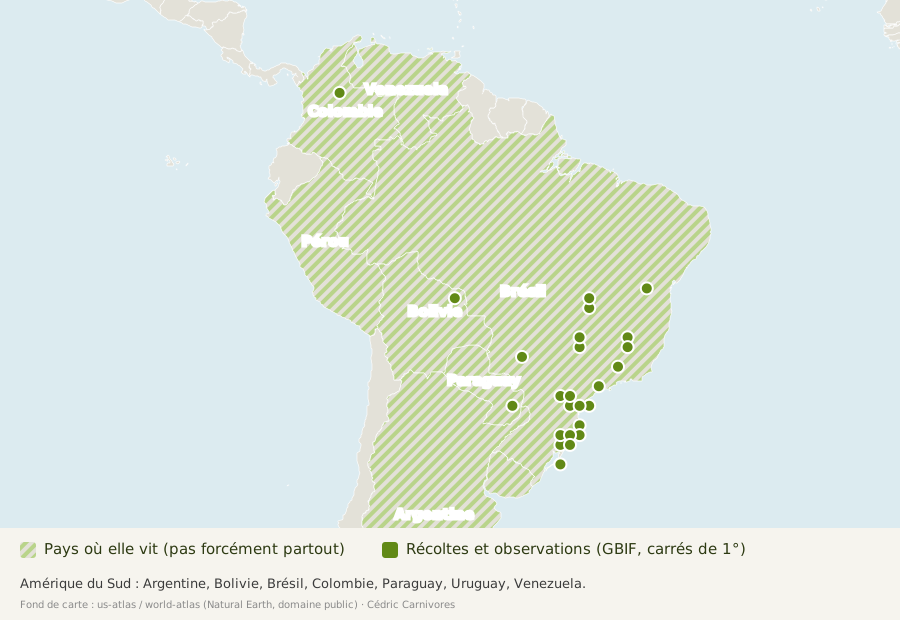
Argentina, Bolivia, Brazil, Colombia, Paraguay, Uruguay and Venezuela (more than 1,300 records in GBIF). According to Kew's world plant list (WCVP), it is native to the following regions: northeastern Argentina, Bolivia, northeastern Brazil, northern Brazil, southeastern Brazil, southern Brazil, west-central Brazil, Colombia, Paraguay, Taiwan, Uruguay and Venezuela. According to the Flora do Brasil (official list of the plants of Brazil), it grows in these Brazilian states: Bahia, Federal District, Espírito Santo, Goiás, Minas Gerais, Mato Grosso do Sul, Mato Grosso, Paraná, Rio de Janeiro, Rio Grande do Sul, Santa Catarina and São Paulo. Major biomes: Amazonia, Caatinga, Cerrado and Atlantic Forest.
Habitat
According to the Flora do Brasil: terrestrial plant, in high-altitude grasslands, open grasslands, campos rupestres (rocky mountain grasslands), cerrado (savanna), gallery forests and restinga (coastal sand vegetation).
Sources
- Wikipedia (English), Utricularia tricolor: author, range, life form, chromosomes.
- Kew, World Checklist of Vascular Plants (via GBIF): natural distribution.
- Flora e Funga do Brasil, official list (via GBIF): states, biomes, endemism, life form and vegetation types in Brazil.
- GBIF, Utricularia tricolor: author, original publication, countries and localities of herbarium specimens and observations.