
 Français
 Español
 Deutsch
 Italiano



Sarracenia diseases and pests: how to recognise them


Diseases and pests
Recognise and avoid them
Sarracenia are hardy, but not immune to a few diseases and pests. Here are the ones we come across most often.
This article comes from “Les sarracenia en images”, the book Cédric wrote from his experience at the nursery, and from our growing guide. All photos are ours.
Botrytis (grey mould)
This is the best-known fungal disease of Sarracenia. It appears early in the season, between March and late May, when warmth and humidity suit it. Growing under glass increases the risk: ventilate as much as possible at this time. Outdoors, cases are rare.
Attacks are also common after division: the cut in the rhizome opens the door to it, especially in S. leucophylla, the most sensitive species. Cédric has often seen the worst attacks after a very cold winter. The best prevention: the end-of-winter clean-up, cutting the foliage 10 cm above the rhizome (see Sarracenia in winter).
Pythium and phytophthora
They cause seedling damping-off and root rot. It is fairly rare in Sarracenia. The causes: old or poorly aerated substrate, and overheated substrate, as in small black pots in full sun.
If the rhizome turns brown, unpot it, cut away all the brown part until you find white, healthy tissue, then repot in fresh, airy substrate such as our No. 1 mix.
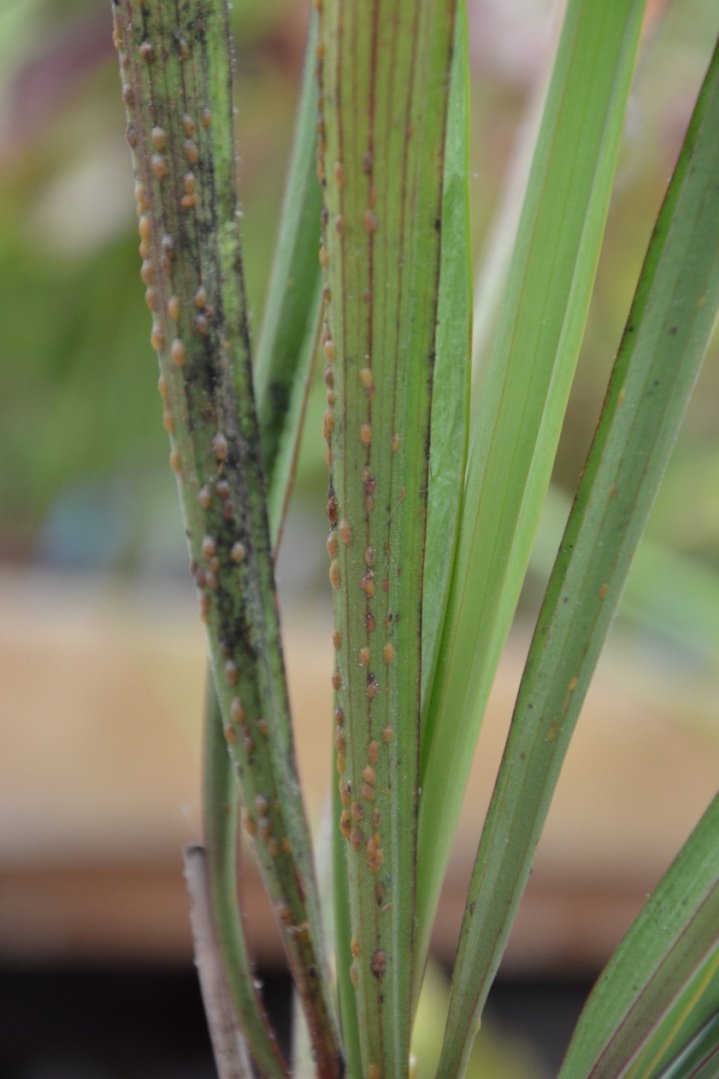
Mealybugs and scale insects
The mealybug is the most common pest. It is a sap-sucking insect, very invasive and hard to eradicate. Signs: slight leaf deformation and slower growth. It is easy to spot:
- black patches on the leaves: this is sooty mould, a fungus that grows on the sugary honeydew produced by the insects;
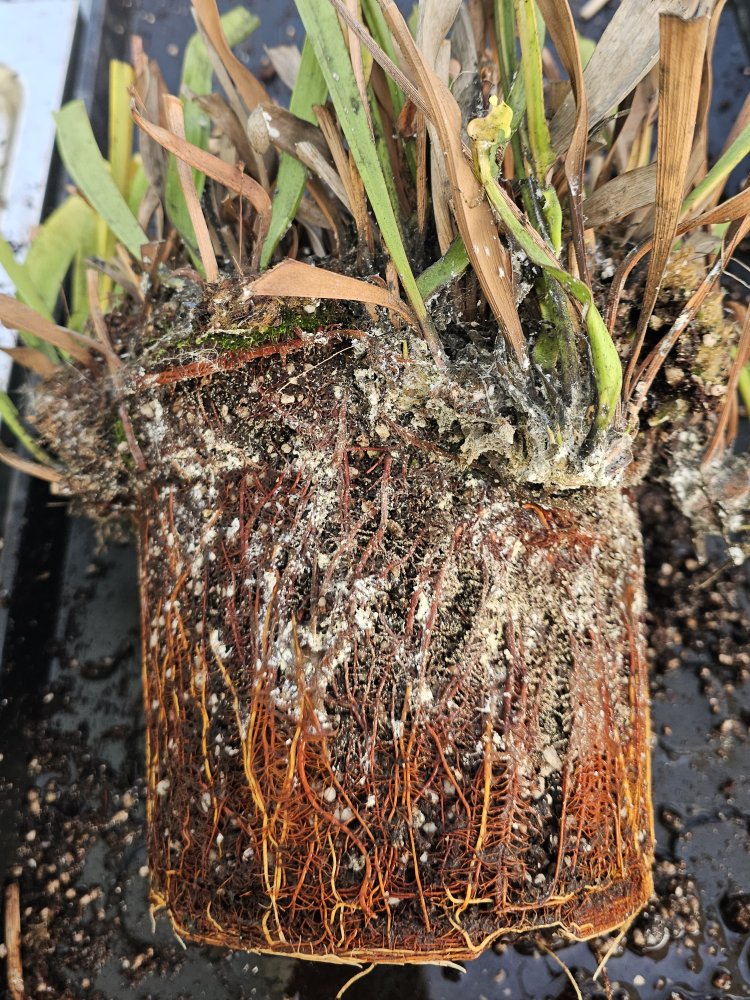
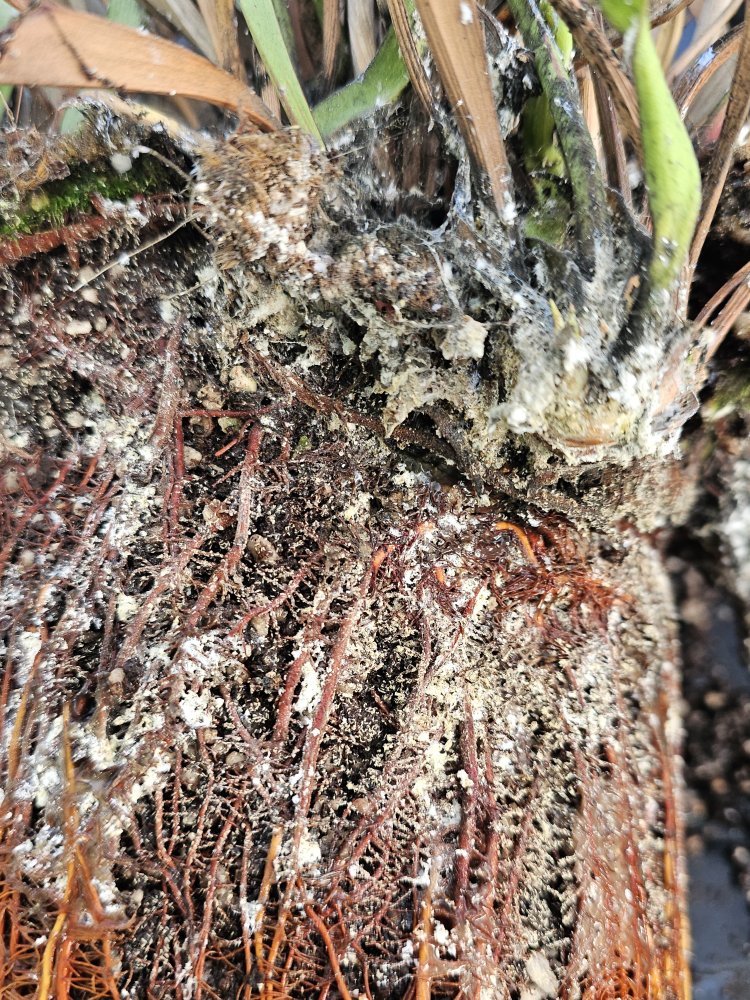
- a light white, floury deposit, mainly at the base of the leaves and under the rhizome.
In a heavy infestation, it spreads over the whole rhizome and down to the roots: when the plant is taken out of its pot, the root ball is covered in white deposits.
Scale insects are less common, but cause just as much damage. They settle mainly on the foliage, whereas the more discreet mealybug prefers the rhizome. Attacks mostly happen under glass.
Thrips
These tiny insects are rarer, but their damage on Sarracenia is easy to see.

Not sure?
Describe what you see at our plant hospital: you get a first diagnosis straight away, and the nursery also looks at your photo.
A question about your Sarracenia?
✉ Contact us© 2026 Cédric Carnivores - Carnivorous plant nursery since 2012
Share this article:


Similar posts

Sarracenia in winter: rest, frost and the big clean-up
Rest from October to March, watering, frost hardiness down to -20 °C, greenhouse ventilation and the end-of-winter clean-up: Sarracenia in winter.

Fertiliser for Nepenthes and Heliamphora: our advice
Yes, Nepenthes and Heliamphora need fertiliser, but not just any way: Osmocote, Liquid Ocean, doses and the right moments.