
 Français
 Español
 Deutsch
 Italiano

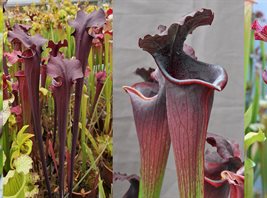
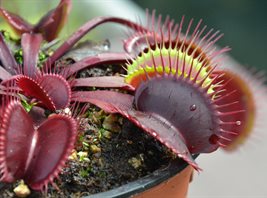


Summer growth vs winter dormancy: Dionaea, Drosera & Sarracenia


Summer growth vs Winter dormancy
Are your Dionaea, Drosera and Sarracenia turning black, shrinking or seeming to disappear in autumn? Don’t worry: they are not dying, they are getting ready for spring. Find out how to recognise their dormancy and see them through it.
Why do temperate carnivorous plants need cold?
Unlike Nepenthes from tropical jungles, Venus flytraps (North Carolina), Sarracenia (North America) and many Drosera come from bogs that have real winters with frost and sometimes snow.
As soon as the photoperiod (day length) shortens in October and temperatures drop below 10°C, the plant draws all its energy back into its underground storage organs (rhizome or winter bud) and sacrifices its summer traps, which are useless without insects.
Active growth
Full sun outdoors, vigorous growth, feet in water.
Winter dormancy
Between 0°C and 10°C, metabolism at a standstill, substrate just moist.
Heating at 20°C
Bringing the plant into a heated living room in winter exhausts and kills it.
What happens under the peat
💡 Pro tip: In Venus flytraps and Sarracenias, as long as the underground rhizome (the heart at ground level) stays white and firm to the touch, your plant is perfectly healthy, even if 90% of the foliage above ground has dried up!
How your 3 main families change
Drag the central slider ↔ on each annotated botanical diagram to compare the summer and winter states.
Dionaea muscipula
Venus flytrapOrigin: bogs of North & South Carolina (USA) • Hardiness: -7°C to -10°C (in a large pot)
- •Foliage: Thin or upright petioles, new leaves every week.
- •Traps: Large (2 to 4 cm), blood-red inside in the sun, very responsive.
- •Watering: Pot permanently standing in 2 to 4 cm of rainwater or demineralised water.
- •Foliage: Dwarf rosette pressed to the ground, short, broad petioles.
- •Traps: Tiny, pale green, inactive. The large summer traps turn black.
- •Watering: Empty the saucer! Keep the peat just moist.
✂️ Should you cut the black traps off your Venus flytrap?
Yes, but only when they are completely black and dry! As long as the base of the leaf is still green, the plant is drawing precious nutrients back into its bulb. Cut only the black part with fine scissors to prevent Botrytis (grey mould).
Drosera
Sundews / sticky plantsFocus on temperate species (D. rotundifolia, filiformis, intermedia, binata) & subtropical ones
- •Appearance: Fully unfolded leaves (round, upright or forked depending on the species).
- •Traps: Plenty of glue droplets (mucilage) thanks to strong light.
- •Flowering: Graceful flower stalks in summer.
- •Radical transformation: All the summer leaves dry up. In the centre forms a hibernacle (compact bud without glue).
- •The case of D. binata : Nothing is visible on the surface any more! Everything regrows from the fleshy roots in spring.
⚠️ Important distinction: temperate vs subtropical (D. capensis, D. aliciae)
Temperate Drosera (rotundifolia, intermedia, filiformis) form a hibernaculum from autumn and spend the winter outdoors in the frost. By contrast, subtropical Drosera from South Africa (D. capensis, D. aliciae) simply slow their growth between 5°C and 12°C in a bright conservatory without forming a true hibernaculum (if they get a light frost, they dry out on the surface and regrow from the roots in spring).
Sarracenia
North American Trumpet PlantsCarnivorous pitchers in summer vs phyllodes (flat leaves) in winter • Hardiness: -10°C to -15°C
- •Flowers then pitchers: Large, striking flowers in spring, followed by tall tubular pitchers.
- •Second flush: S. leucophylla produces its finest white pitchers in September–October!
- •Drying: The pitchers turn brown from the hood downwards (especially if they are full of insects).
- •Phyllodes: Flat, sabre-shaped leaves without traps appear (S. flava, oreophila).
✂️ Winter care & an exception (Sarracenia purpurea)
Cut only the brown, dry part of the pitchers. At the end of winter (February/March), trim all the old pitchers to 10 cm from the rhizome (without cutting the green phyllodes!) to let the sun reach the coming flower buds. Note that Sarracenia purpurea is the exception: its squat pitchers stay green and purple all winter!
🔍 Carnivore Doctor: “Is what I am seeing normal?”
Select your plant, the current season and what you are seeing to find out immediately whether it is natural winter dormancy or a growing problem.
📅 What do your plants do month by month?
Click a period of the year to show the exact state of your plants and how to water them.
Ordering between October and March? Here is what to expect!
1. Your Dionaea in a winter parcel
🌿Don’t be surprised by its small size! You will receive a compact rosette pressed against the peat, with very small traps. Its large underground bulb is full of energy and will burst into vigour from April.
✔ Spring regrowth guaranteed2. Your temperate Drosera in winter
💧Careful when opening the parcel: for a D. rotundifolia, filiformis or binata, the pot may look almost empty! Look closely at the centre: the small green/brown bud (hibernaculum) or the fleshy roots are quietly sleeping.
✔ Whatever you do, do not throw the pot away!3. Your Sarracenia in a winter parcel
🏺To avoid mould during transport and make packing easier, we often trim the old dry summer pitchers before shipping. You receive a large, healthy rhizome with its winter phyllodes, ready to flower in spring!
✔ Neatly trimmed by usFrequently Asked Questions about Overwintering
Everything you need for a stress-free seasonal transition
Find our plants in the shop
All our plants are grown at the nursery following the natural rhythm of the seasons.
Share this article:


Similar posts
Choosing your first carnivorous plant: species and care
How to choose between carnivorous plants: Venus flytrap, Drosera, Sarracenia and Nepenthes.

Carnivorous plant traps in detail
Glue, jaws, pitchers, suction, eel traps: discover in interactive animations how each carnivorous plant catches its prey.