Français
 Español
 Deutsch
 Italiano



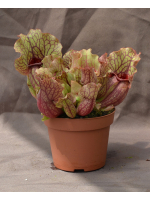
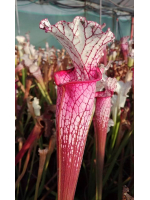
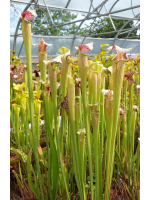
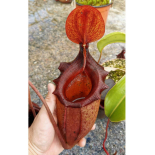
How we pack our plants


Expert Shipping of Your Carnivorous Plants
Careful preparation and the best protection, so your plants settle in at home.
What size of plant will you receive?
Our plants are graded by maturity (S, M, L, XL). See our illustrated guide for details.
SEE THE SIZE GUIDE →The seasonal cycle and shipping
☀️ Spring / Summer (March to October)
Active growth. For large plants such as Sarracenia, we prefer to ship bare-root with a mini root ball. The weight of a pot combined with tall pitchers makes shipping in pots extremely risky (breakage is almost certain when the parcel gets knocked).
❄️ Autumn / Winter
Ideal dormancy. Plants are resting and dry pitchers are trimmed. It is the safest time to ship, with no water stress at all.
Our standard: bare roots & mini root ball
1. Protecting the pitchers
In season, the mini root ball keeps the plant hydrated while preventing the weight of a pot from crushing the leaves if the parcel is turned over.
2. Guaranteed hygiene
Each plant is unpotted by hand and its roots inspected. You receive a healthy, pest-free plant.
3. Optimal hydration
Roots protected by damp absorbent paper.
Option: shipping in pots
Possible on request for Nepenthes, Dionaea and Drosera.
⚠️ Important exception: adult Sarracenia in growth are never shipped in pots. Their height and the weight of wet substrate create far too much momentum in transit.
Frequently asked questions
Why not ship large Sarracenia in pots?
Safety first! A 1 L or 2 L pot is heavy; at the slightest knock, that weight can snap the fragile pitchers. The mini root ball is the best compromise between safety and freshness.
ORDER SUBSTRATE HERE
How do I replant on arrival ❓
Rehydrate the roots for 15 min in rainwater. Plant in soaked substrate without packing it down too much.
Can you ship in winter ❓
Yes! Extra insulation + a heat pack if needed.
Everything about buying and receiving your carnivorous plants
Buying a collector carnivorous plant is an exciting step for any gardener, beginner or botany expert. However, shipping these specialised plants, such as Sarracenia, Dionaea muscipula (Venus flytraps) or Drosera, requires technical know-how that only a specialist nursery can guarantee. Our shipping method is designed around the unique metabolism of these fascinating plants.
Why bare roots for Sarracenia?
Sarracenia is a bog plant with long upright pitchers that can reach 80 cm in some varieties such as Sarracenia leucophylla or Sarracenia flava. In the growing season (spring and summer), these pitchers are full of water and digestive fluid. Shipping such a plant in a large pot full of damp blond peat carries a major risk: momentum. If the parcel is knocked or tipped over in transit, the heavy pot (often several hundred grams) can fall onto the fragile pitchers and bend them irreversibly.
Using a mini root ball (bare-root shipping) is the most environmentally friendly and safest solution. By wrapping the rhizome in Chilean sphagnum or absorbent paper soaked in demineralised water, we keep perfect residual moisture while making the parcel much lighter. This cuts the carbon footprint of transport and ensures the plant arrives without mechanical damage.
Why substrate and repotting matter
When your order arrives, repotting is a crucial step. Carnivorous plants cannot tolerate ordinary potting compost, whose mineral salts would burn their roots. You must use a specific mix, usually 70% pure blond sphagnum peat and 30% perlite or quartz sand for aeration. This acidic, nutrient-poor substrate mimics the natural bog environment.
Acclimatisation and life cycle
Your plants' life cycle follows the day length and temperature. In winter, do not be surprised to receive plants with reduced or trimmed foliage: it is the dormancy period. This winter rest is vital for the plant's longevity. During it, the plant stores energy in its rhizome for a burst of growth with the first spring sunshine. In summer, acclimatise the plant gradually to avoid heat shock, always keeping the pot in a saucer of rainwater or reverse-osmosis water so it stays constantly hydrated by capillary action.
By choosing a French nursery like Cédric Carnivores, you get plants grown in a European climate, already used to our seasonal cycles, which ensures vigorous regrowth and better disease resistance. Whether you grow in a greenhouse, an outdoor bog garden or on a sunny windowsill, careful shipping is the first step to success.
Share this article: