
 Français
 Español
 Deutsch
 Italiano



Propagating Sarracenia: division and rhizome cuttings


Propagating Sarracenia
It all starts with the rhizome
Sowing gives plants that are all different. To get an exact copy of a plant, you go through the rhizome: division or cutting.
This article comes from “Les sarracenia en images”, the book Cédric wrote from his experience at the nursery, and from our growing guide. All photos are ours.
The rhizome, the heart of the plant
Sarracenia are rhizomatous plants: they grow from an underground stem. It has three roles:
- anchoring the plant in wet, soft, windswept ground;
- storing energy from the growing season, to survive the winter rest when the plant no longer catches insects;
- multiplying the plant, by producing new offsets.
Division
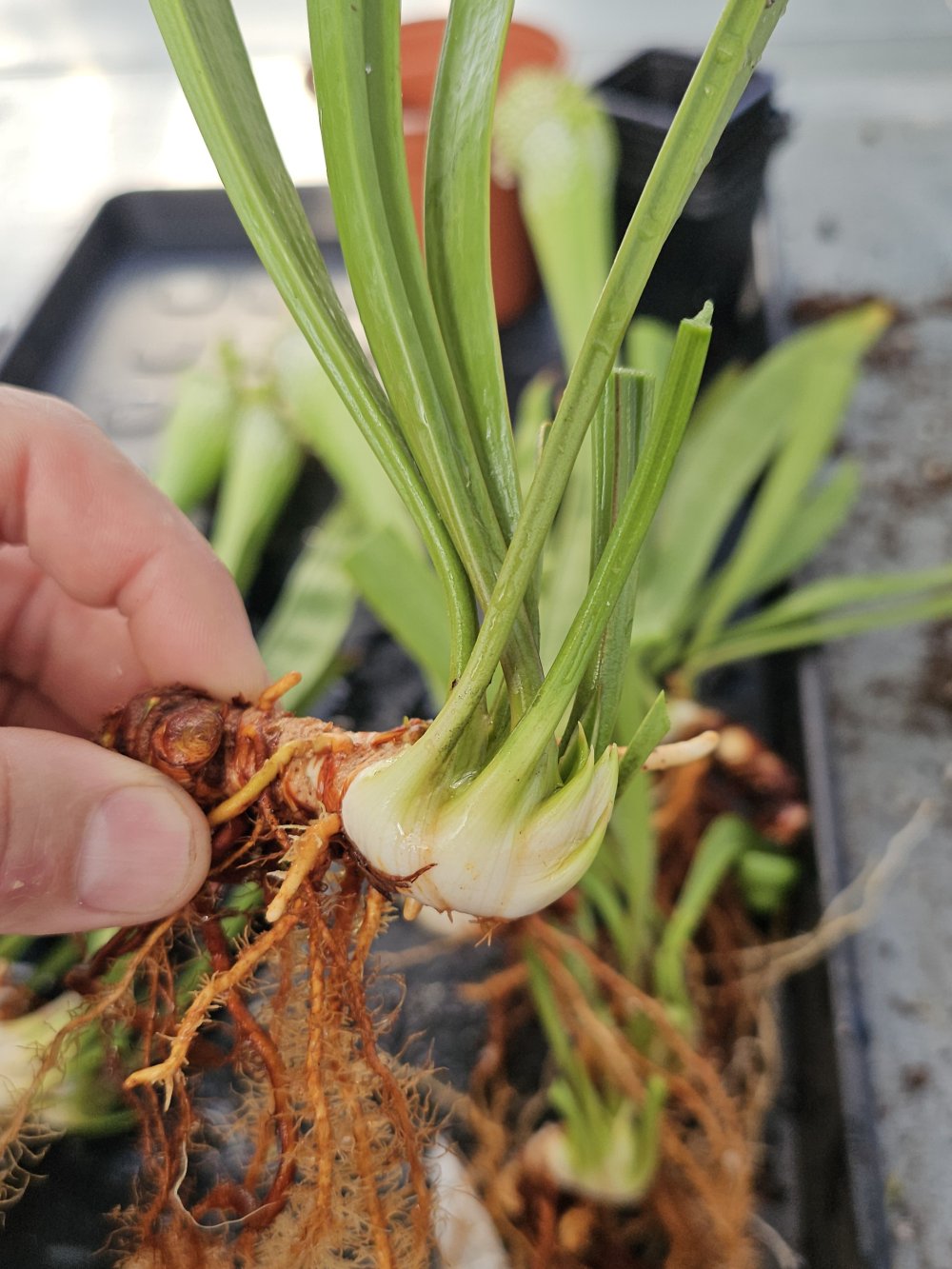
This is the simplest method for a well-developed plant, when the rhizomes fill the pot or the substrate is too old. Find where the new rhizomes are attached to the old one, then break or cut them cleanly: each growing point must keep its own roots.
Remove the old brown leaves, without pulling on the green ones, which can tear off a piece of rhizome, and cut off brown or burnt roots. Rinse the roots with water to remove the old substrate, which can hide earthworm eggs. Then repot in fresh substrate, such as our No. 1 mix.
The first year, choose a small pot, 7.5 to 9.5 cm depending on the size of the division, even if it soon looks cramped: the plant recovers better and looks nicer. The following year, move it to a 17 cm pot. Wedge the back of the rhizome against the edge of the pot to leave it room to grow forward, without burying it too deep.
Every cut is an entry point for botrytis, a grey mould. Work cleanly and ventilate well in the following weeks, especially with S. leucophylla, the most sensitive species. Avoid dividing it too often: its variety alba likes to stay several years, up to four, in a large pot without being disturbed.
When to divide?
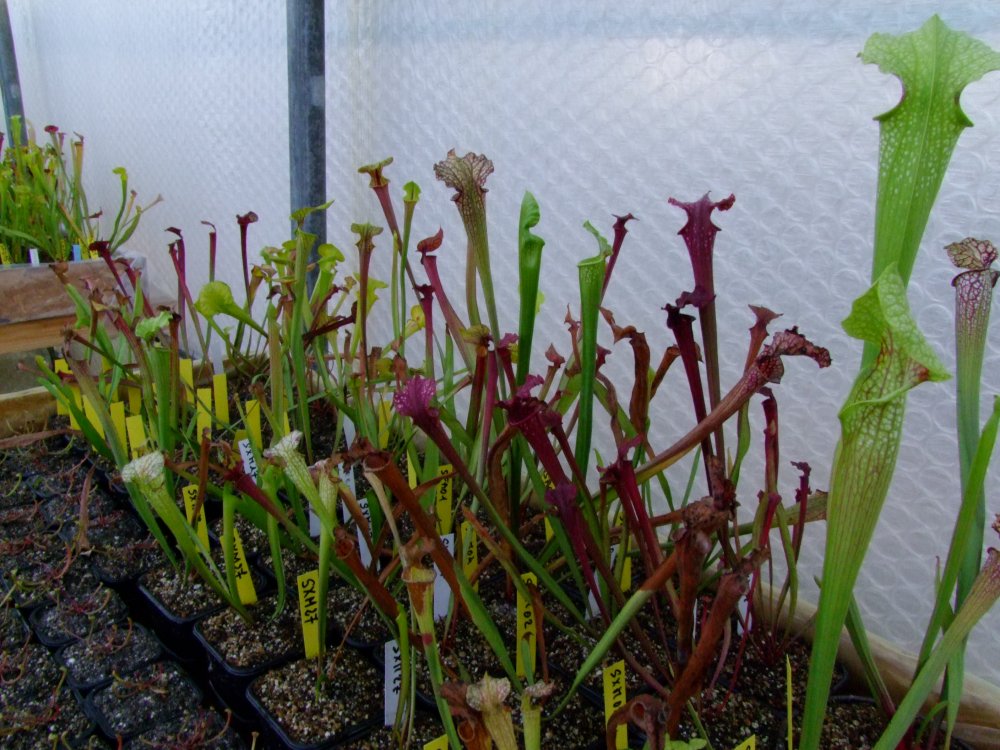
Preferably in autumn or at the very start of winter rather than in spring: the roots have three or four months to develop, and the plant starts again much better in spring.
- S. oreophila, S. flava and their hybrids, which start early: from October, mid-October.
- S. leucophylla, S. alata, S. rubra and their hybrids, which grow again in autumn: wait until this second growth is over, around late November, and divide if possible before early January.
Dividing in spring is still possible. The plant will look less nice the first season, and a S. x moorei may even make only phyllodes for a year, but it recovers the following year.
Rhizome cuttings
It is not a cutting in the usual sense. The rhizome is cut into sections, or nicked, to wake up the dormant buds along it.
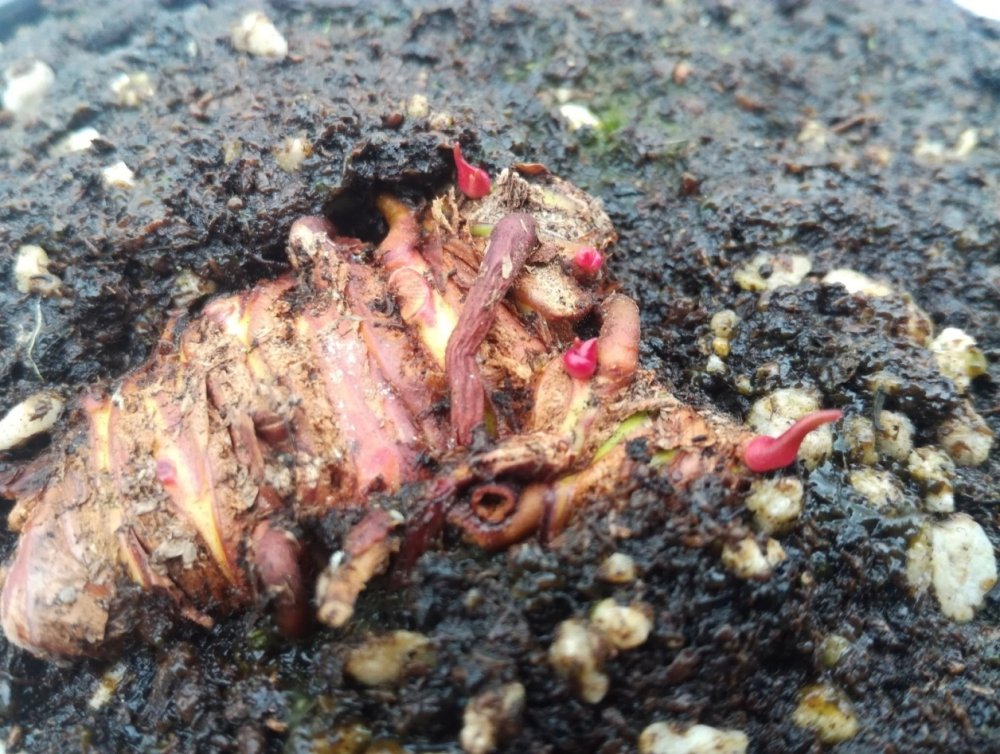
It is the fastest method to multiply Sarracenia. Depending on the species, it gives adult-size offsets almost every time. Together with division, it is also the only way to faithfully reproduce a cultivar, such as 'Tarnok': seed would give different plants.
Good to know
Flowering itself helps the plant multiply: it causes a break in the rhizome, which doubles the growing point. To see it done, watch our video on repotting and dividing Sarracenia (in French).
A question about your Sarracenia?
✉ Contact us© 2026 Cédric Carnivores - Carnivorous plant nursery since 2012
Share this article:


Similar posts

Pollinating Sarracenia step by step
Tools, collecting pollen, placing it on the five stigmas, labelling and harvesting the seeds: our hand pollinations explained in pictures.

The nursery bog garden: the build in photos
Earthworks, wooden frame, liner, walkway, then the Sarracenia: building the bog garden at our Castelnau-sur-Gupie nursery, from 2020 to 2025.