
 Français
 Español
 Deutsch
 Italiano

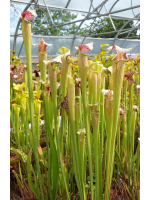
Growing guide: Sarracenias


Sarracenias Tamed
Discover outdoor carnivorous plants that are far hardier than you might think (down to -20°C). An interactive guide based on the work and photographs of Cédric Azais (Cédric Carnivores).
The Plant’s Yearly Timeline
Move the slider through the months to follow how the Sarracenia changes, the water level it needs and the jobs of the moment.
Water Level & Saucer
From April to September: water generously and always keep 2 to 5 cm of pure water in the saucer.
Morphological state
20°C à 35°C+Active carnivorous pitchers
The pitchers are fully open and coloured by the sun. They secrete a sweet nectar that lures prey to the rim, from where it slides to the bottom of the tube.
📋 Grower’s tasks
Temperature Range & Winter Rest
Extreme tolerance: from -20°C (in a bog garden) up to +45°C in summer
☀️ Light: Full Sun Required
Without direct sun, the plant becomes leggy and stays green.
- • Outdoors: Full sun all day long.
- • In a greenhouse: Maximum shading of 20%.
- • Indoors: In front of a window facing due south is essential.
🧊 The Real Danger of Frost
It is not the cold that kills a Sarracenia, but physiological dehydration when the substrate stays frozen for several days while the plant is in the sun or wind.
💨 Humidity & Ventilation
Outdoors, air humidity is never a problem. In a greenhouse, always ventilate, summer and winter to avoid heat stress (>45°C) and fungal diseases.
Workshop: Substrate, Water & Containers
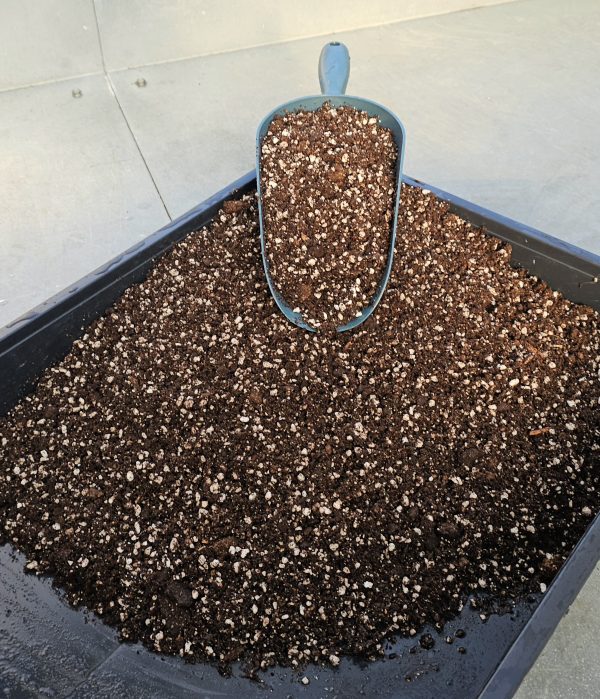
A light substrate is essential: it encourages deep rooting and keeps the rhizome oxygenated. Work out your own mix below.
🧮 Mix & Container Calculator
Mix proportions
🚿 Water Quality Tester
Water is the second pillar of survival. Check instantly whether your water source is suitable for Sarracenias:
Rainwater / reverse-osmosis / pure demineralised water
Perfect! Strictly pure, with no lime or chlorine. Just make sure that shop-bought demineralised water is free of colouring and perfume (often added for steam irons).
Interactive Anatomy of a Sarracenia
Click the 4 glowing dots on the botanical diagram, or the buttons, to explore the plant’s key organs.
The Flower: the Sign of Spring
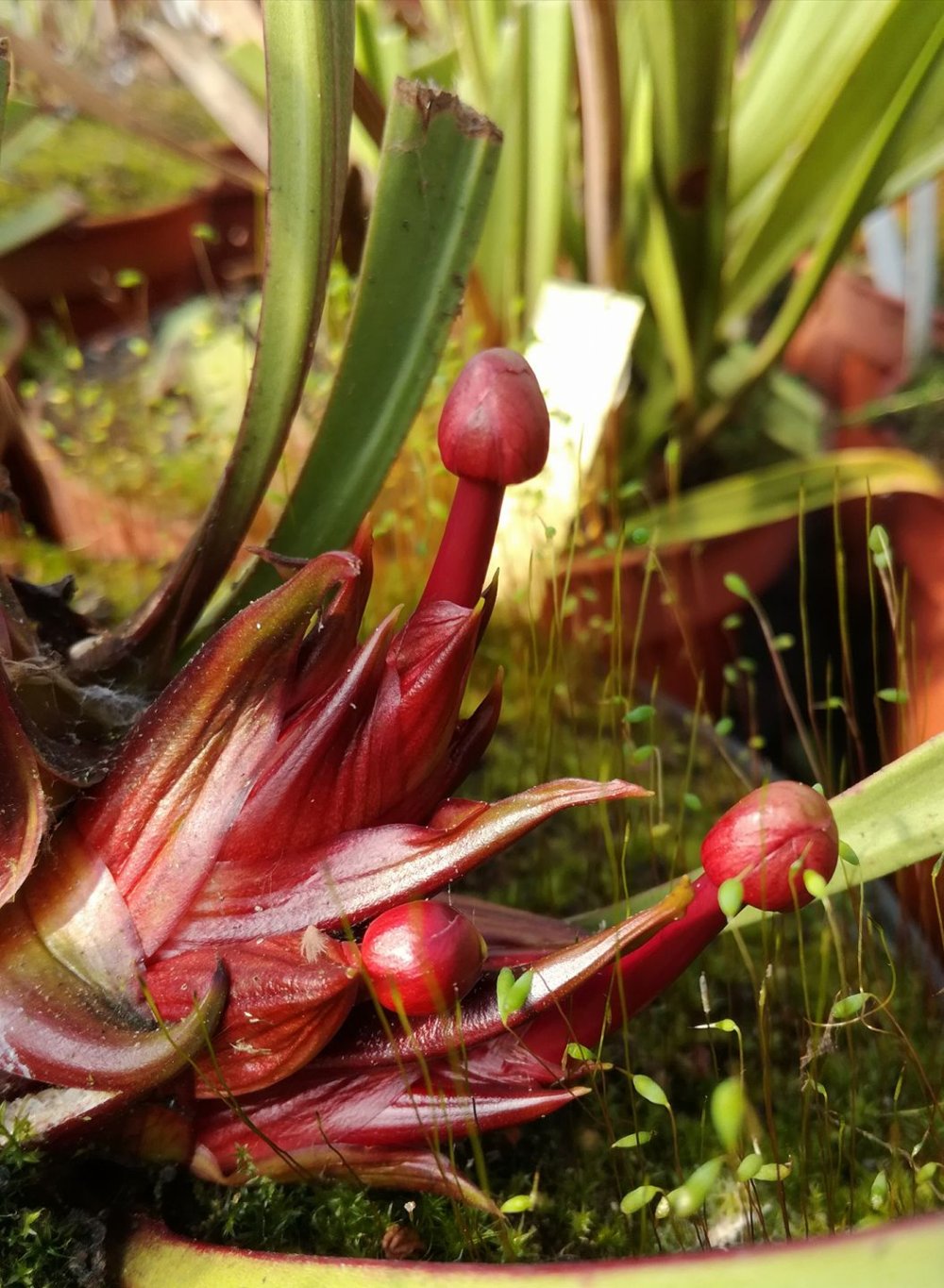
Photo: the protective scales open at the tip of the rhizome at the end of winter to let the flower bud emerge before the carnivorous leaves.
© Photograph: Cédric Azaïs
Species, Varieties & Cultivars
Explore all the species detailed in Cédric Azaïs’s guide.
Propagation: the Two Schools of Sowing & Cuttings
Learn how to create your own hybrids by pollination or faithfully clone your finest cultivars.
Comparison: Classic Sowing vs Accelerated Method
Growth of the seedlings up to adult maturity (flowering)
1. The normal (natural) school
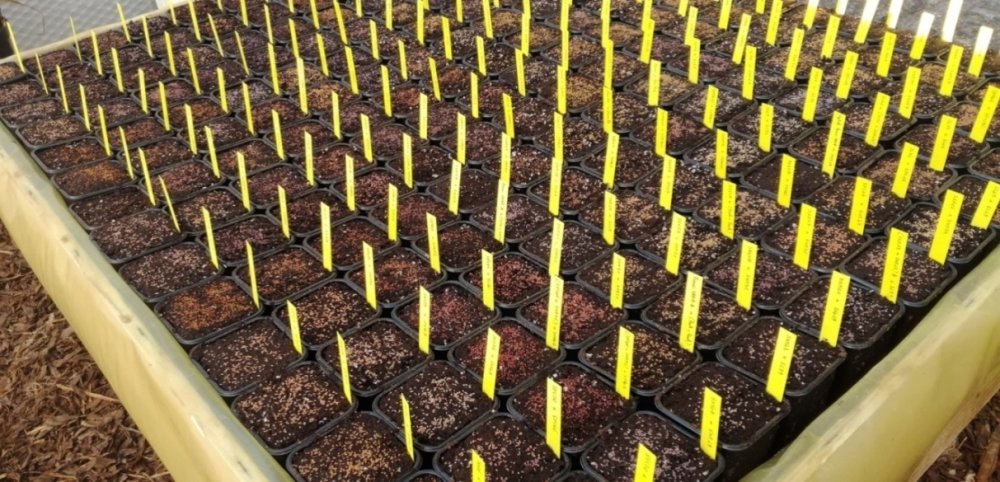
Adult in 4 to 7 yearsSow in March/April on a blond peat + quartz sand mix. Germination in 2 to 8 weeks. Young plants follow the natural cycle with a winter rest every year.
2. The accelerated school (terrarium)
Adult in 2 to 3 years!Continuous growth without winter rest for the first years:
- Terrarium fitted with a heating cable buried in 3 cm of moist sand.
- Horticultural lighting of 8 to 9 h a day.
- Spectacular time saving: halves the wait before the first flower!
Hand Pollination (Sexual)
Essential for genetic mixing and creating new crosses.
- Collect the pollen that has fallen to the bottom of the “umbrella” of the father flower.
- Place it on the 5 stigmas at the tips of the umbrella of the receiving (mother) flower.
- Careful labelling: Always write down Mother plant × Father plant (pollen).
Clump Division (Asexual)
The simplest way to propagate an already well-developed plant.
- Ideally done in printemps when repotting.
- Cleanly separate the growing points of the rhizome that already have their own roots.
- Caution: Avoid dividing too often S. leucophylla which dislikes disturbance.
Rhizome Cuttings (Cloning)
An advanced technique to propagate a rare plant.
- Cut or notch healthy sections of rhizome.
- This removes apical dominance and reactivates dormant buds along the rhizome.
- Golden rule: This is the only method (with division) to faithfully propagate cultivars (e.g. 'Tarnok').
✂️ End-of-Winter Trim (the 10 cm Rule)
At the end of winter / very start of spring, clean the plant before the flowers wake up:
Interactive Diagnosis of Diseases & Pests
Select a symptom seen on your plants to show what to do:
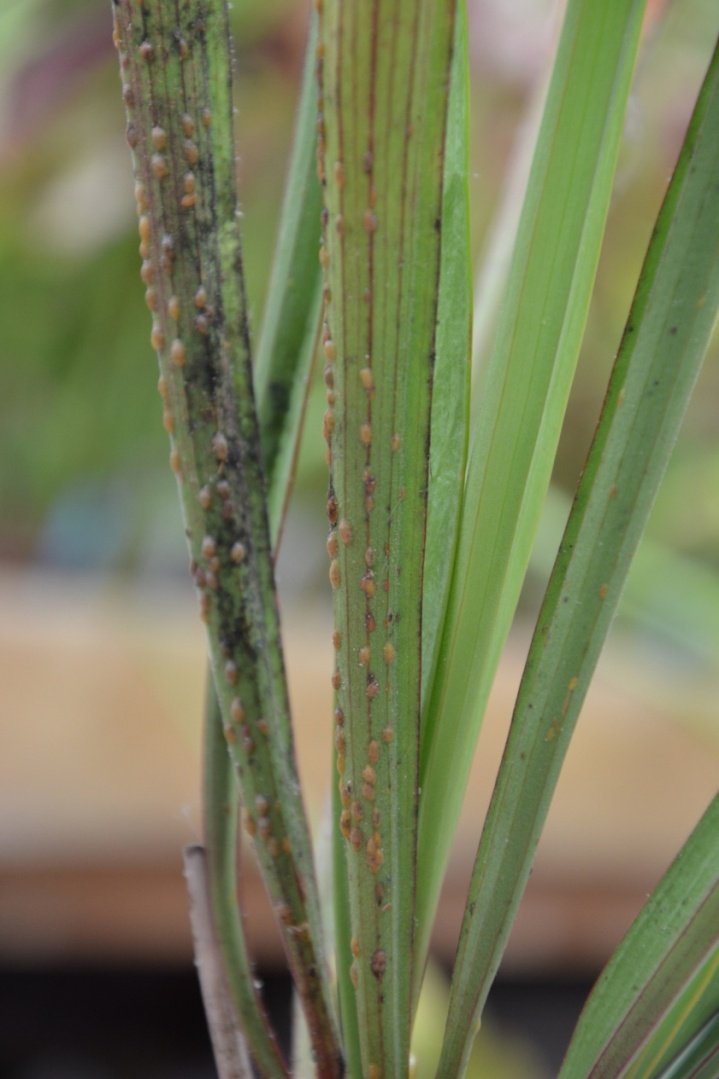
Diagnosis: Attack by mealybugs/scale (mealy or armoured).
Consequences: Their honeydew attracts a black fungus (sooty mould) and their bites cause twisted or aborted pitchers.
Action: Inspect carefully under the scales and under the rhizome. Clean them off by hand and treat with a suitable product (white oil / soft soap, or a systemic product for an infestation in a collection).
Diagnosis: Fungal root diseases (Pythium / Phytophthora).
Causes: A substrate that is too old and airless, or overheated roots in small black pots in full sun in summer.
Emergency action: Unpot immediately, cut away all the brown part of the rhizome until you reach perfectly white, healthy tissue, then repot in a fresh, airy peat/perlite mix.
Diagnosis: Botrytis (grey mould).
Causes: Stuffy, humid air in winter, combined with old dead leaves that have not been cleaned away.
Action: Cut all affected leaves to 10 cm from the rhizome, remove the water saucer and always ventilate the greenhouse even in cold weather.
Diagnosis: Attack by Thrips.
Causes: Tiny insects, very mobile in hot, dry weather, that empty plant cells.
Action: Keep a close eye on the underside of the lids and young shoots. Shower the leaves with rainwater and treat quickly before the next generation damages future pitchers.
Final Word
“By respecting these cycles and techniques, you are no longer growing a simple plant: you become the guardian of a jewel of biodiversity. The Sarracenia will reward you with incredible colours through the seasons.”
Useful tools
- Is your plant unwell? The plant hospital
- Is your water suitable? Test it
- Planning a bog garden? The planner and its plans
- No. 1 mix · Which substrate? : Ready-to-use substrate: our No. 1 mix, and the right mix for each plant
Share this article:





Similar posts

Growing guide: Nepenthes
Altitude, day/night temperature, substrate, watering, species, cuttings, feeding and pests: the interactive guide to growing Nepenthes successfully.

Growing guide: annual, Petiolaris & tuberous Drosera
Reversed cycles, warm terrariums, tubers and smoke water: the interactive guide to growing annual Drosera, the Petiolaris complex and the tuberous…