Français
 Español
 Deutsch
 Italiano
Species, variety, cultivar, clone: reading a Sarracenia name


Reading a Sarracenia name
Species, variety, cultivar, clone…
S. flava var. cuprea, S. purpurea subsp. venosa, S. x moorei 'Adrian Slack'… These names are often used, and sometimes misused. Here is how to read them.
This article comes from “Les sarracenia en images”, the book Cédric wrote from his experience at the nursery, and from our growing guide. All photos are ours.
Genus and species
The genus groups species that share several characters: here, Sarracenia. The species is a group of plants of the same genus, identified by a botanical name: Sarracenia flava, Sarracenia leucophylla… The genus takes a capital letter, the species is in lower case, both in italics.
Subspecies, variety and form
- Subspecies (subsp. or ssp.): a natural variation of the species, in shape, genetics or distribution, most often an isolated population. Example: S. purpurea subsp. venosa.
- Variety (var.): a smaller subdivision of the species, with smaller differences than between two species. Example: S. flava var. cuprea.
- Form (f.): a small variation, such as f. viridescens, plants without red pigment, entirely green.
The cultivar
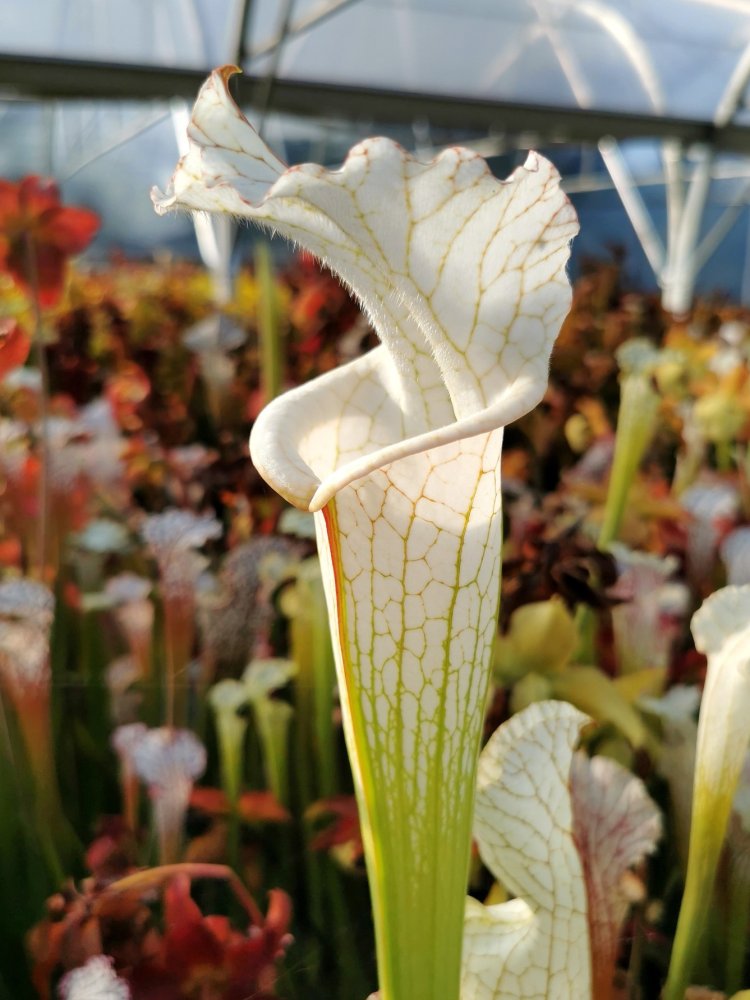
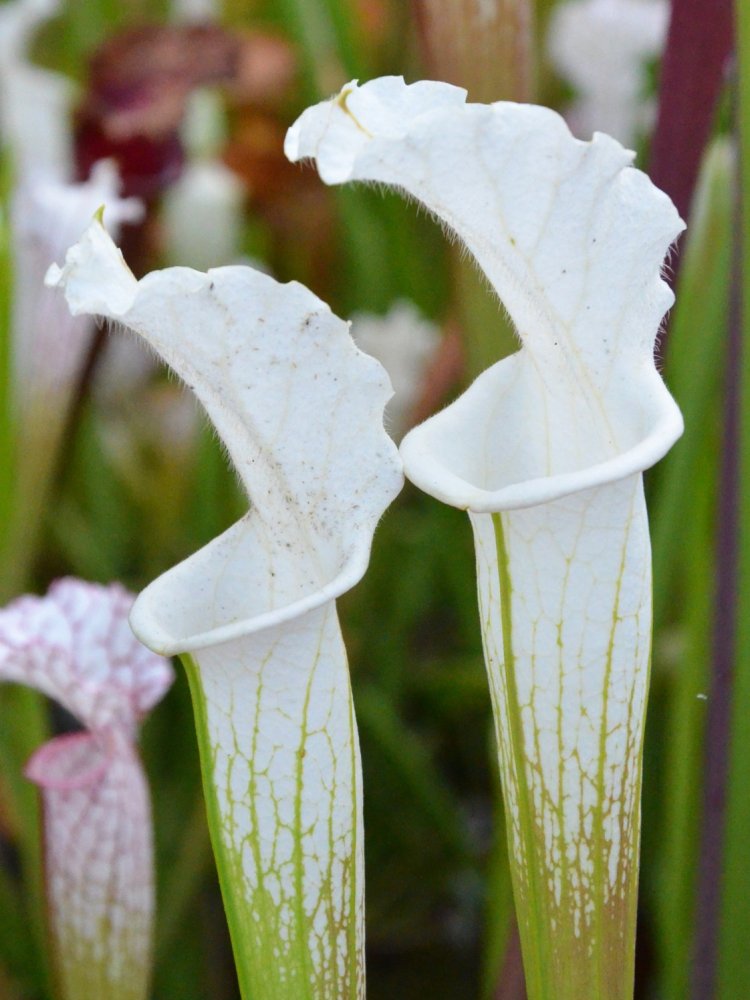
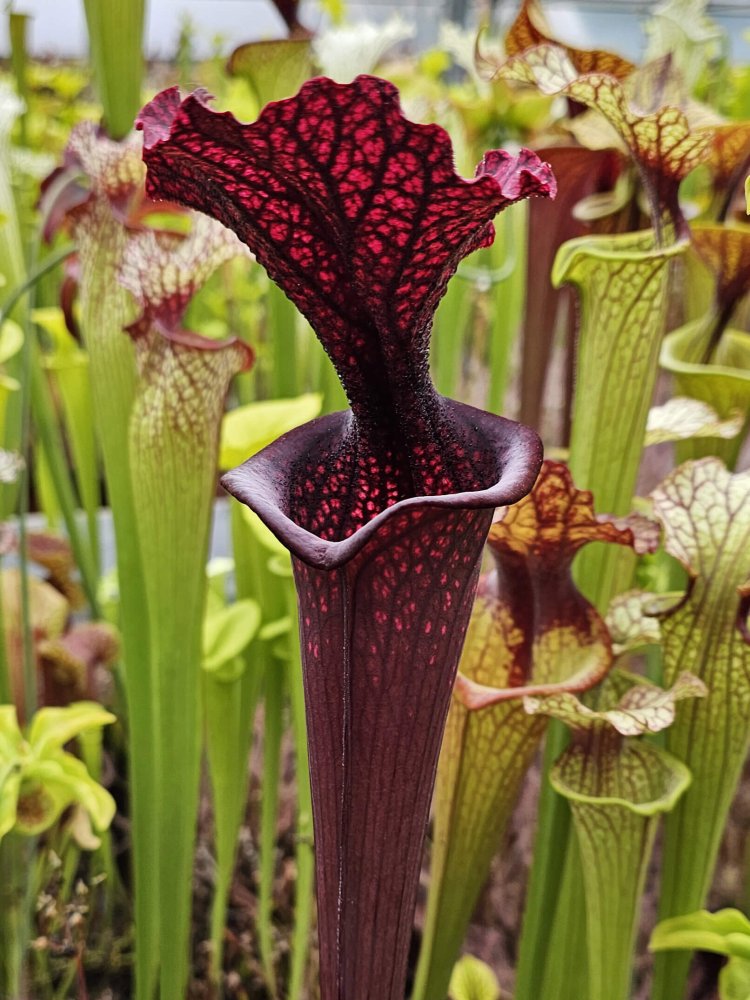
A cultivar is a selection made by people, usually for its beauty or a well-defined character, and given a name. It is written in single quotes, not in italics. A cultivar can come from a pure species or from a hybrid, but it is always propagated without seed (division or rhizome cutting), to keep its characters exactly.
Example: S. x moorei 'Adrian Slack' is a cultivar from a natural cross between S. flava and S. leucophylla. Its very marked colours earned it a name in honour of Adrian Slack, one of the great carnivorous plant enthusiasts.
Hybrid, clone and mutation
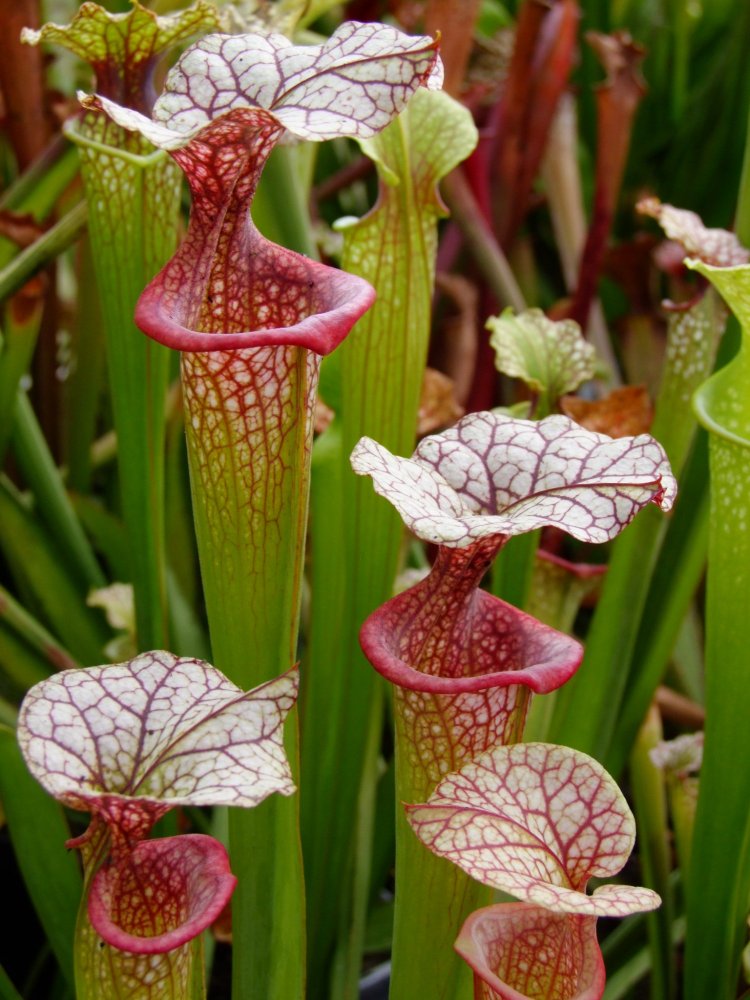
- Hybrid: the cross of two species, marked with an “x”. S. x moorei is the hybrid of S. flava and S. leucophylla; it also occurs in the wild.
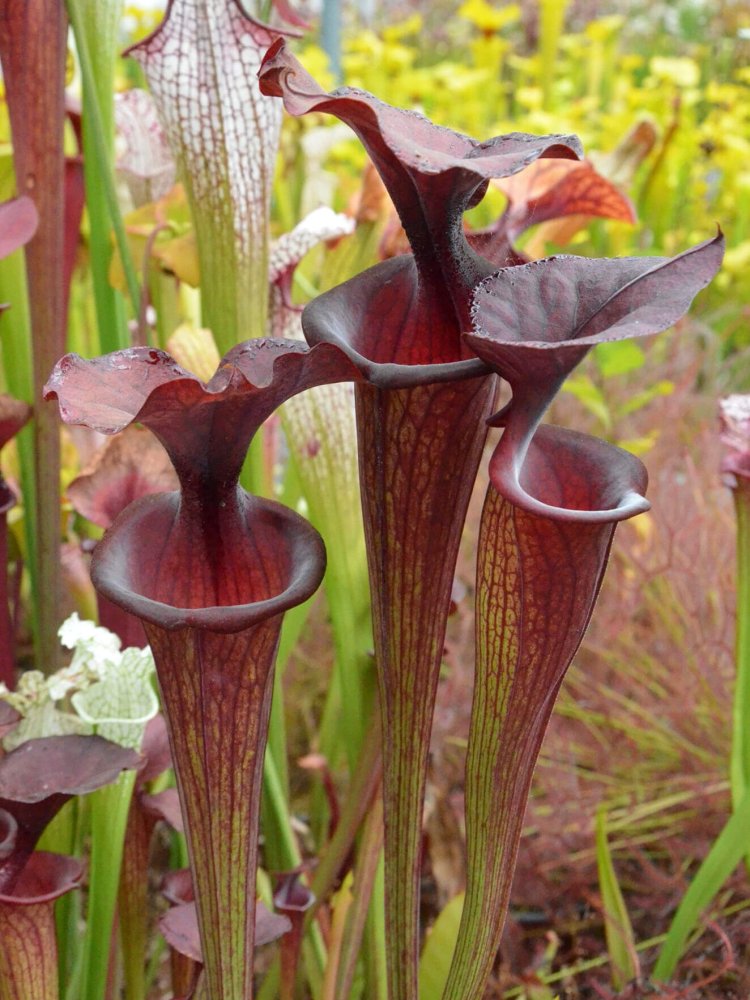
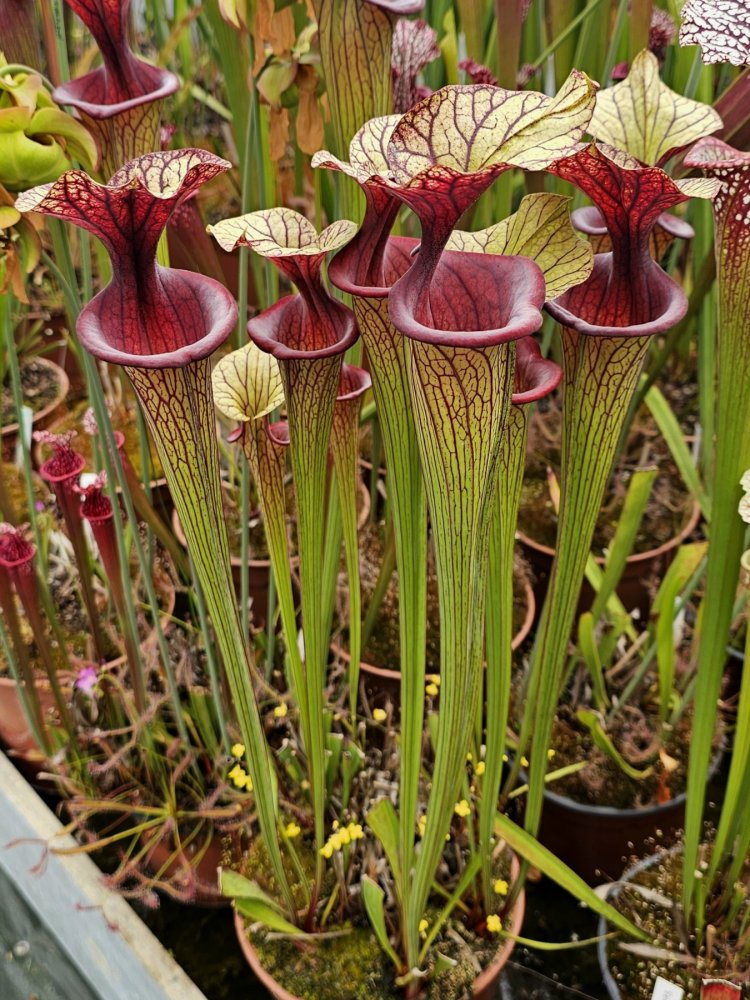
- Clone: all the plants that come from one same plant without going through seed (division or rhizome cuttings). They have exactly the same genetic make-up, so the same features, and also the same weaknesses. Each seed, on the other hand, gives a new clone. For example, 'Emilie brother' and 'Emilie father' are two clones we selected from the same cross. At the nursery, each clone has a code, such as “SF03” or “SL24”. A cultivar is often a single clone, but some group several clones that match the same description.
- Mutation: a natural or induced change. The petal-less flower of S. leucophylla 'Tarnok' is a fine example.
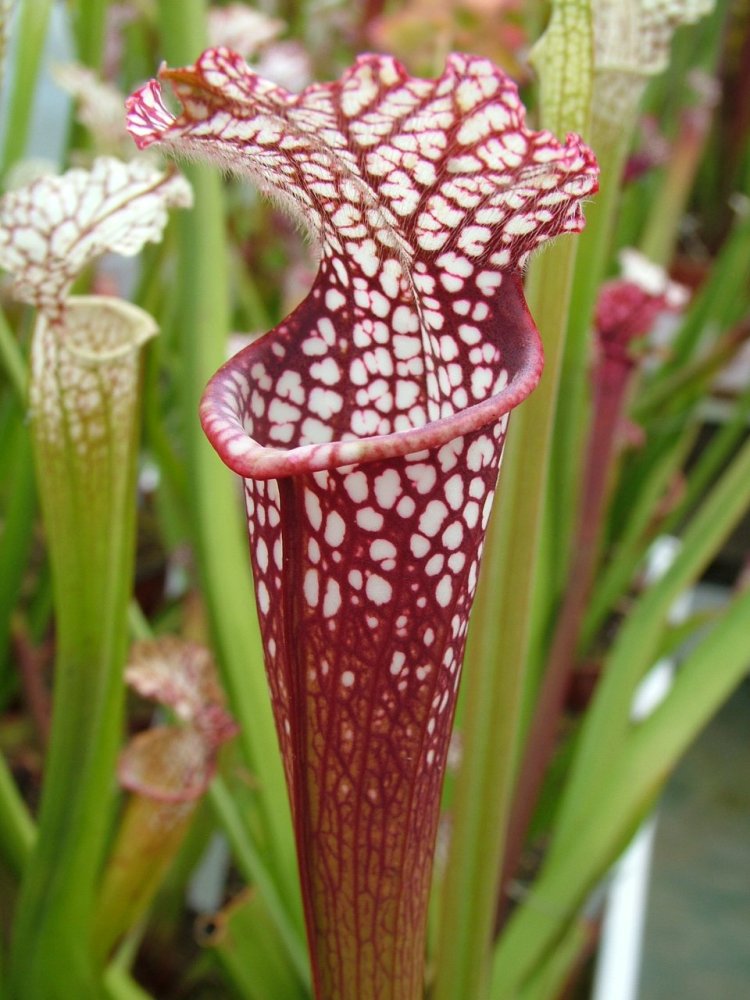
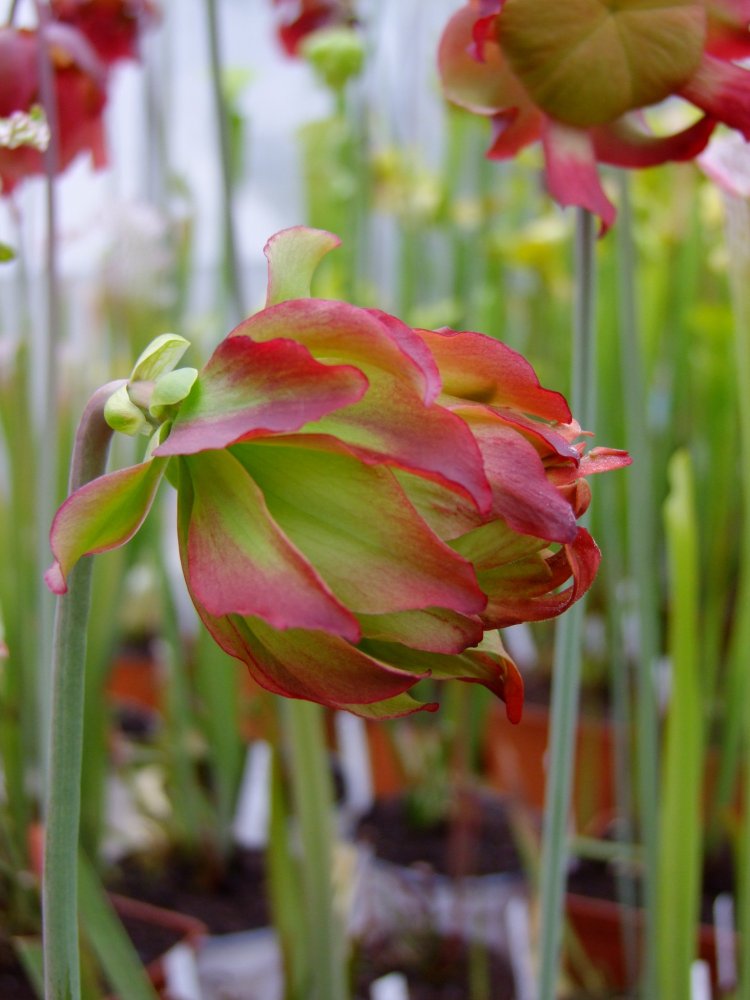
You will find all these names in our Sarracenia collection, and our own selections in our Sarracenia cultivars.
A question about your Sarracenia?
✉ Contact us© 2026 Cédric Carnivores - Carnivorous plant nursery since 2012
Share this article: