Français
 Español
 Deutsch
 Italiano

Sarracenia flowers: blooming, colours and curiosities


The Sarracenia flower
The first sign of spring
Blooming stages, colours, scents, curiosities: everything more than 30 years of growing have taught us about Sarracenia flowers.
Long before the pitchers, it is the flowers that announce the end of winter in our greenhouses. This article comes from the « Flower » chapter of “Les sarracenia en images”, the book Cédric wrote from his experience at the nursery. All photos are ours.
The stages of blooming
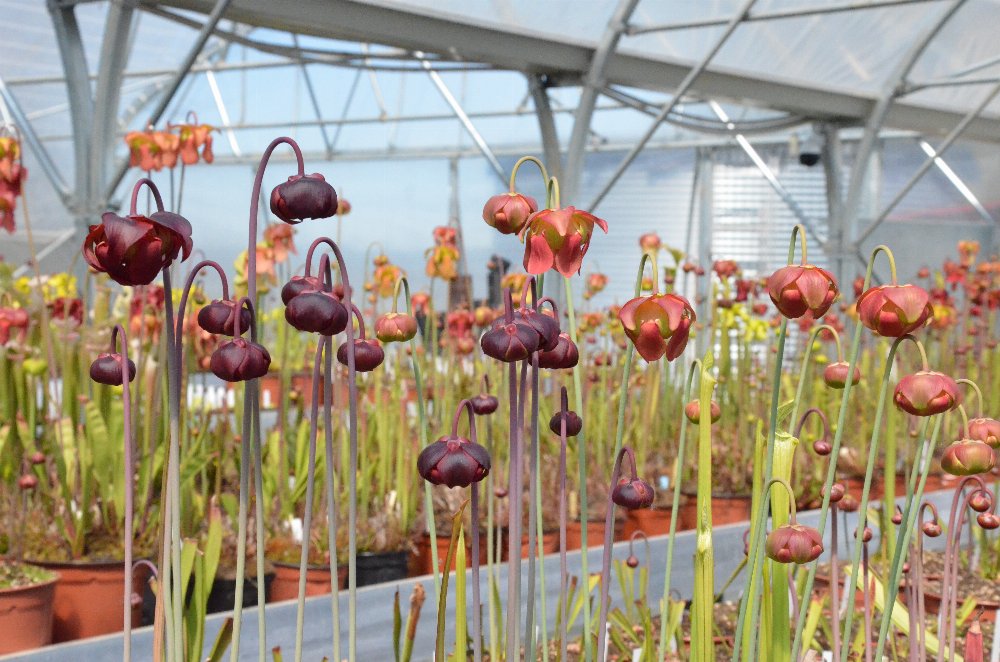
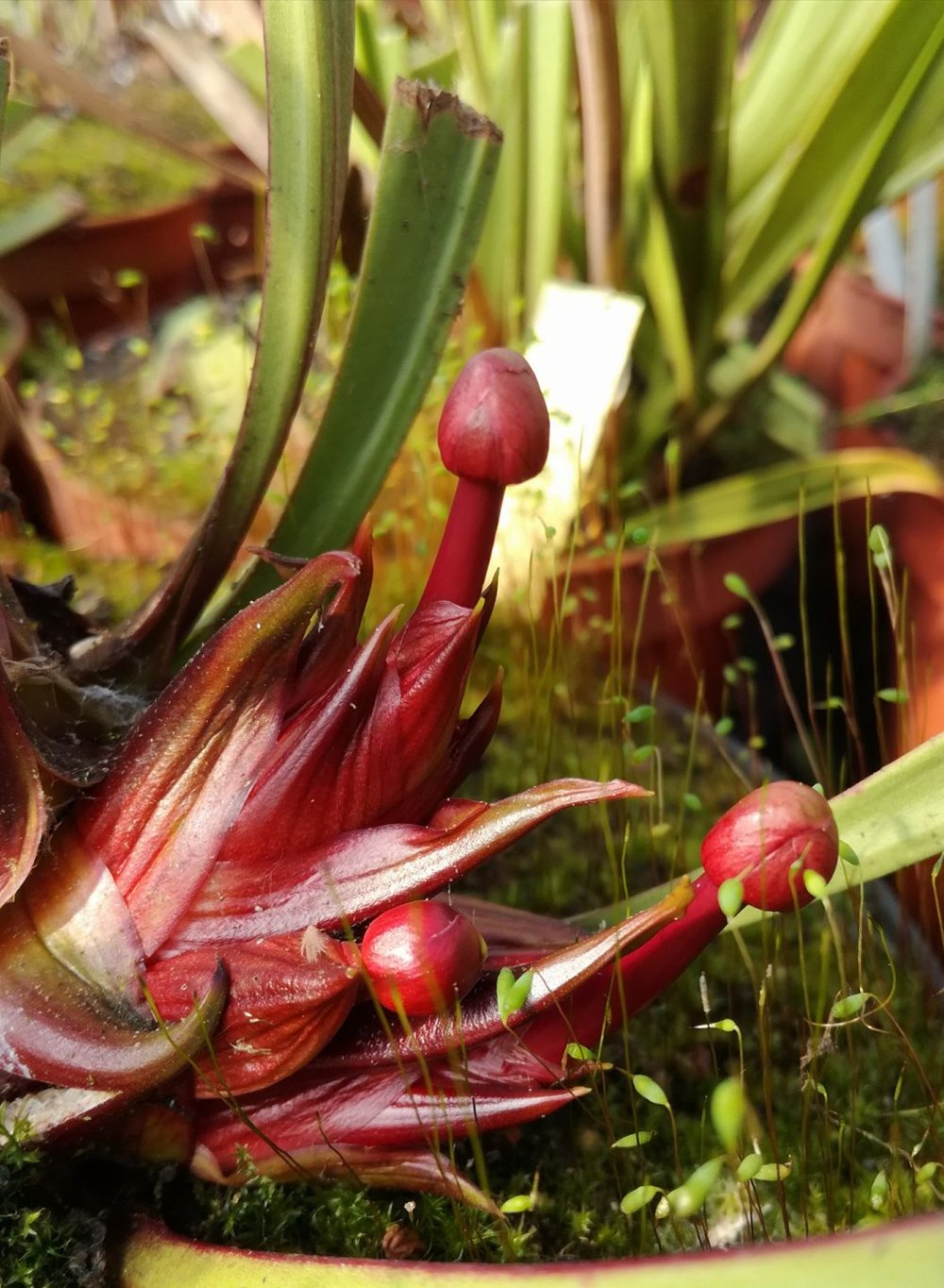
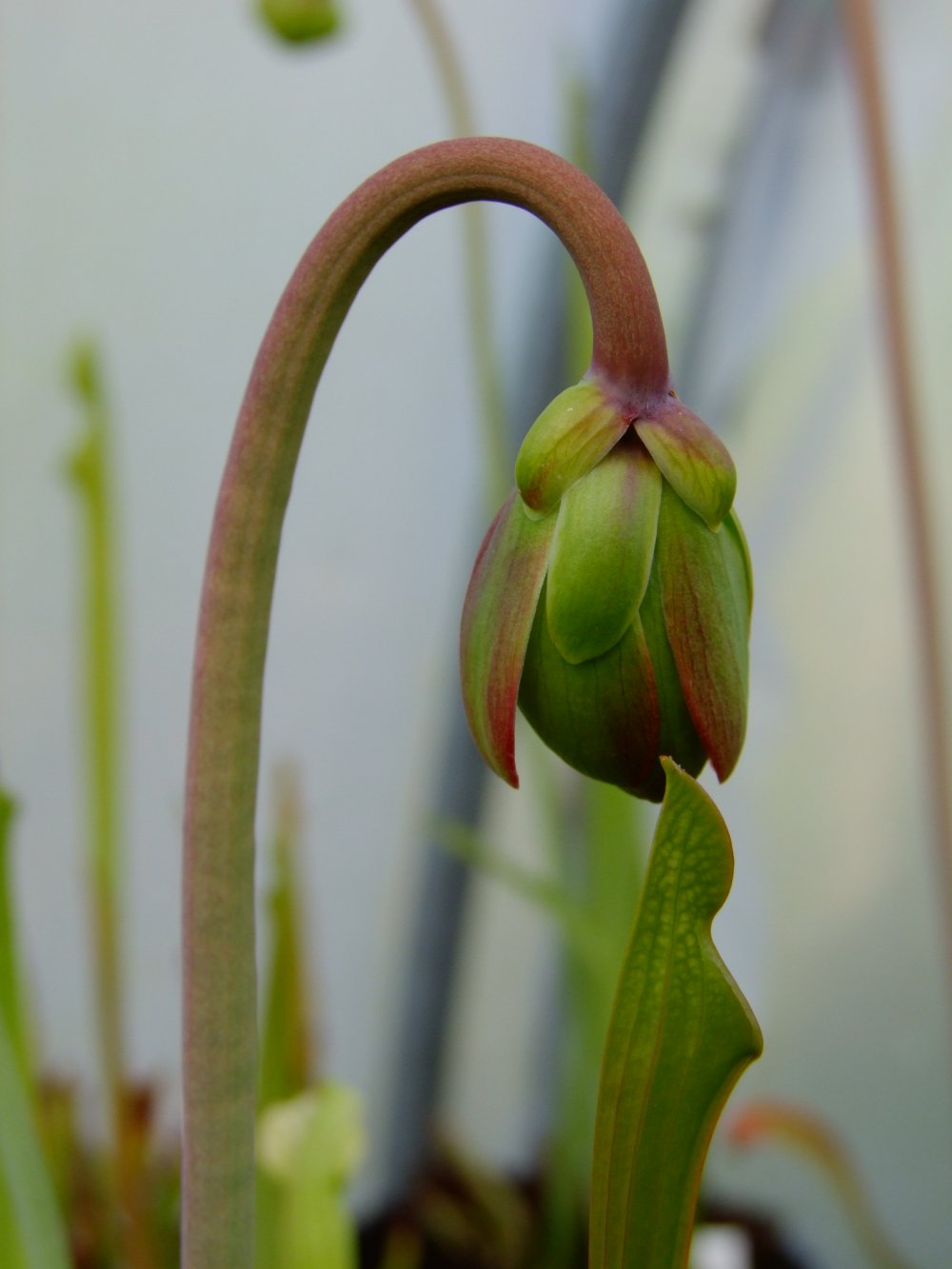
Blooming marks the return of growth after the long months of winter rest. First sign: the scales protecting the tip of the rhizome open to let the flower buds through. It then takes about three weeks for the stalk to be fully formed and the flower to open.
Blooming starts from late February and goes on until June for the latest ones. Climate and set-up (greenhouse, outdoors, bog garden) bring it forward or delay it. S. flava and S. oreophila open their flowers first, followed by S. purpurea, S. leucophylla, S. alata, S. minor, S. psittacina and finally S. rubra.
A little-known feature: blooming creates a break in the rhizome, which leads to a doubling of the growing point. A plant that flowers is therefore often preparing a fuller clump.
A flower like no other
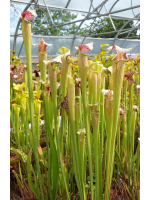
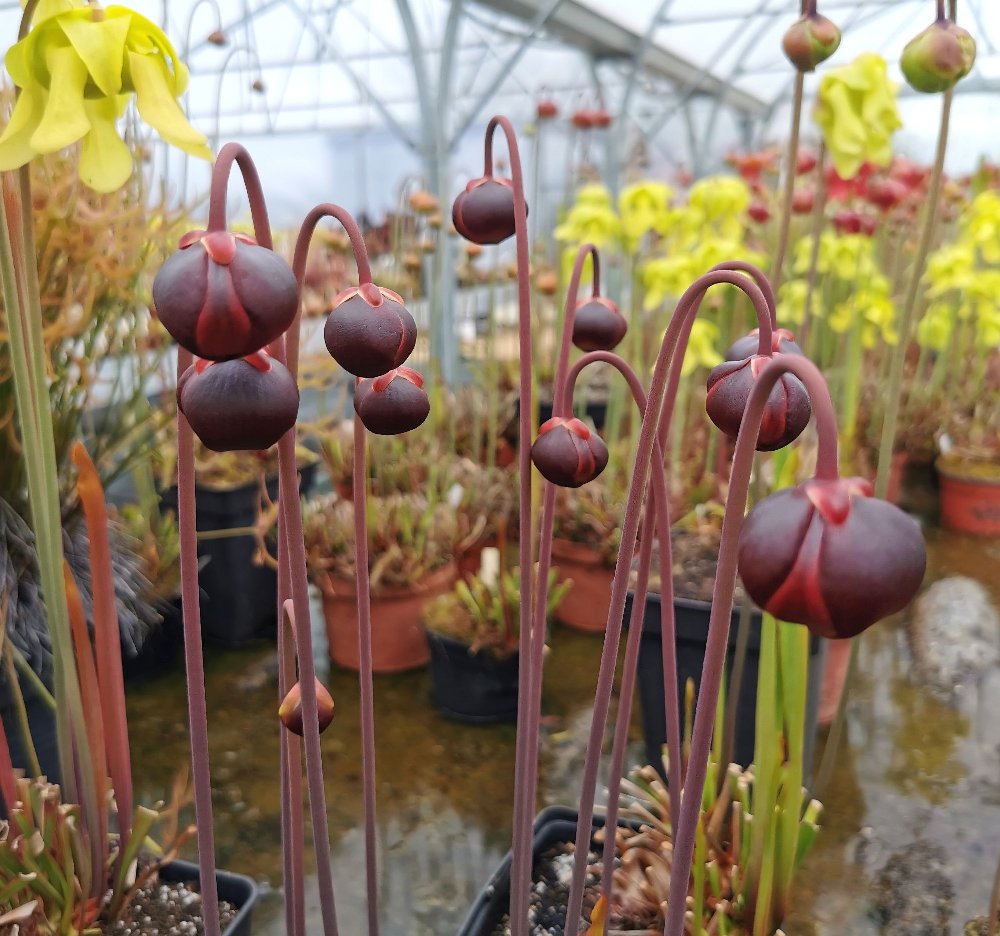
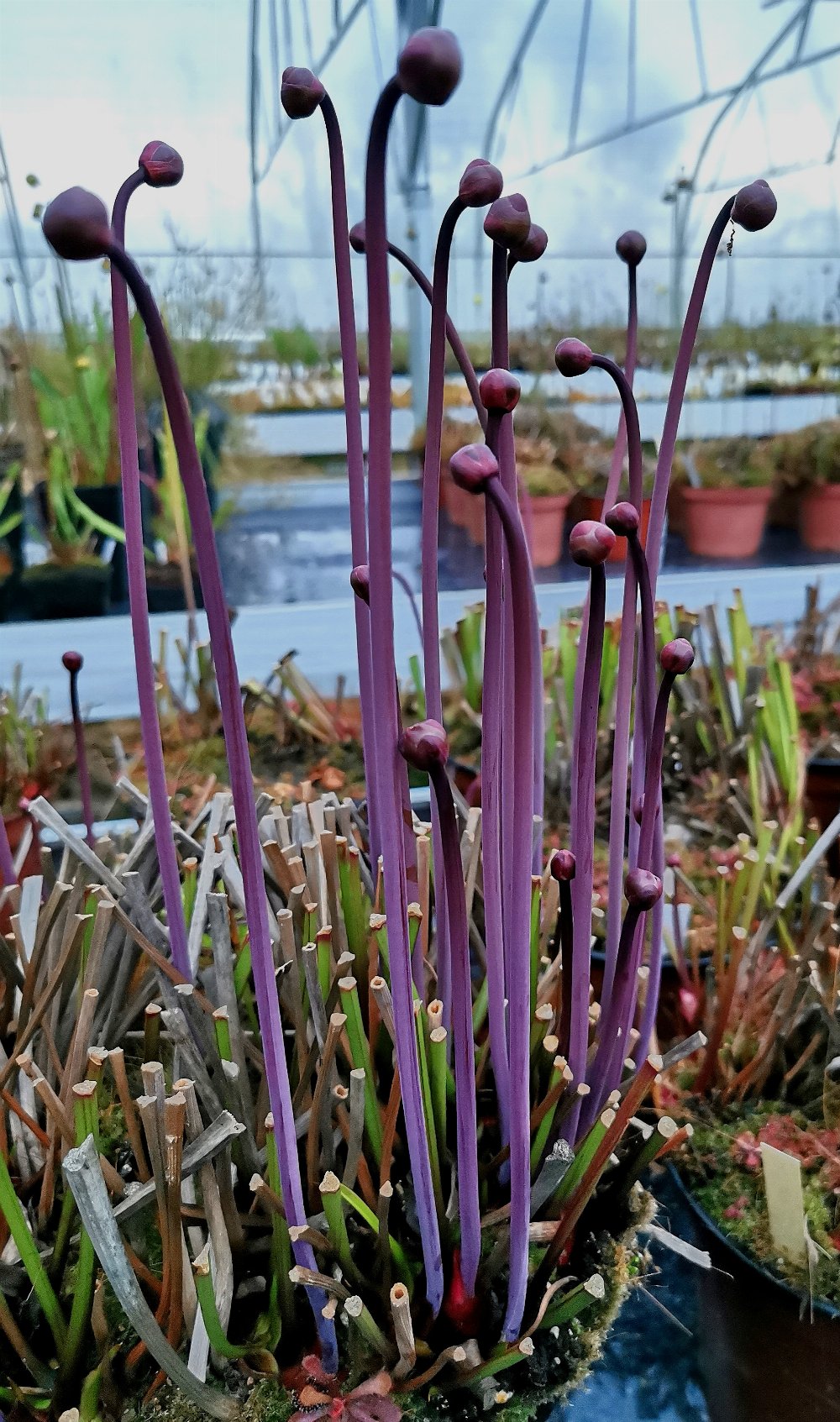
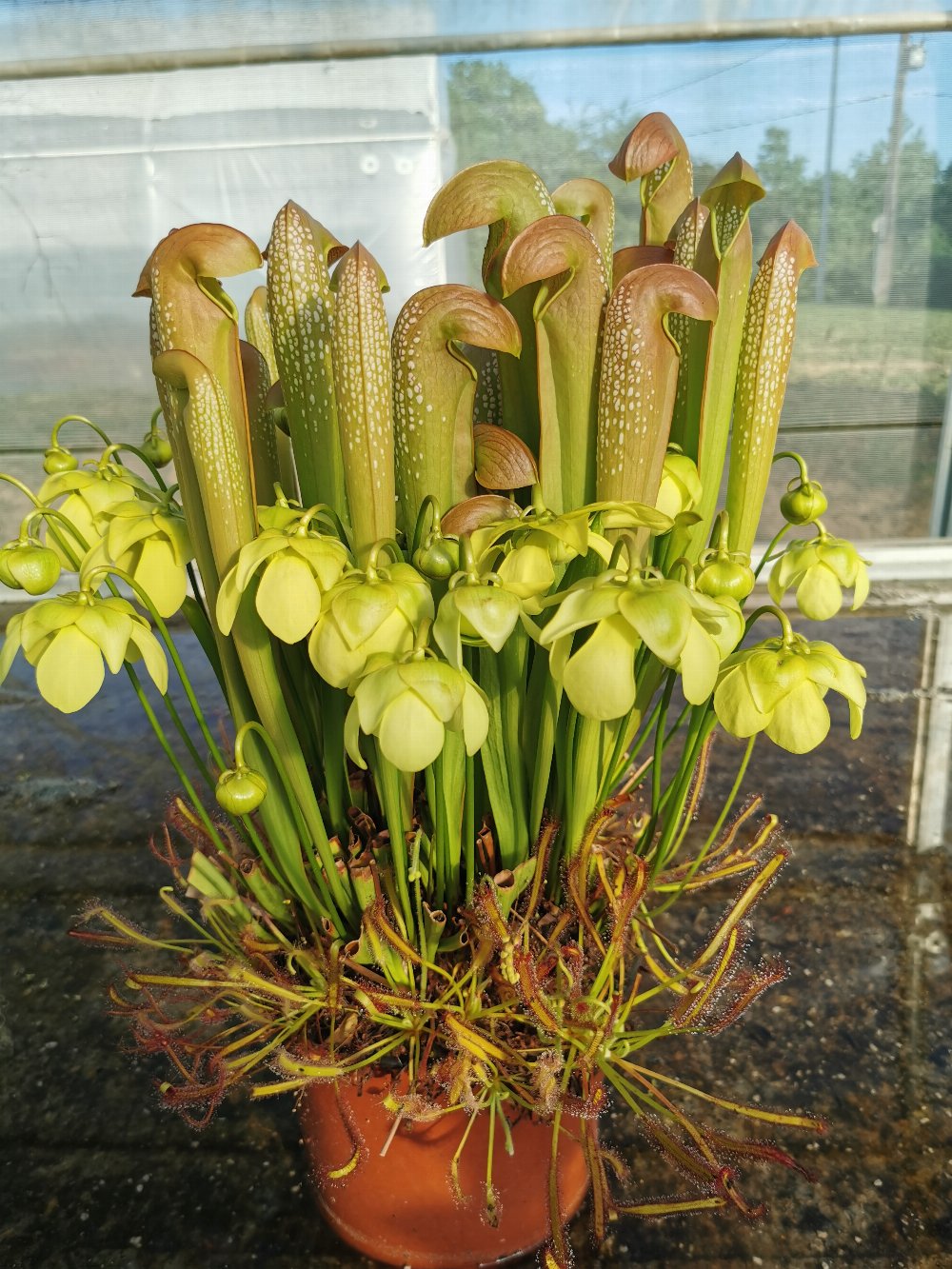
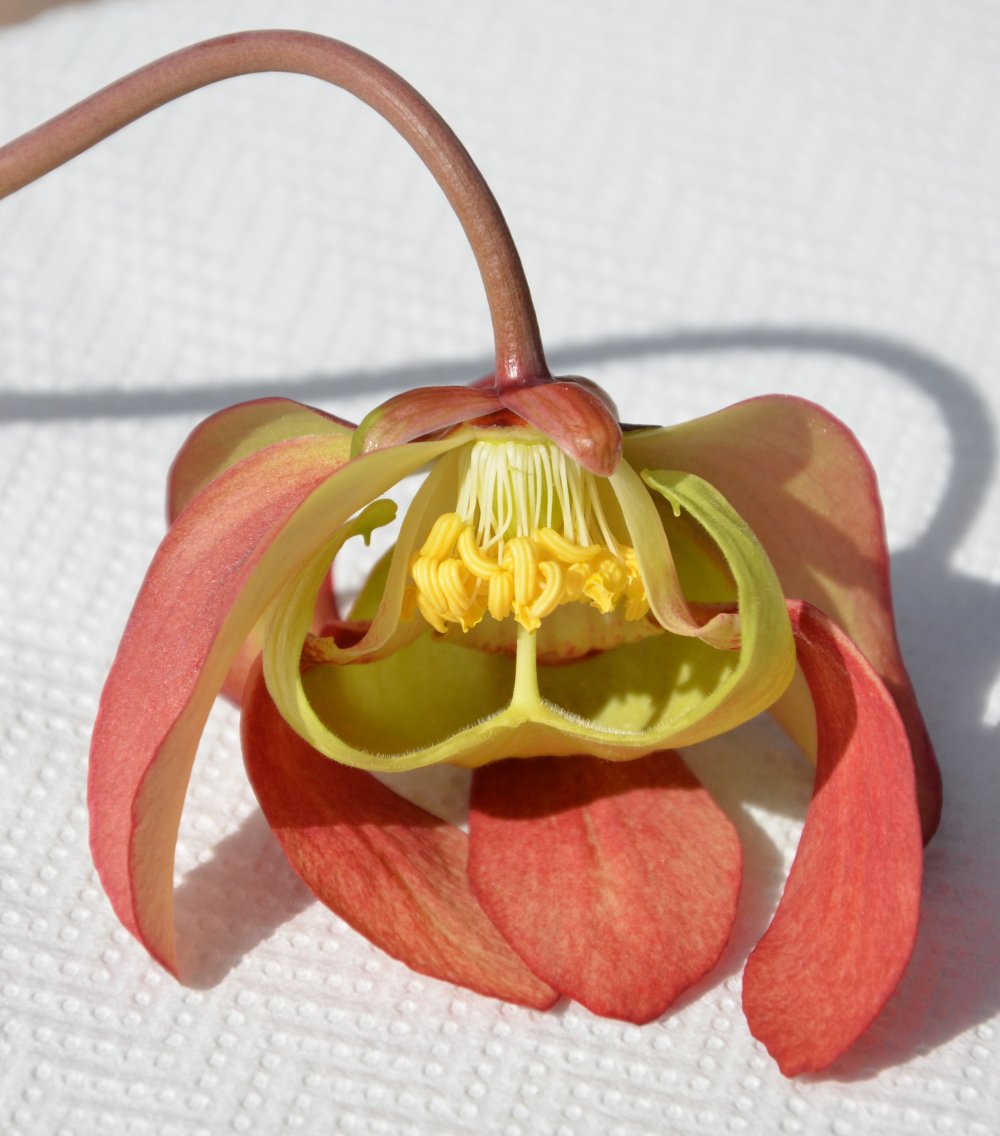
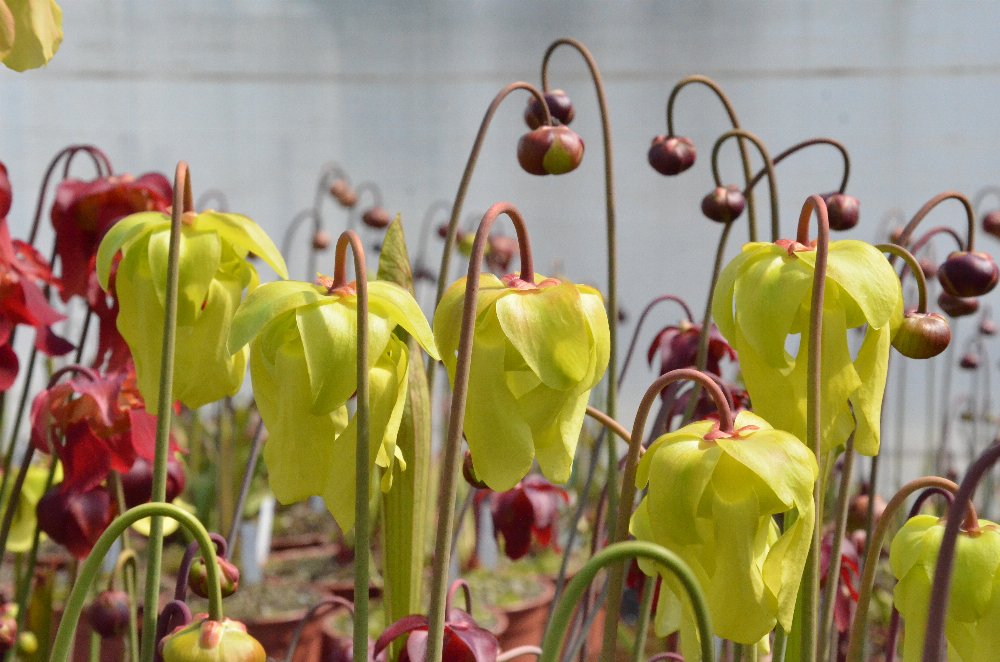
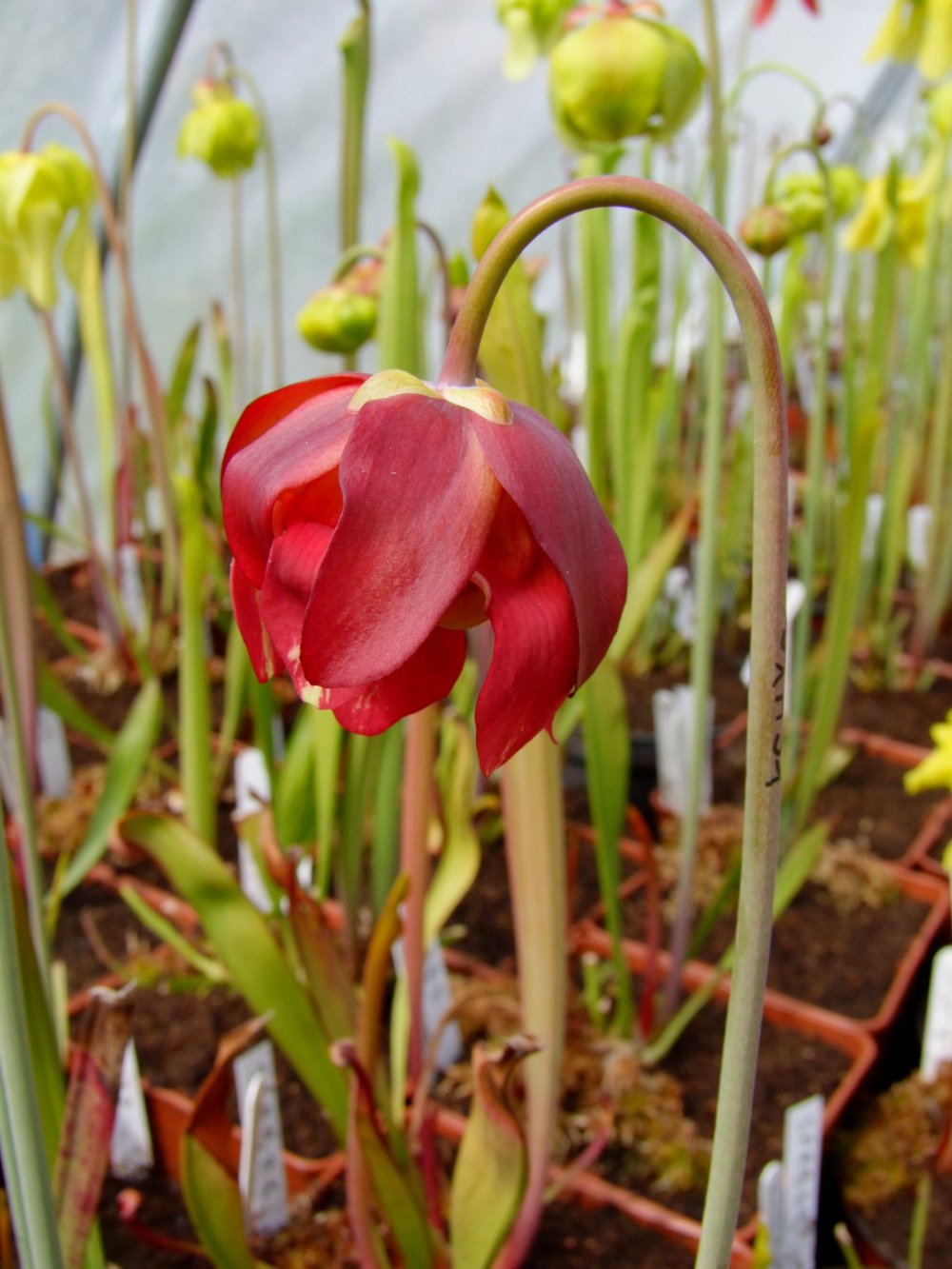
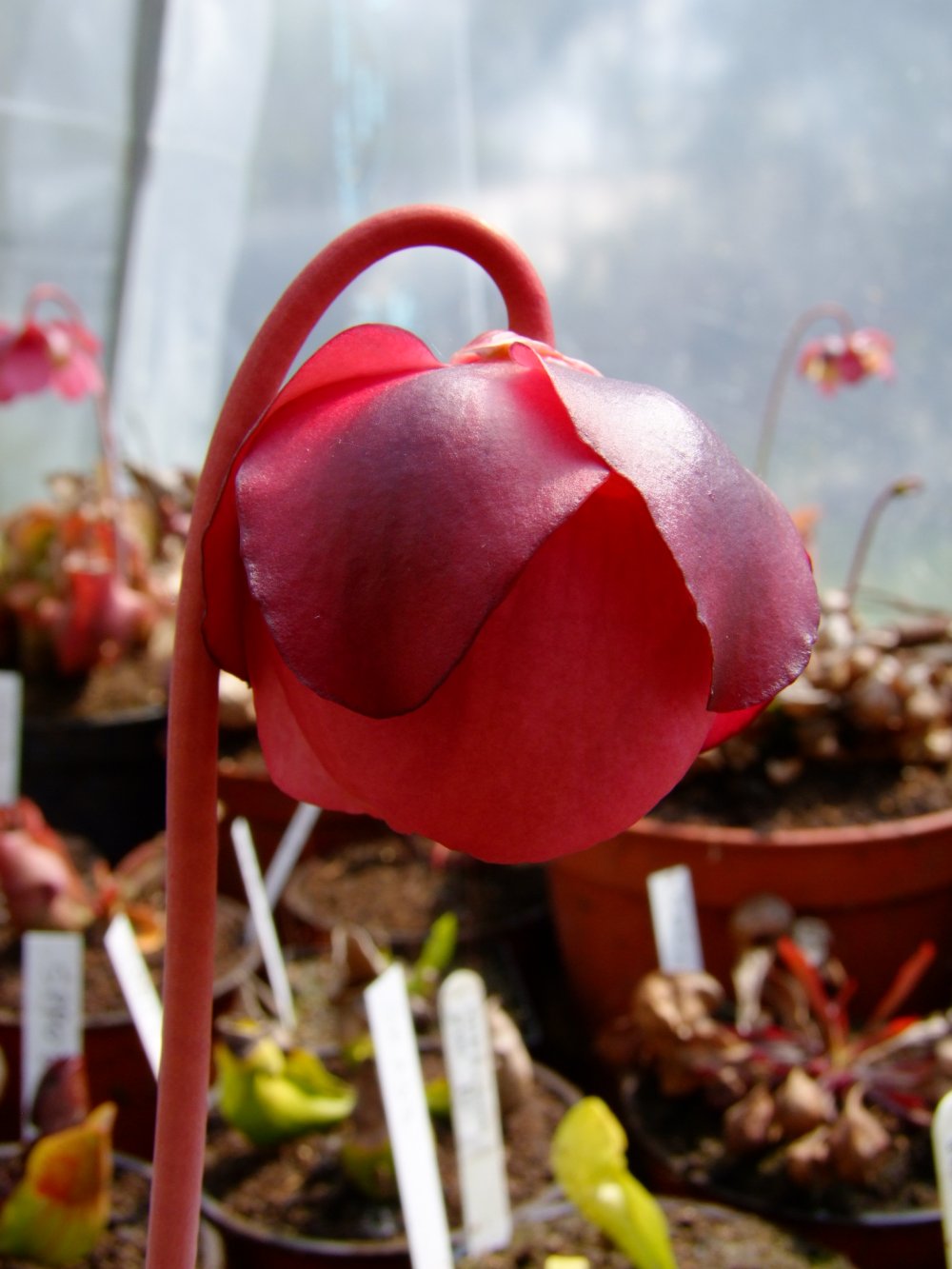
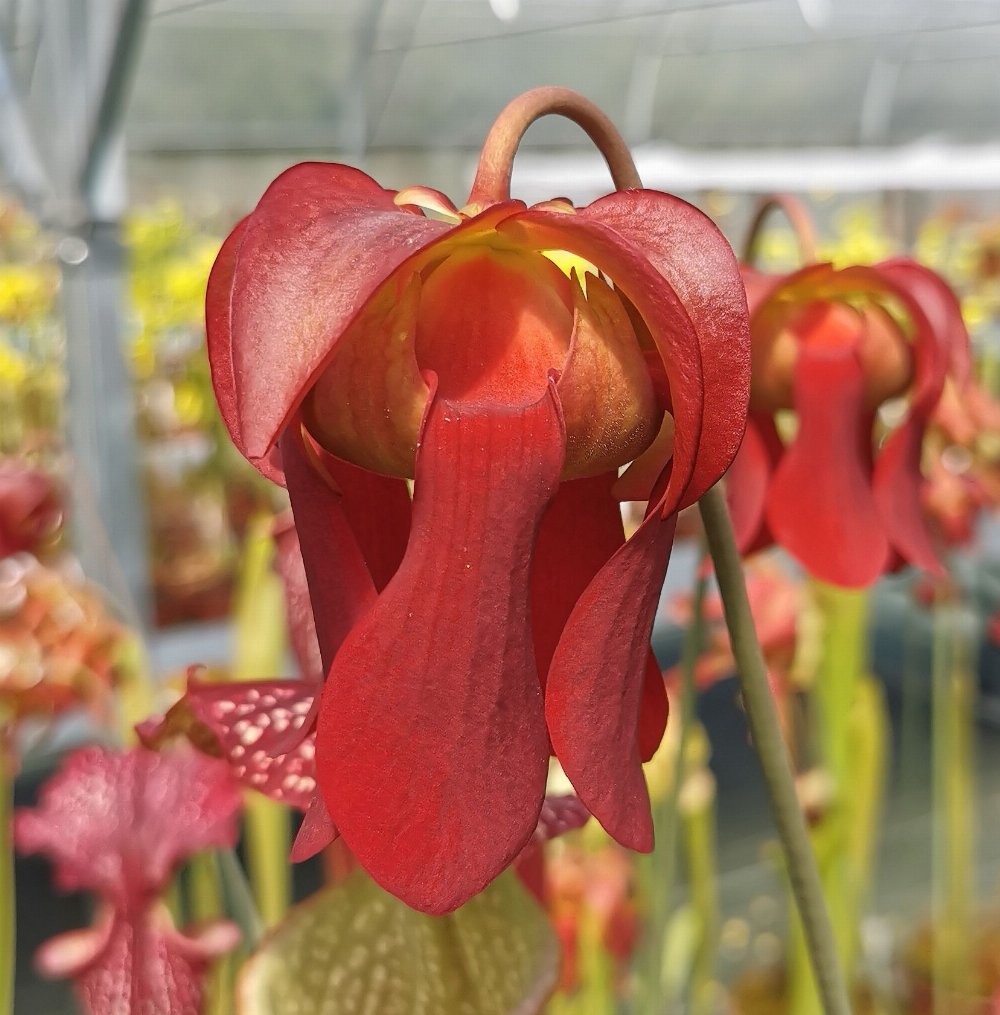
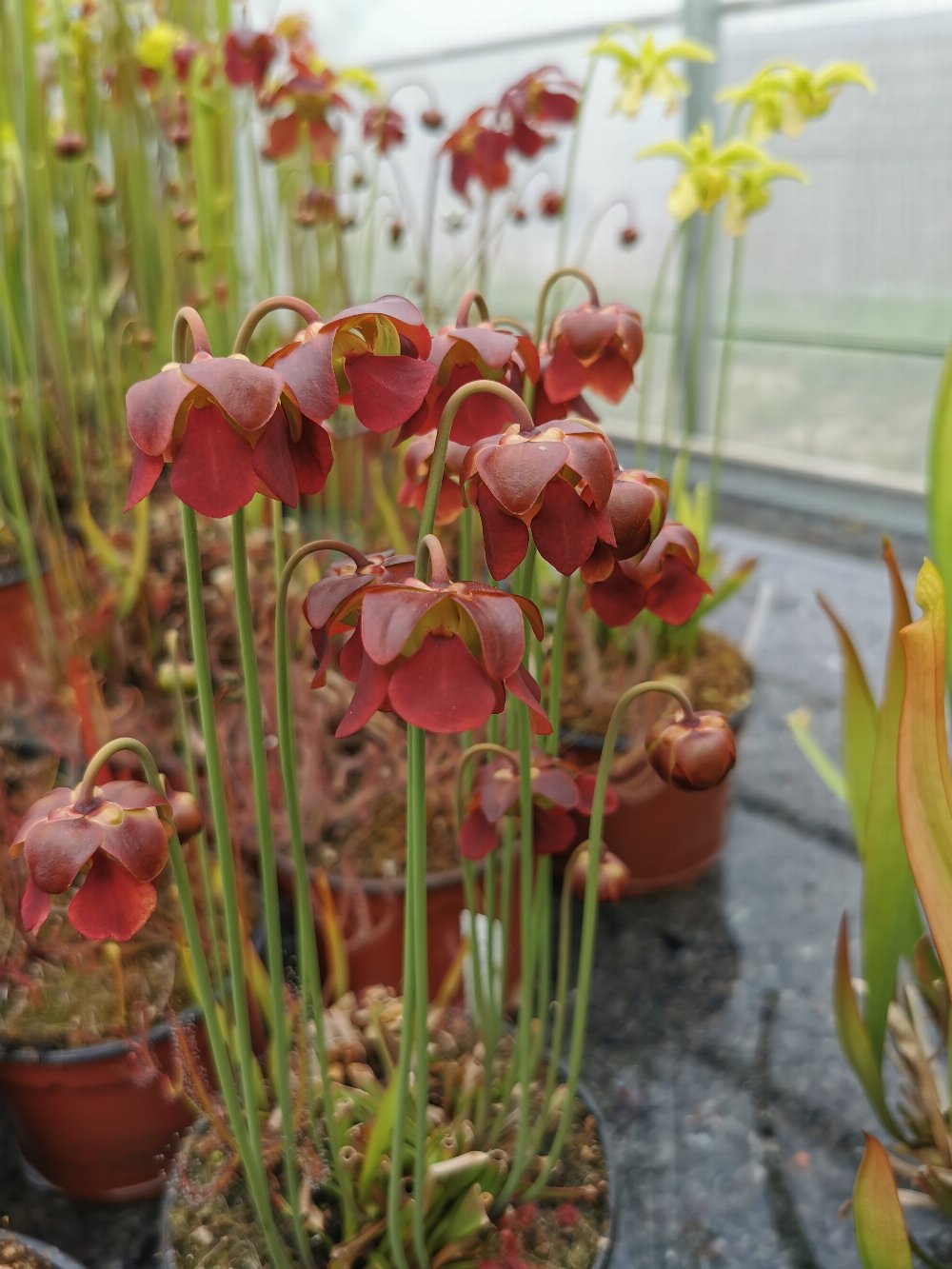
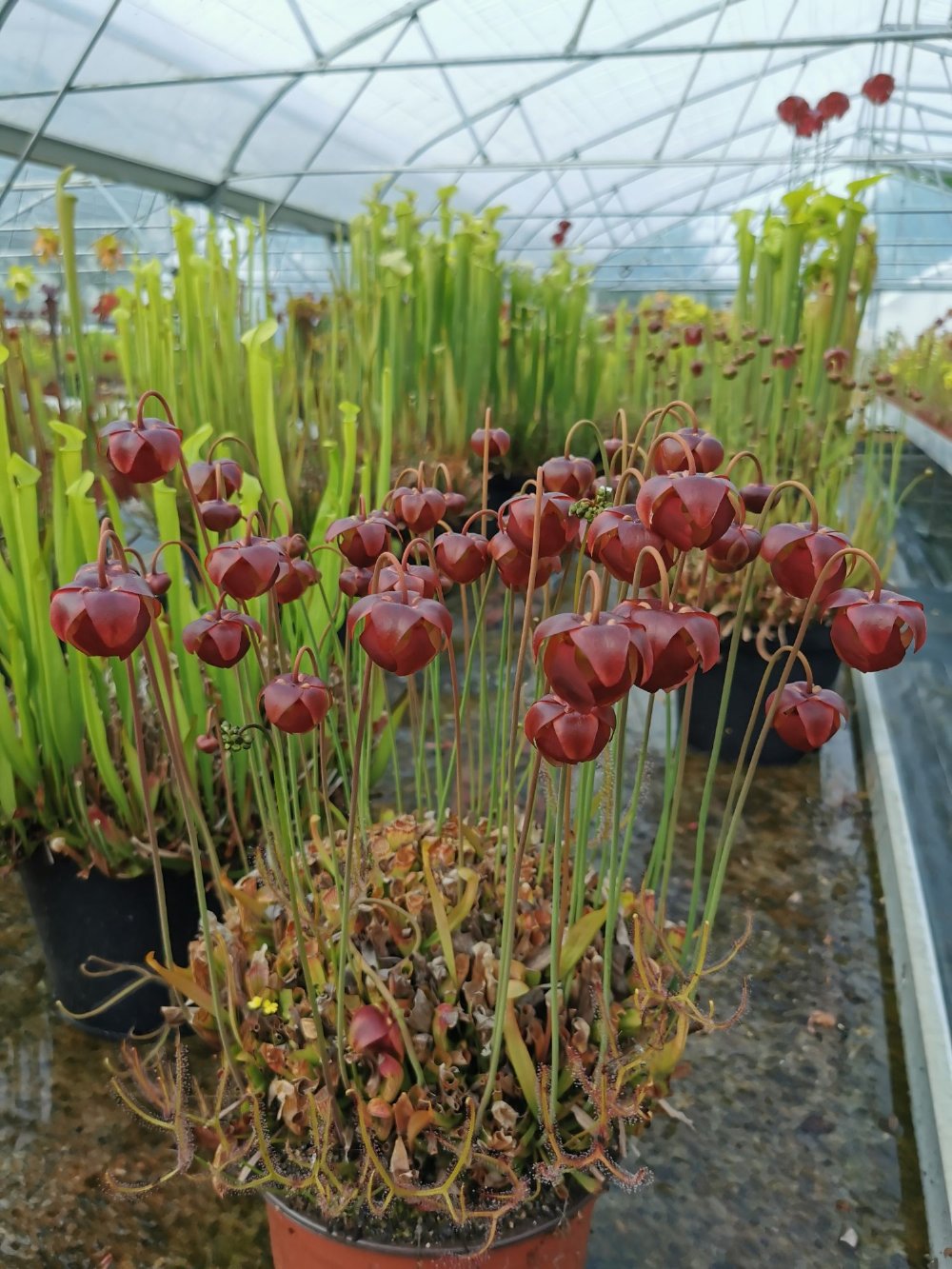
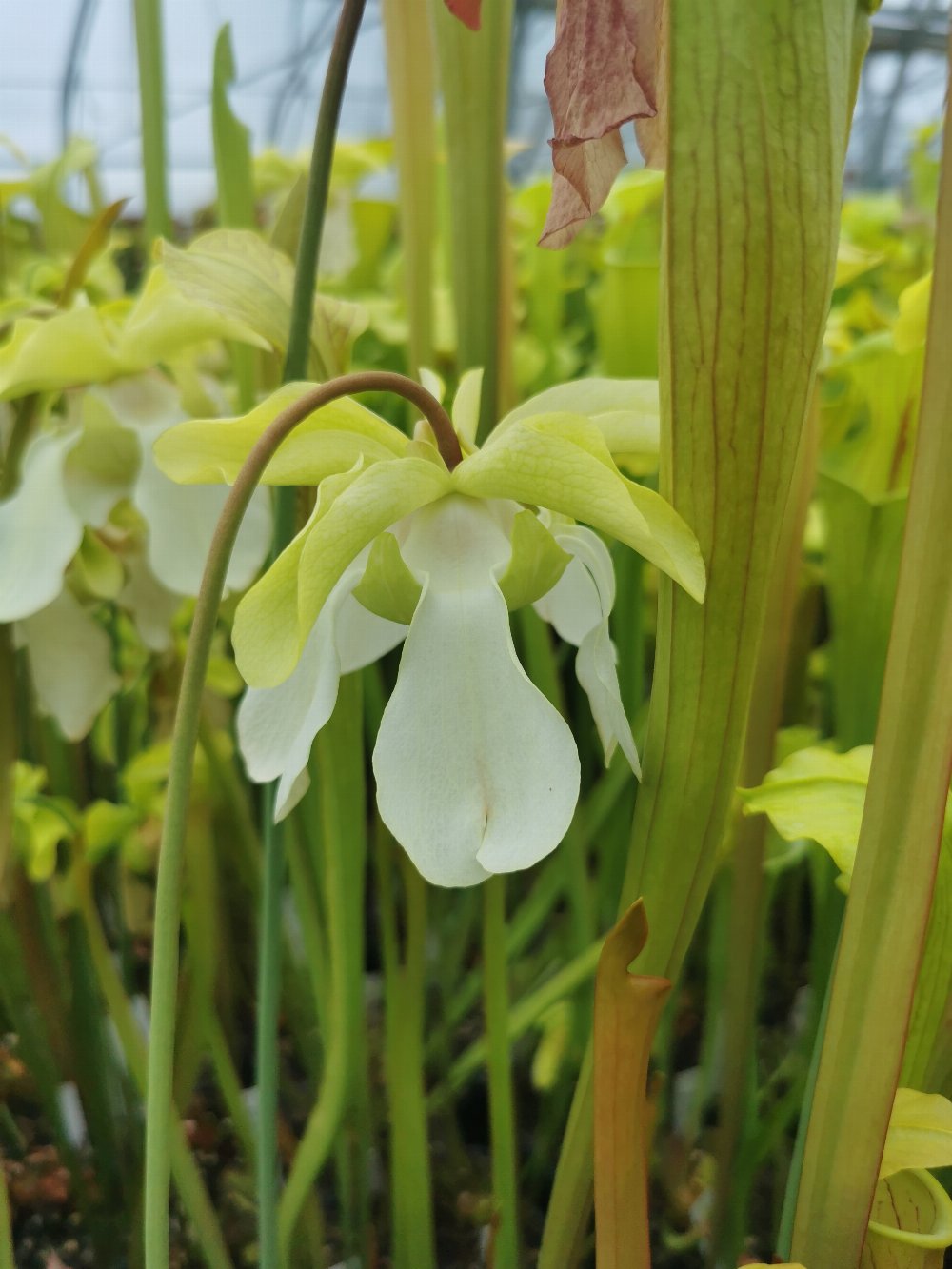
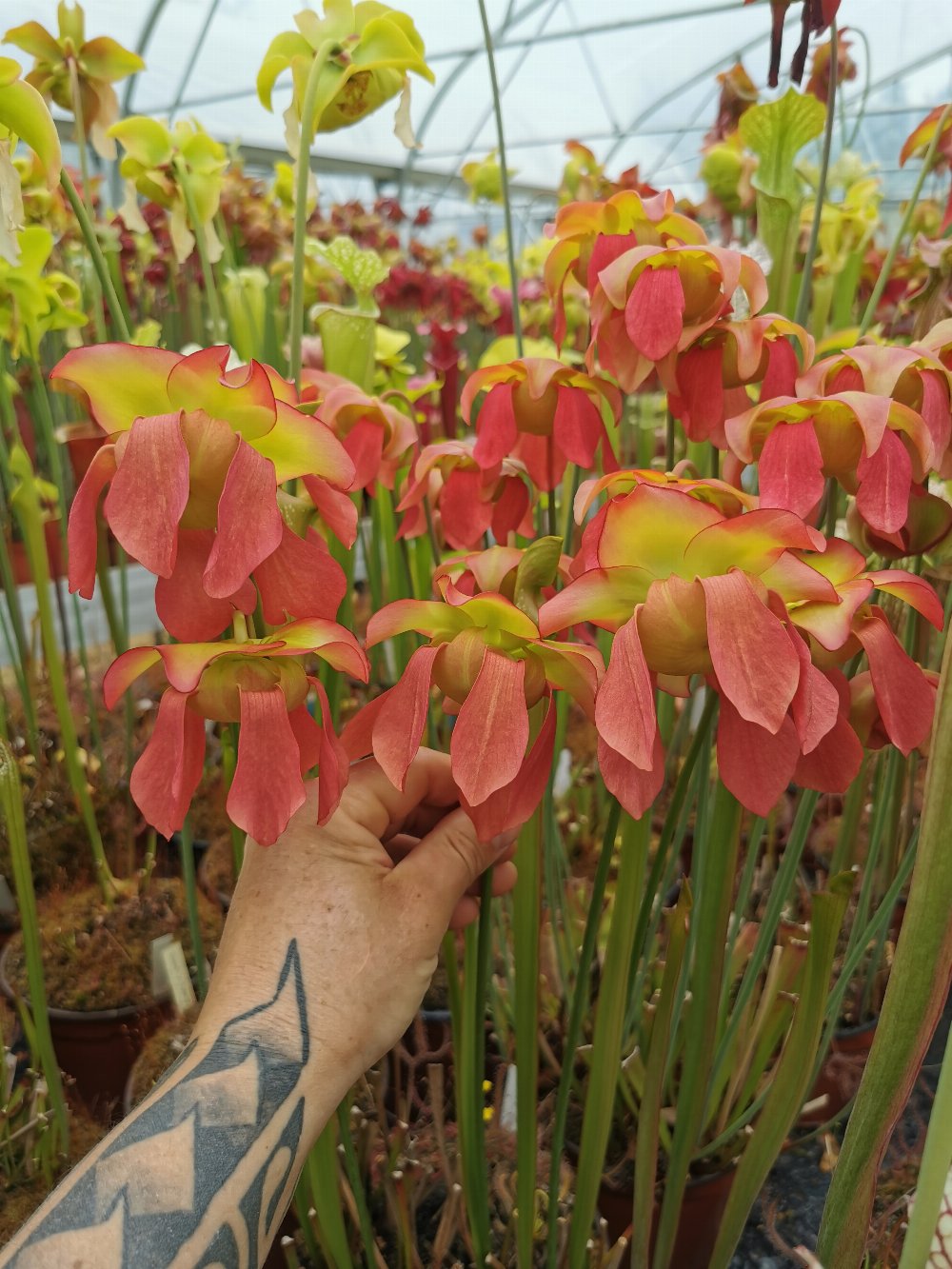
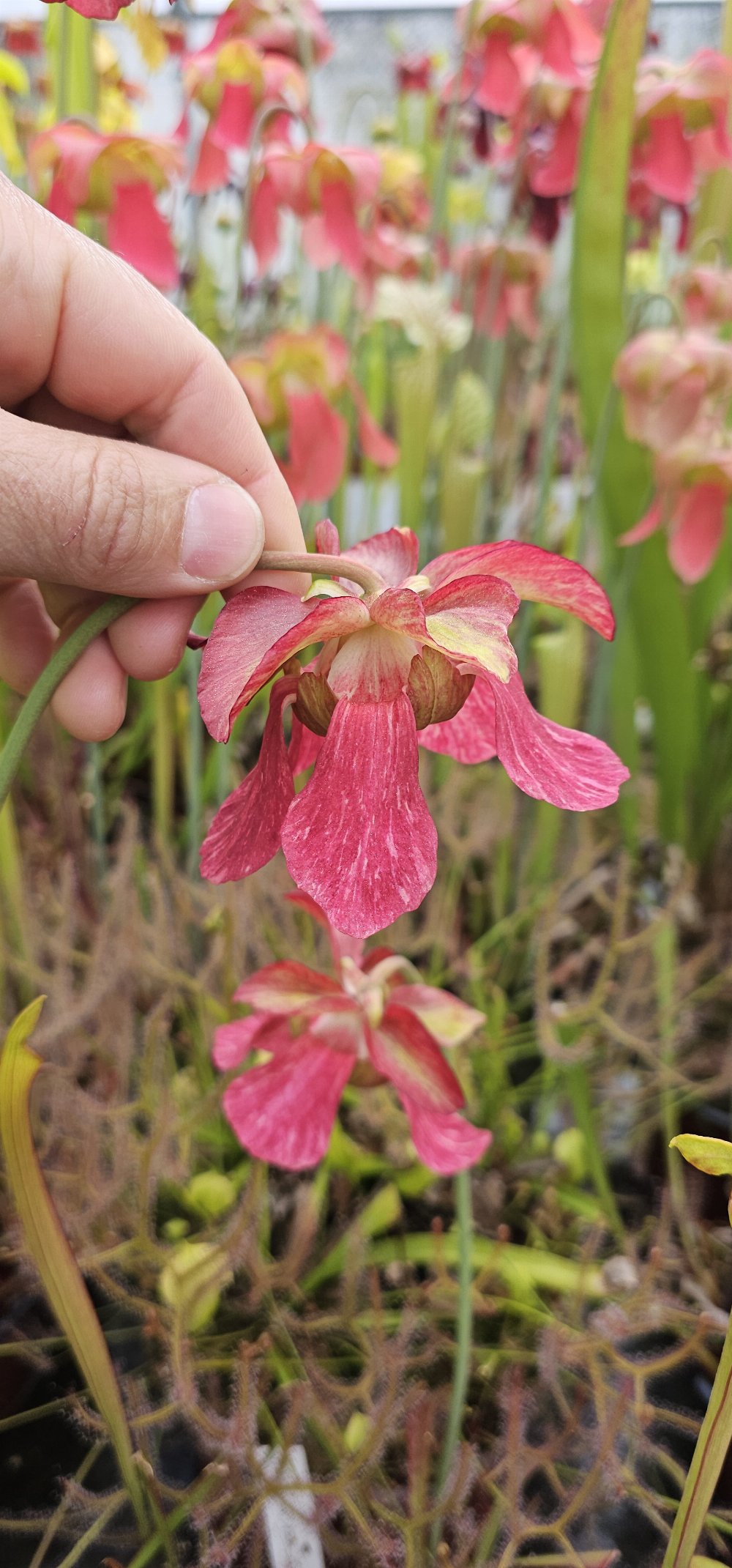
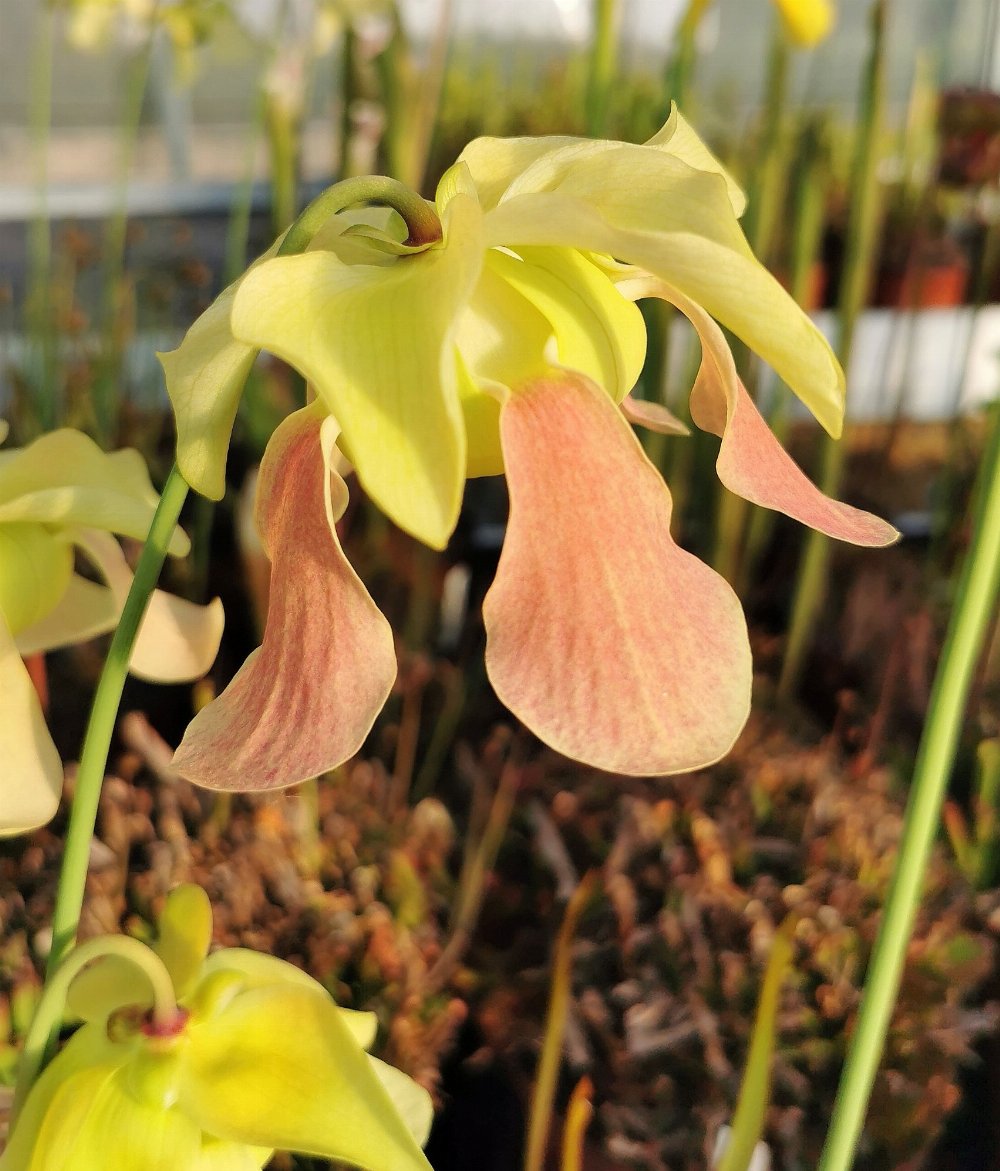
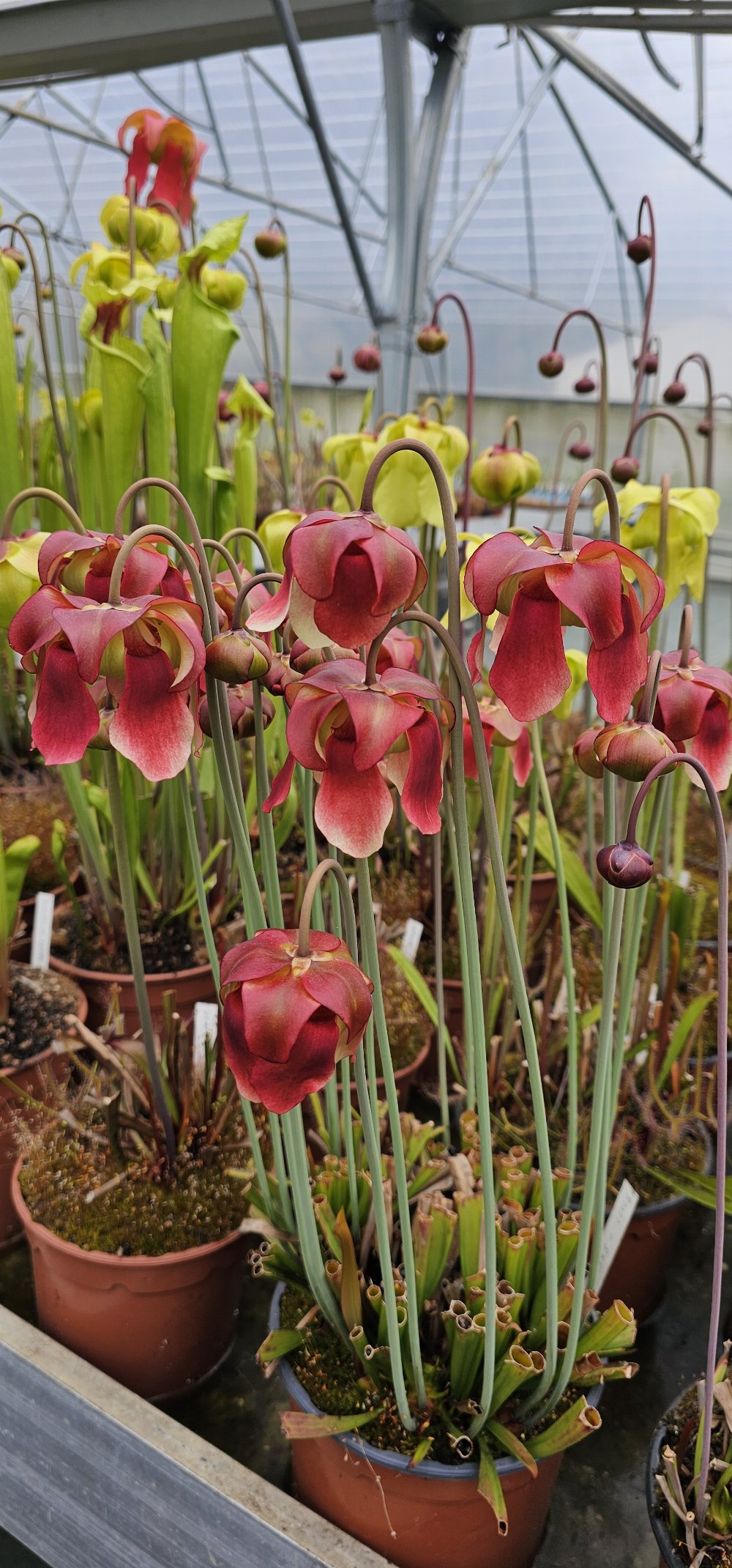
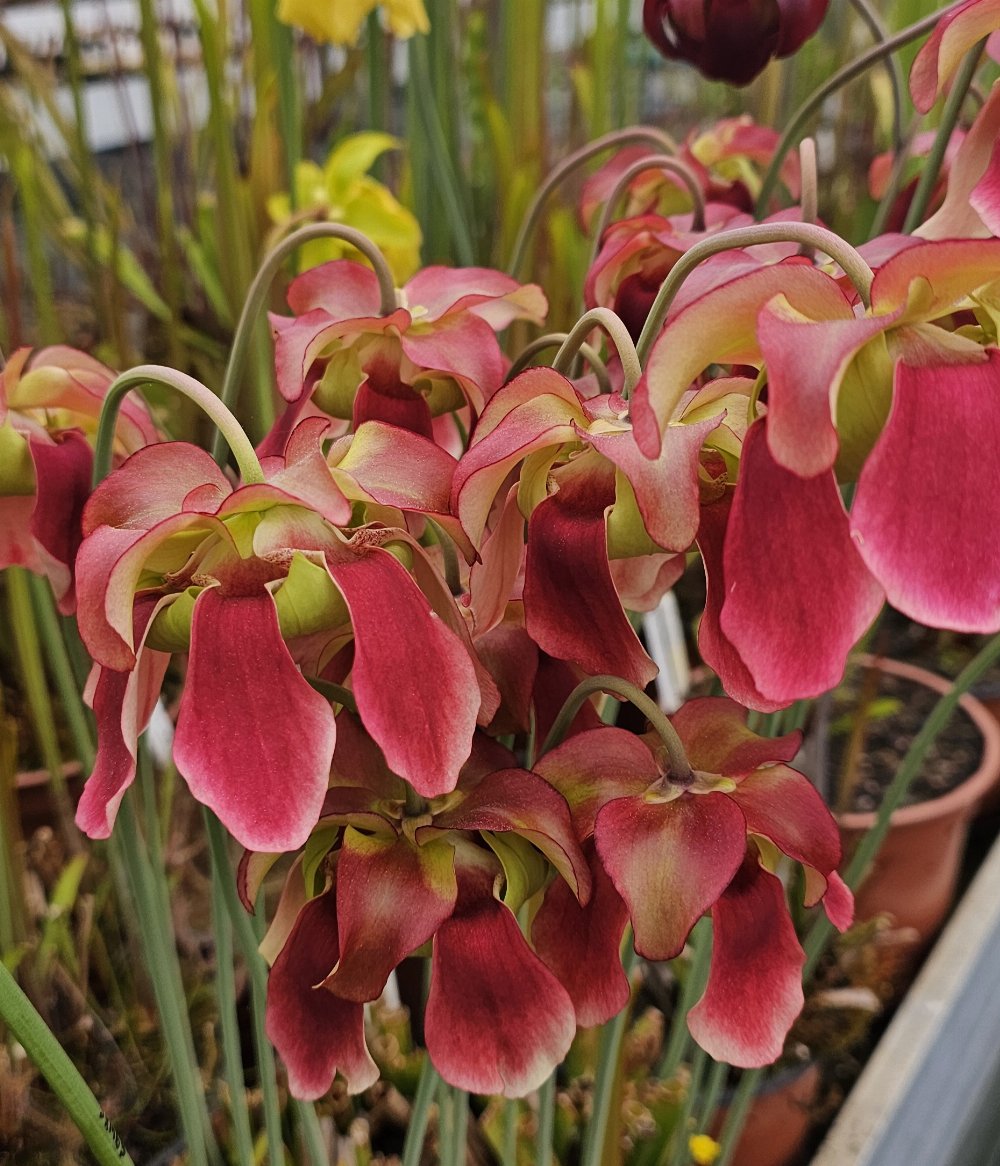
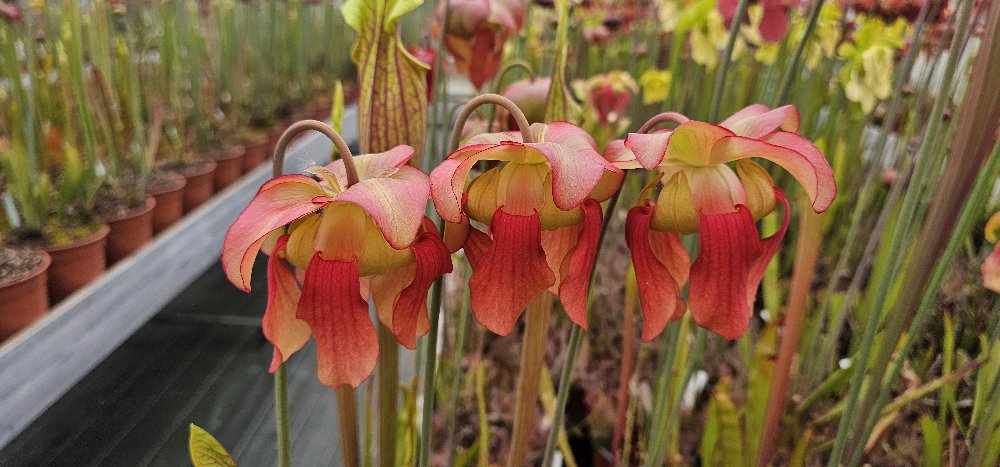
The Sarracenia flower hangs upside down at the end of a long stalk. Its shape is the same in every species: five sepals, five drooping petals, and in the centre a wide “umbrella”, the style, which bears five stigmas at its tips. Pollen from the stamens falls and collects at the bottom of this umbrella: that is where we take it for our crosses.
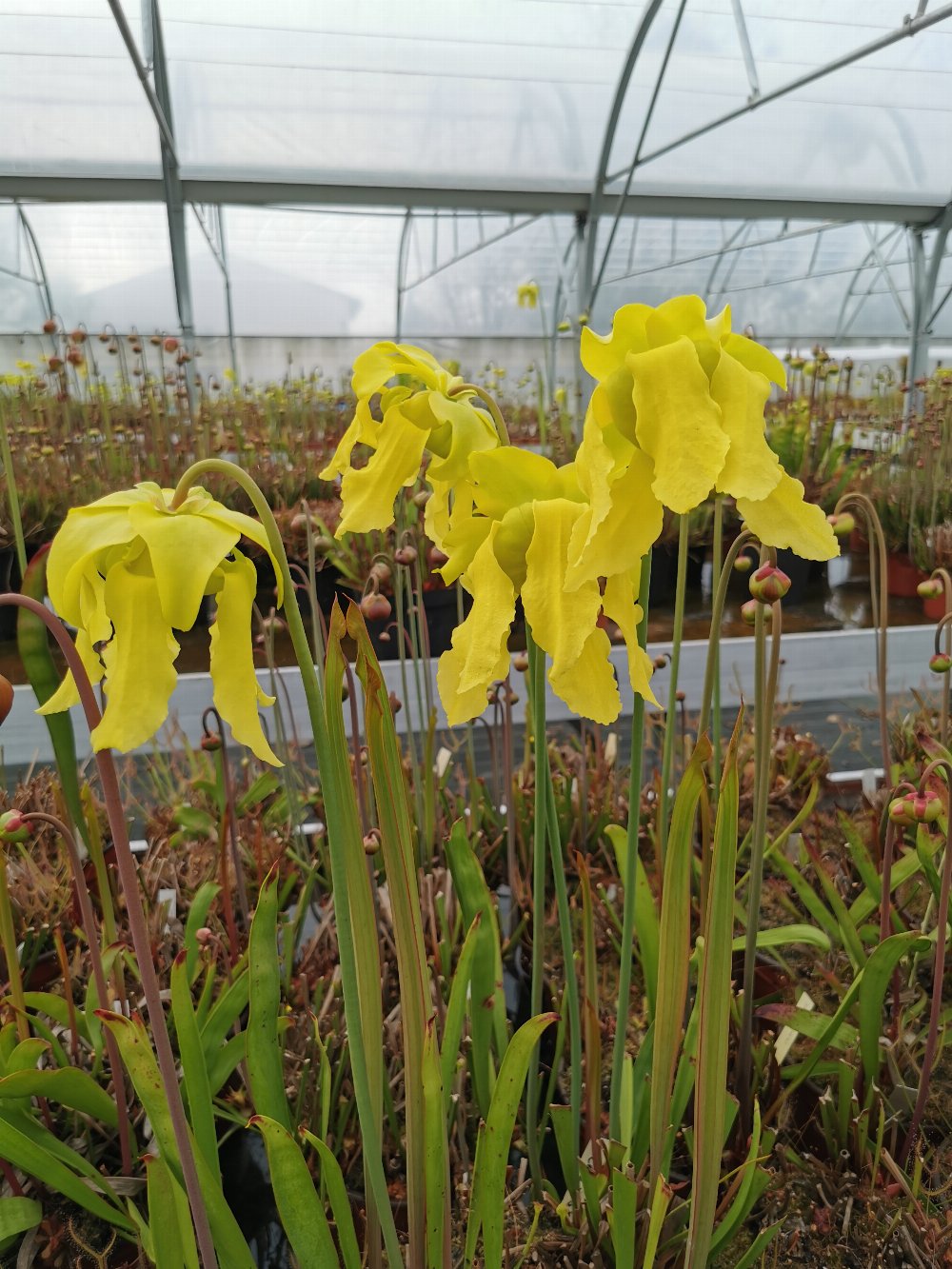
The stalk is 10 cm to 1 m tall depending on the species, and the flower 3 to 13 cm across. The largest are produced by S. flava, S. leucophylla and the x moorei hybrids. In S. flava, the stalk reaches 60 to 80 cm and the flower 6 to 8 cm: these are the largest flowers of the genus.
Colours and scents
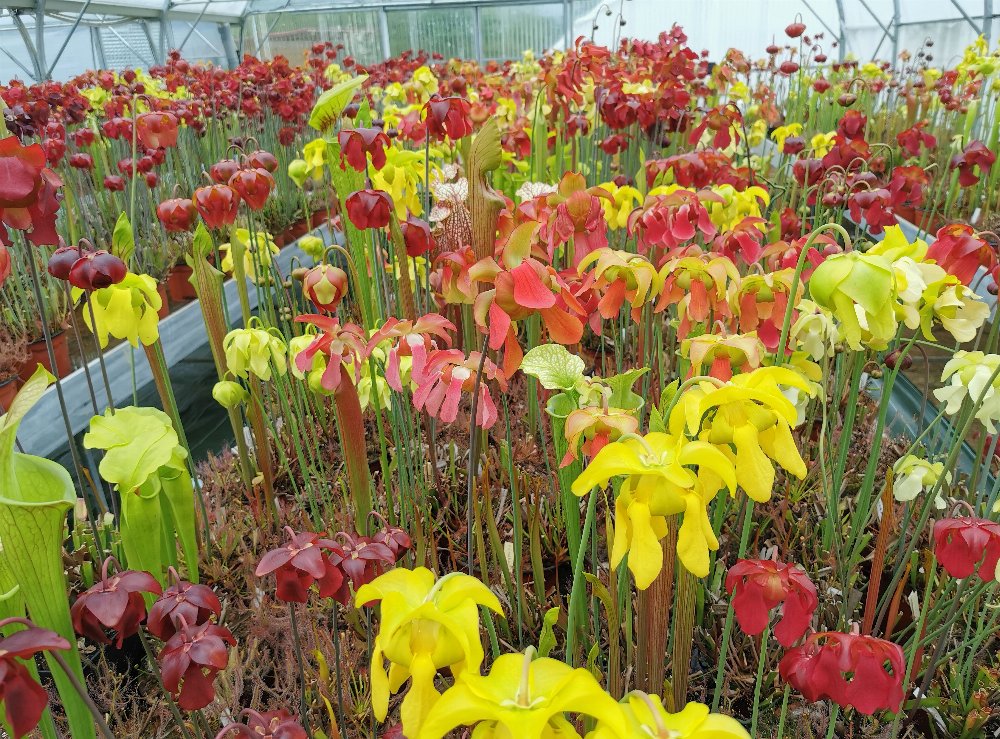
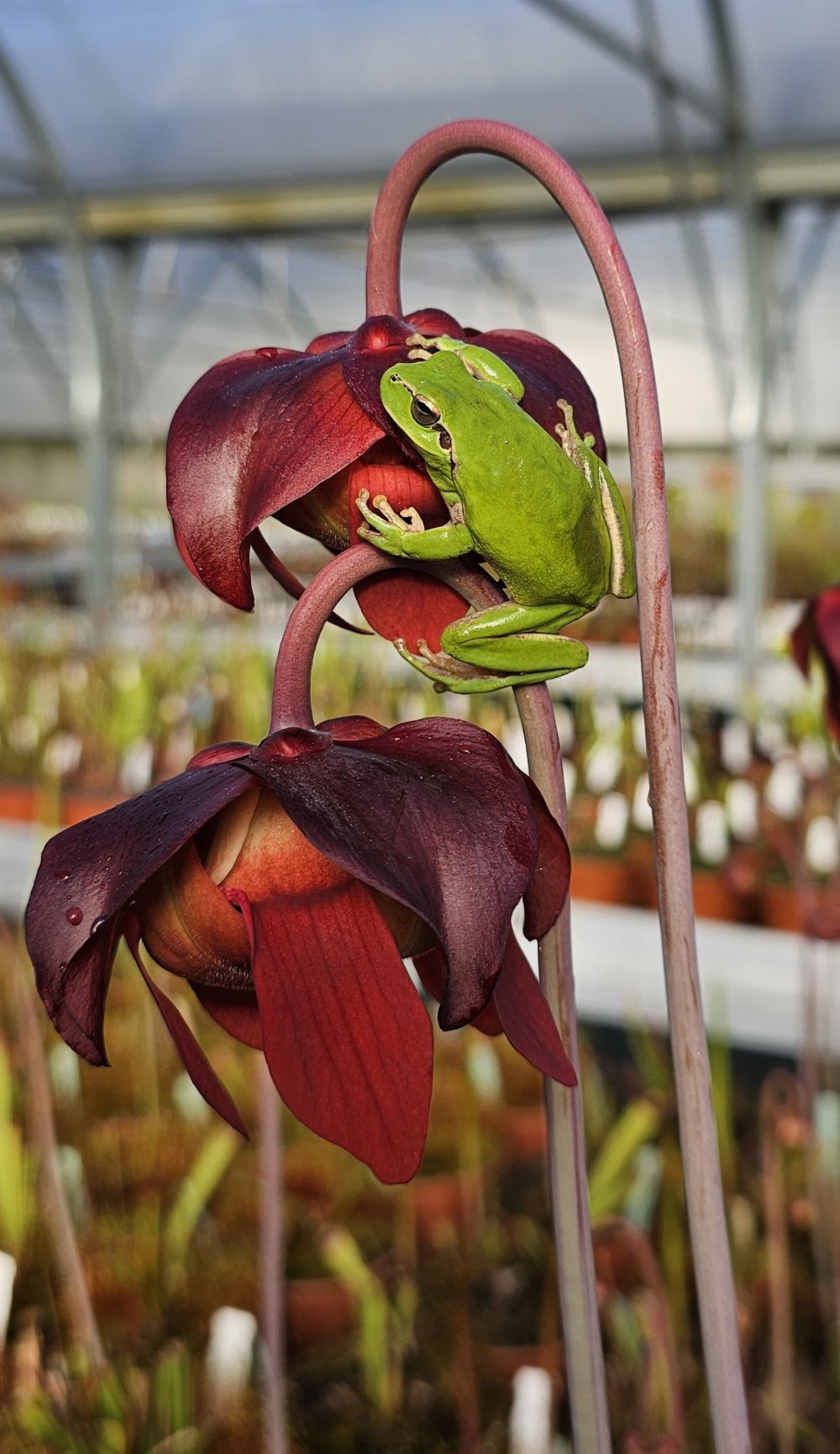
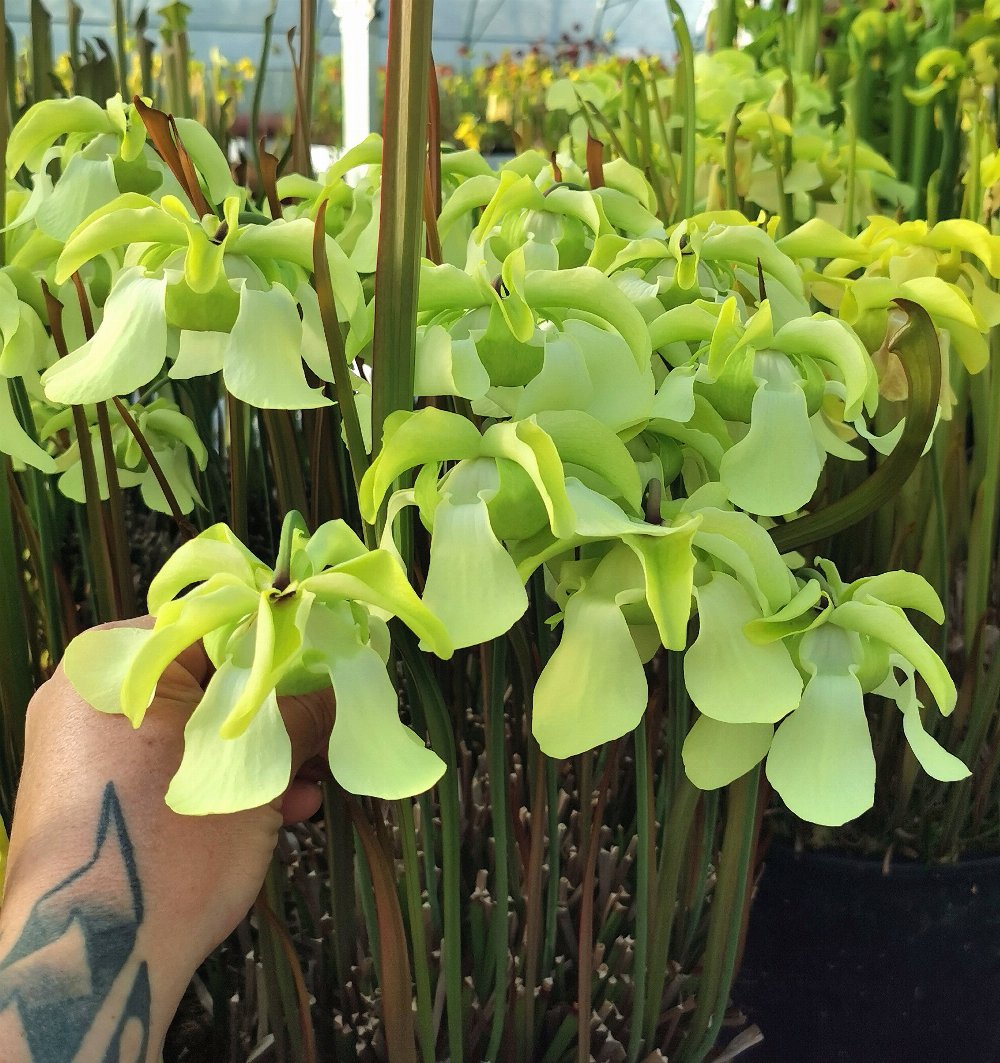
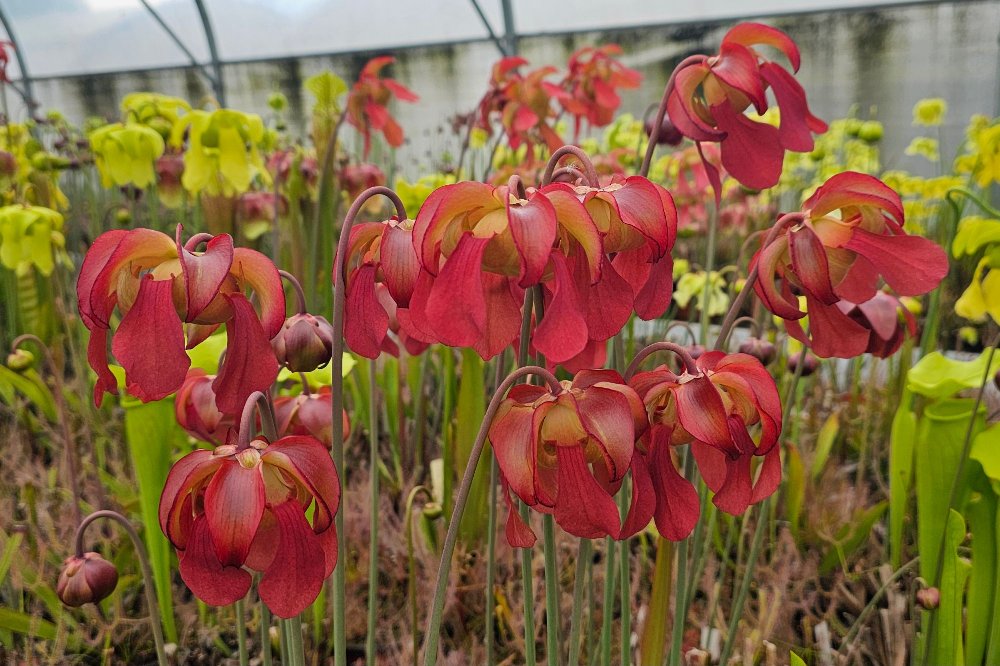
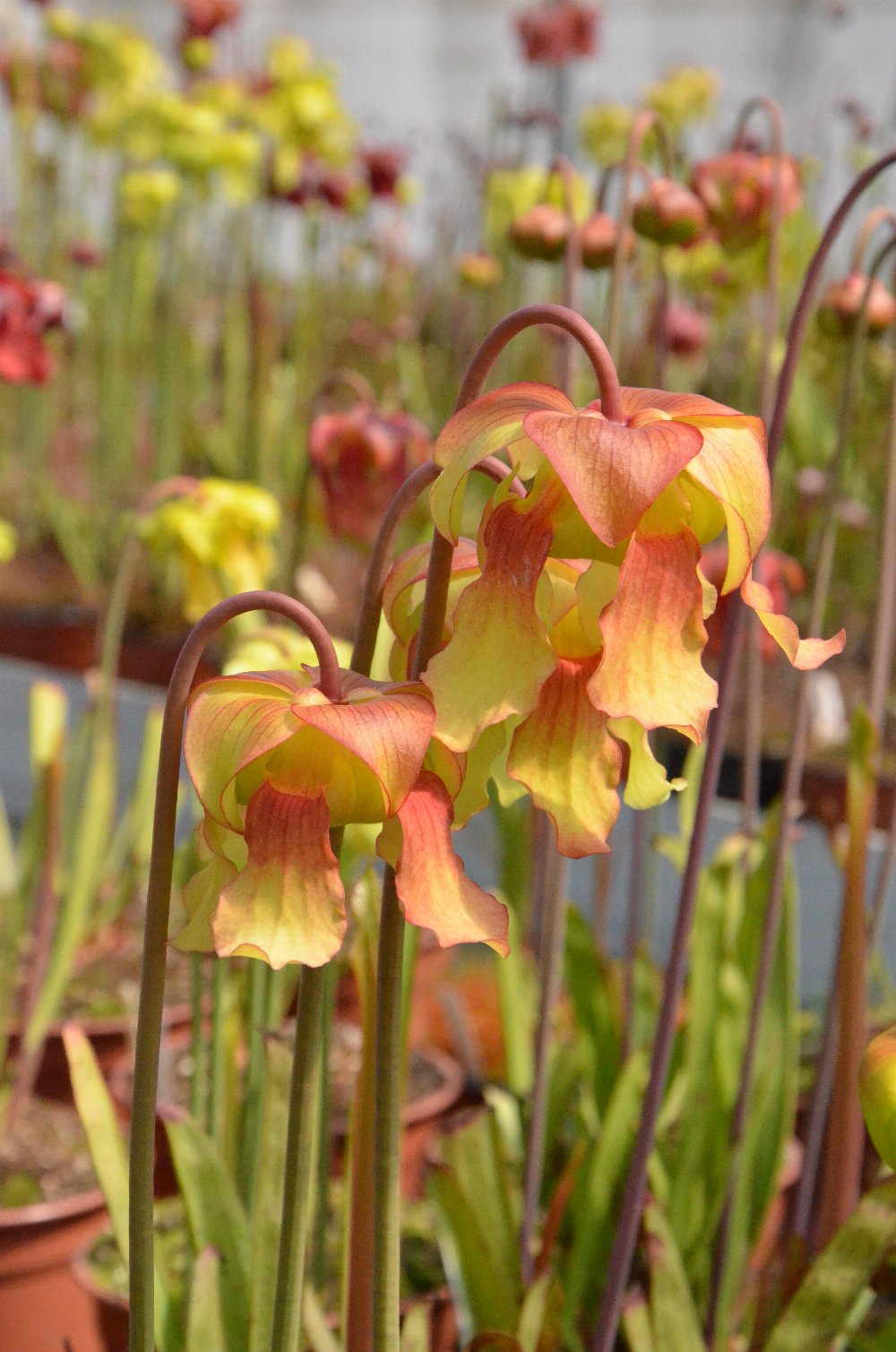
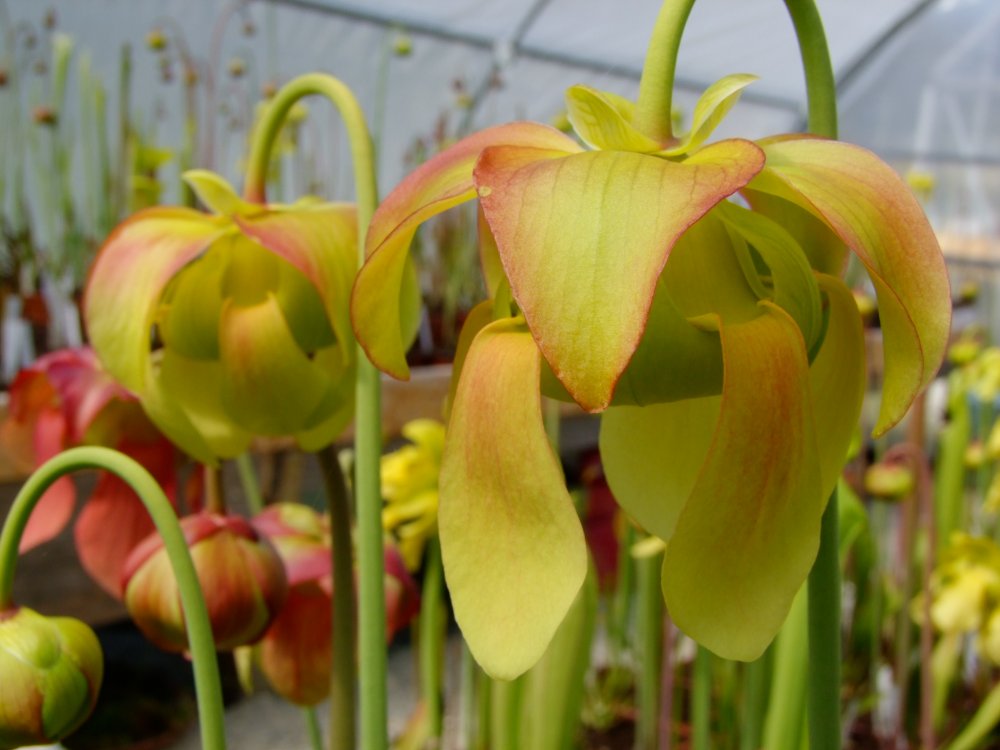
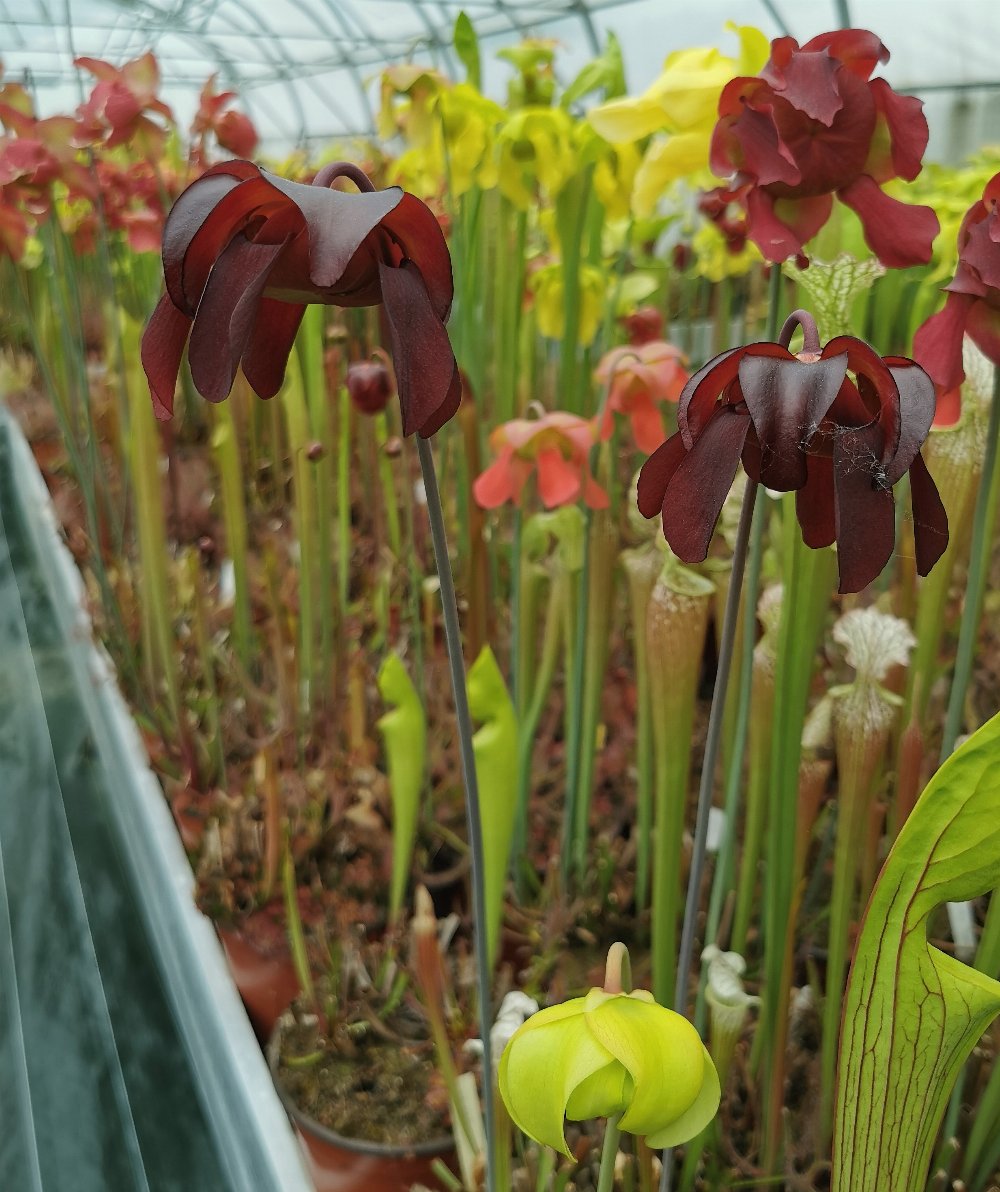
Each species has its base colour: yellow for S. flava and S. oreophila, very pale yellow, almost white for S. alata, yellow-green for S. minor, red for S. leucophylla, pinkish red for S. purpurea, dark red for S. psittacina and S. rubra. The hybrids add every shade in between: orange, speckled red, two-tone…
As for scent, the flower of S. flava is reminiscent of… cat pee. The other species have a milder smell, even a pleasant one in S. leucophylla.

Mutant flowers
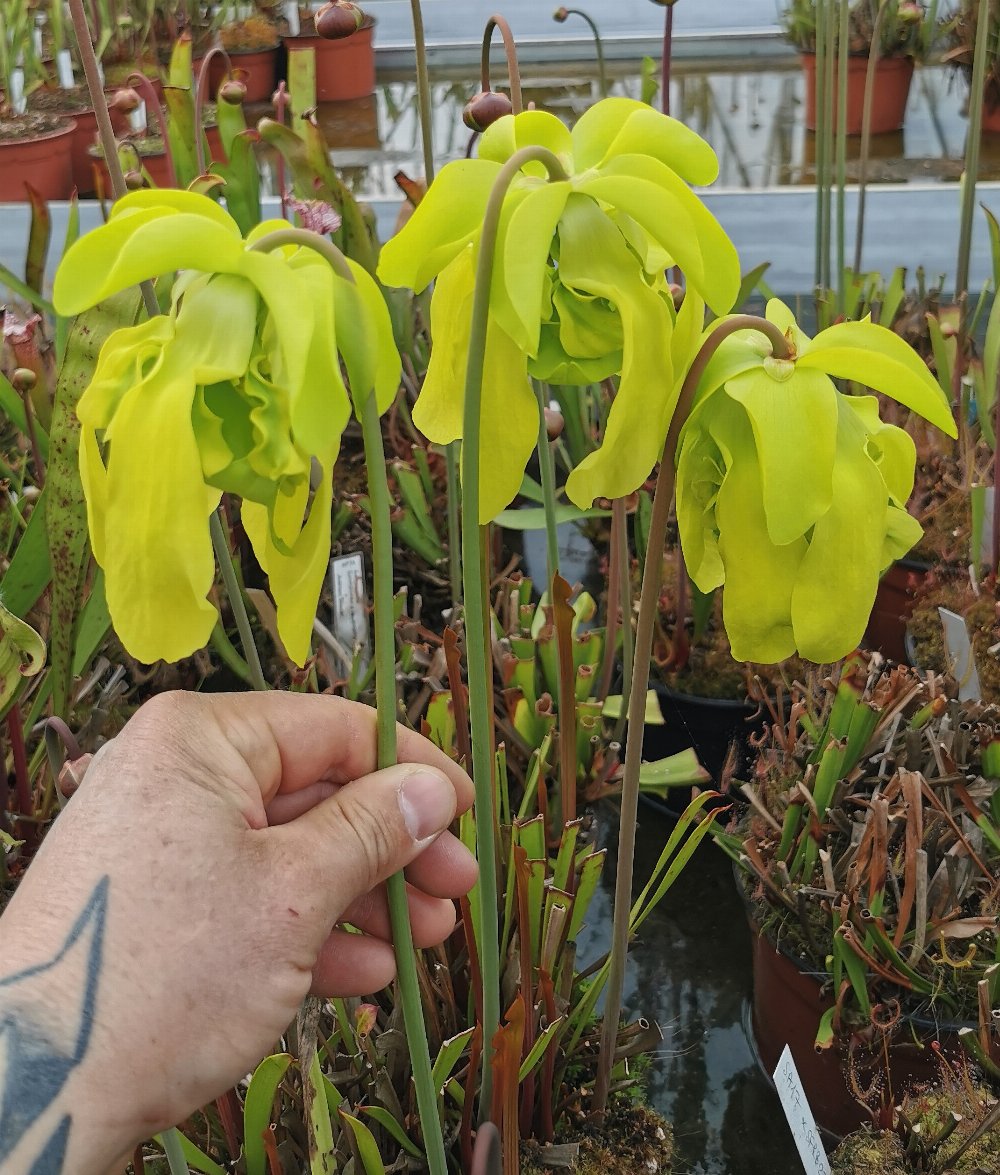
The flower shape is identical in all Sarracenia, apart from a few mutations. The best known is that of S. leucophylla 'Tarnok': its petals have disappeared, replaced by a multitude of sepals. It is a vigorous cultivar, 70 to 80 cm tall, with very marked red veining.
The autumn second bloom
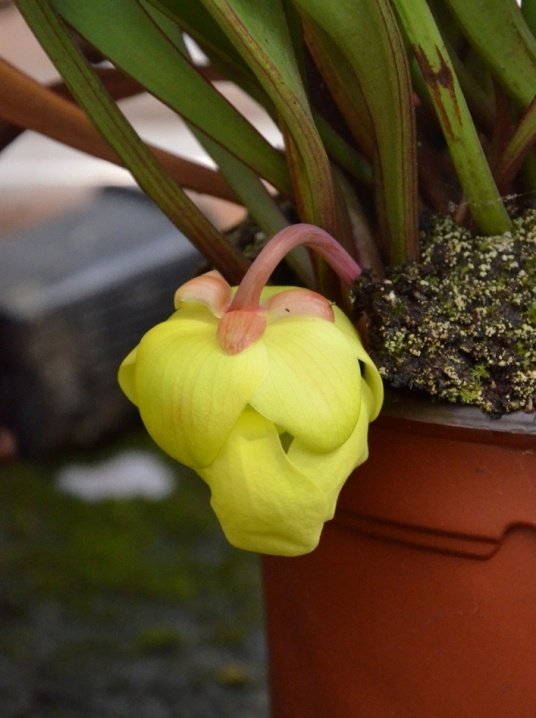
Some Sarracenia flower again at the end of summer or in autumn. It happens mostly in greenhouse culture, and in the species that flower first in spring: S. flava, S. oreophila and their hybrids. Other species are rarely affected.
These flowers are often malformed or abort before opening; we have even seen some open right at the rhizome, or in the substrate. It does no harm: just cut them off. There is no point trying to pollinate them, it is too late in the season for the seeds to ripen.
After blooming
A fertilised flower straightens up and loses its petals. The capsule holding the seeds takes several months to ripen: we usually harvest the seeds of our crosses around early September. You can sow them yourself: our Sarracenia seeds come from these pollinations.
For everything else (sun, water, winter rest, substrate), see our Sarracenia growing guide, and discover our whole Sarracenia collection.
A question about your Sarracenia flowers?
✉ Contact us© 2026 Cédric Carnivores - Carnivorous plant nursery since 2012
Share this article: