
 Français
 Español
 Deutsch
 Italiano



Sowing Sarracenia: the normal method and the fast method


Sowing Sarracenia
Two proven methods
Sowing gives plants that are all different, and sometimes a future star. Here are our two methods: the normal one, with a winter rest, and the fast one, without.
This article comes from “Les sarracenia en images”, the book Cédric wrote from his experience at the nursery, and from our growing guide. All photos are ours.
The normal method, with winter rest
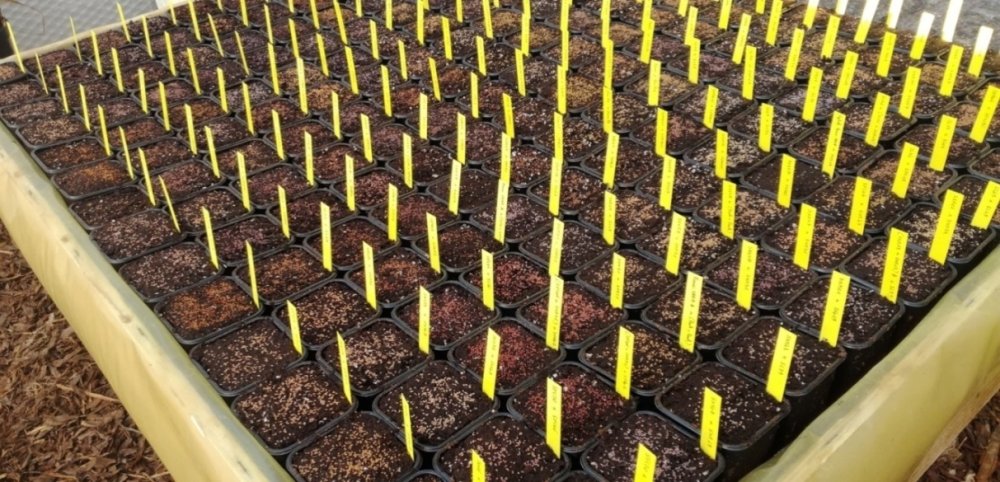
Sow from March or April, in small pots (7 x 7 x 8 or 8 x 8 x 9 cm). Two substrates give very good results:
- 50% blond peat and 50% sand (Loire sand or fine quartz sand): exactly our No. 2 peat and sand mix;
- or pure chopped dead sphagnum moss.
Place the seeds on the surface without covering them, and treat with a fungicide as a preventive measure against fungal diseases. Write the names of the parents on each pot (see Pollinating Sarracenia).
Stand the pots in a tray and keep 1 cm of water underneath at all times. Seeds germinate in 2 to 8 weeks. To speed things up, put the pots in a mini greenhouse or under a cover: humidity stays high and warmth is kept in.
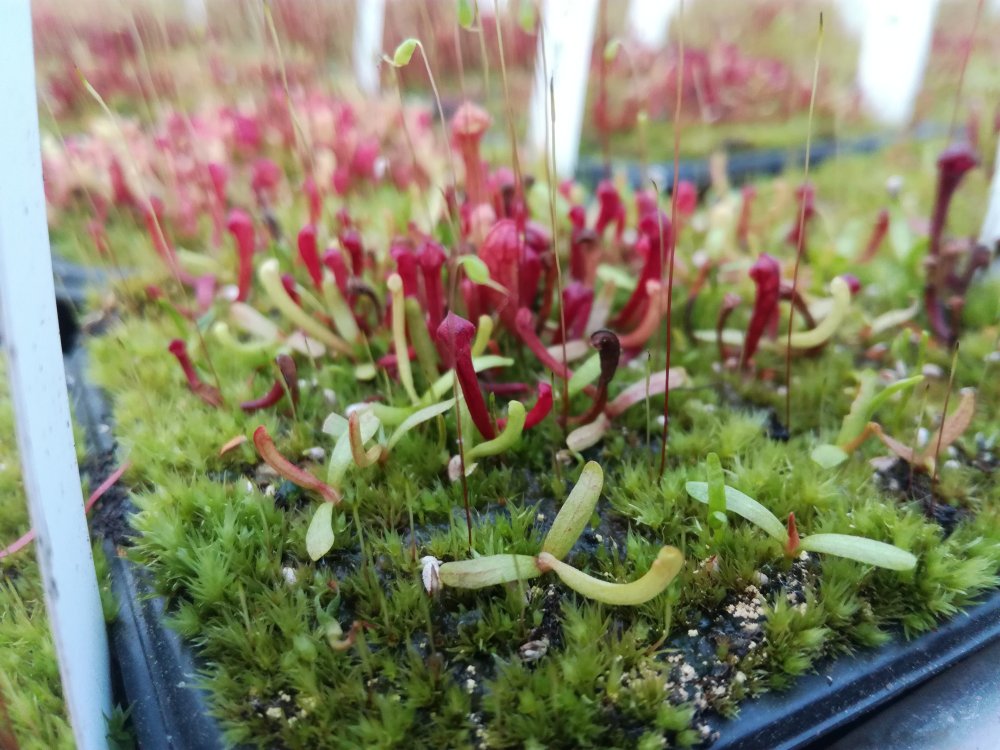
With this method, seedlings have their winter rest like adult plants. Just avoid exposing them to less than -2 °C: young plants are more fragile.
Pricking out and growing on
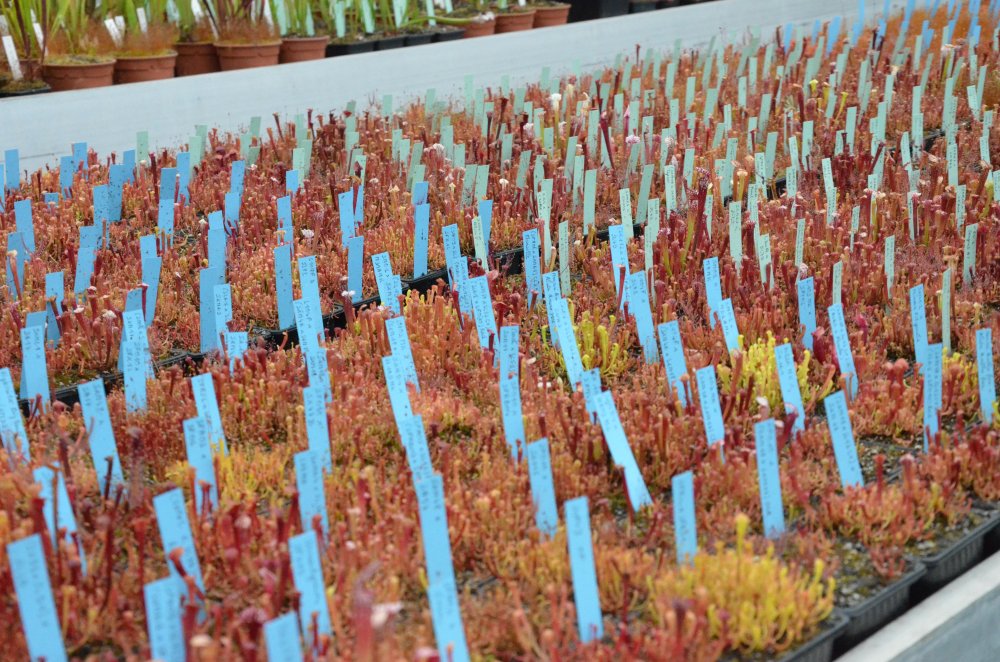
When the seedlings are crowded, prick them out into individual pots. After one year, you can pot them up one by one, or let natural selection work one more year in the same pot. The differences between plants already show: time for the first selections.
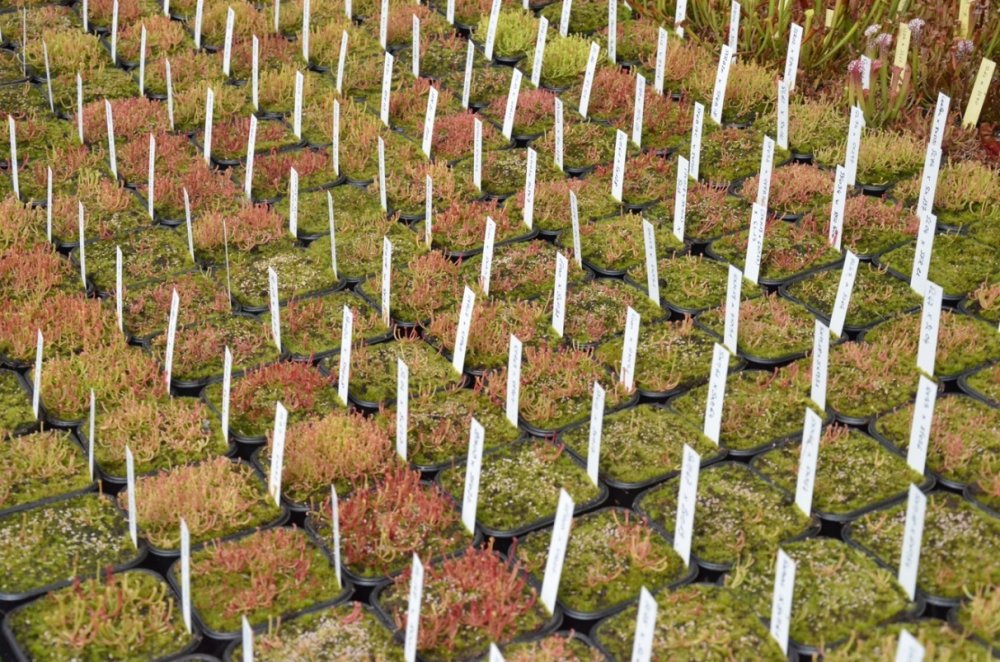
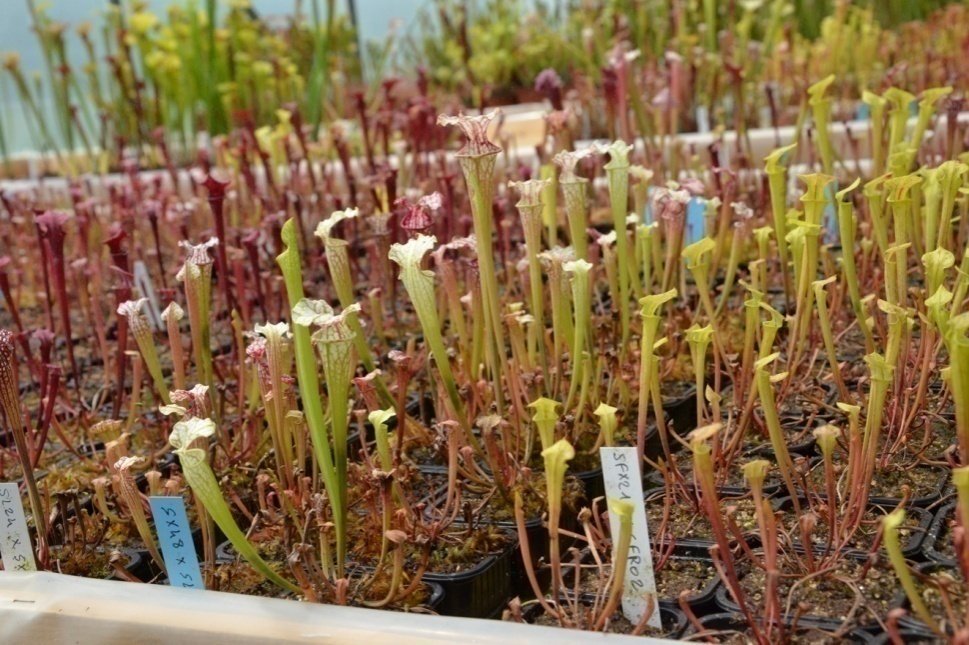
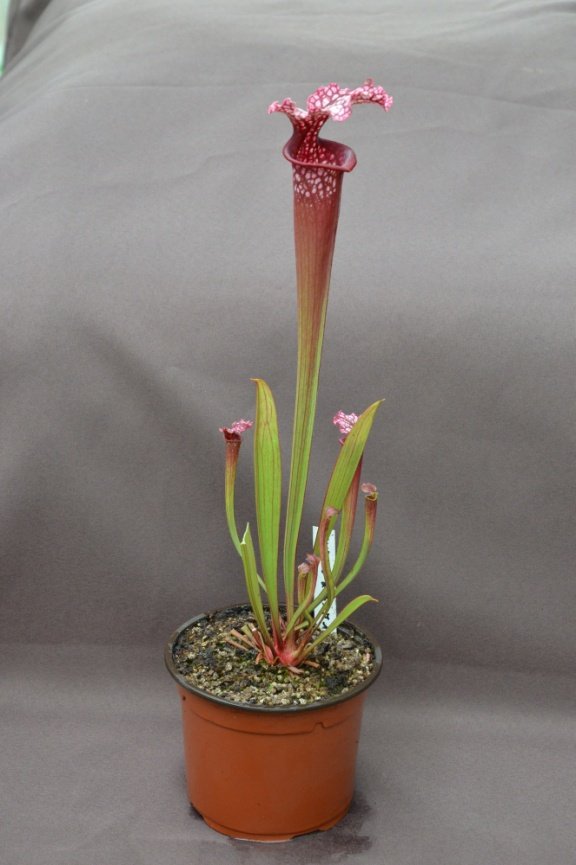
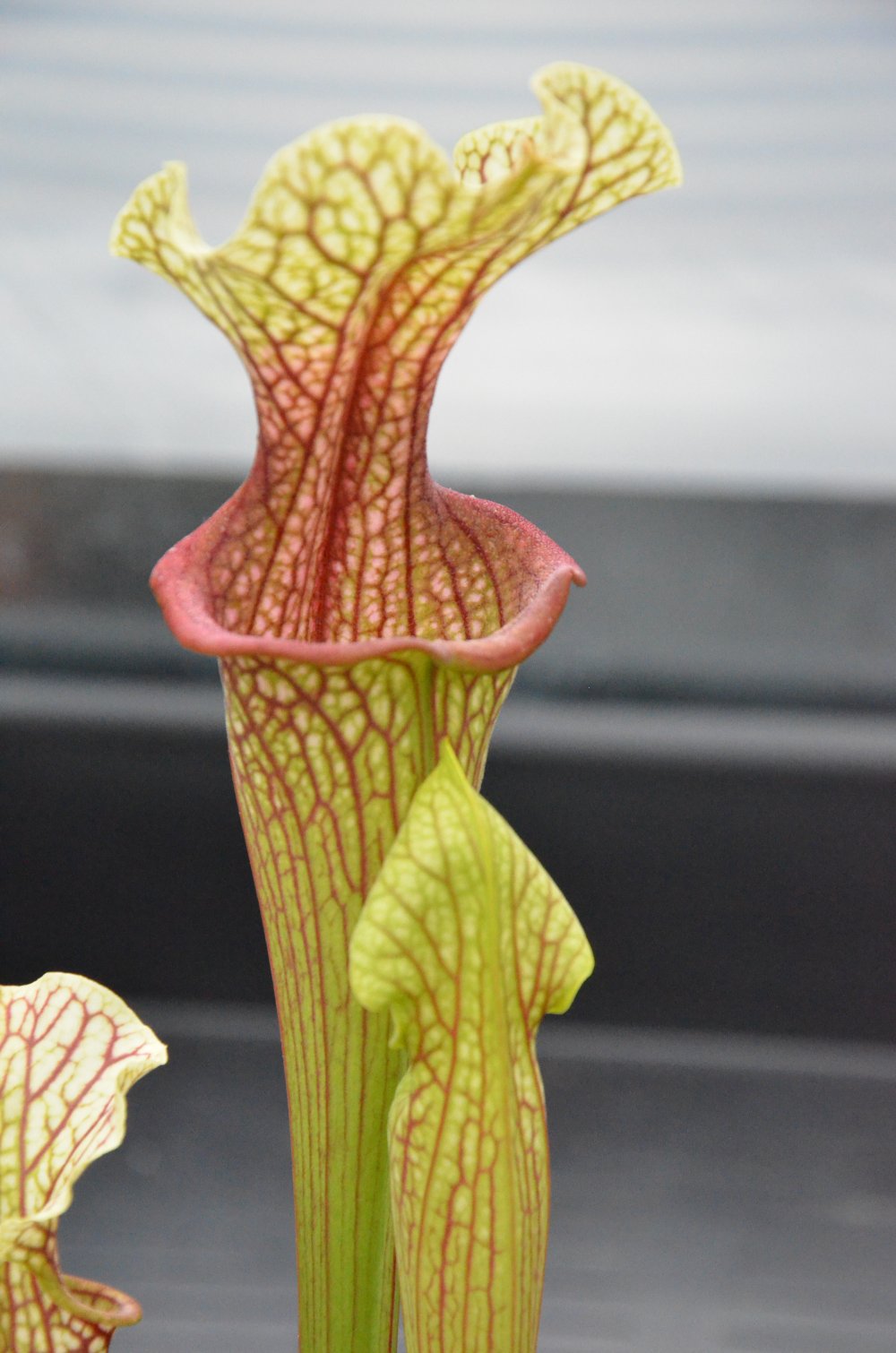
It takes 4 to 7 years to get an adult plant. From the second year, we add 3 or 4 granules of Osmocote per pot: it saves a little time and gives sturdier plants.
The fast method, without winter rest
It works at any time of year, in a heated and lit terrarium or mini greenhouse. The seedlings grow without a break: you get adult plants in 2 to 3 years instead of 4 to 7.
- Same substrates as the normal method. Fungicide treatment is essential here, as the seeds stay longer in the damp.
- Bury a heating cable, the kind used for reptiles, in 3 cm of sand. Moisten the sand and stand the pots on it, without burying them.
- Keep the sand always moist: the pots are watered from below.
- Add fluorescent lighting, 8 to 9 hours a day.
You can switch from the fast method to the normal one at any time, but not the other way round: once plants have known a winter rest, they struggle to do without it. When the plants are crowded, take them out and return to normal culture.
To get started: our Sarracenia seeds, from our own crosses.
A question about your Sarracenia?
✉ Contact us© 2026 Cédric Carnivores - Carnivorous plant nursery since 2012
Share this article:


