
 Français
 Español
 Deutsch
 Italiano


- Out-of-Stock
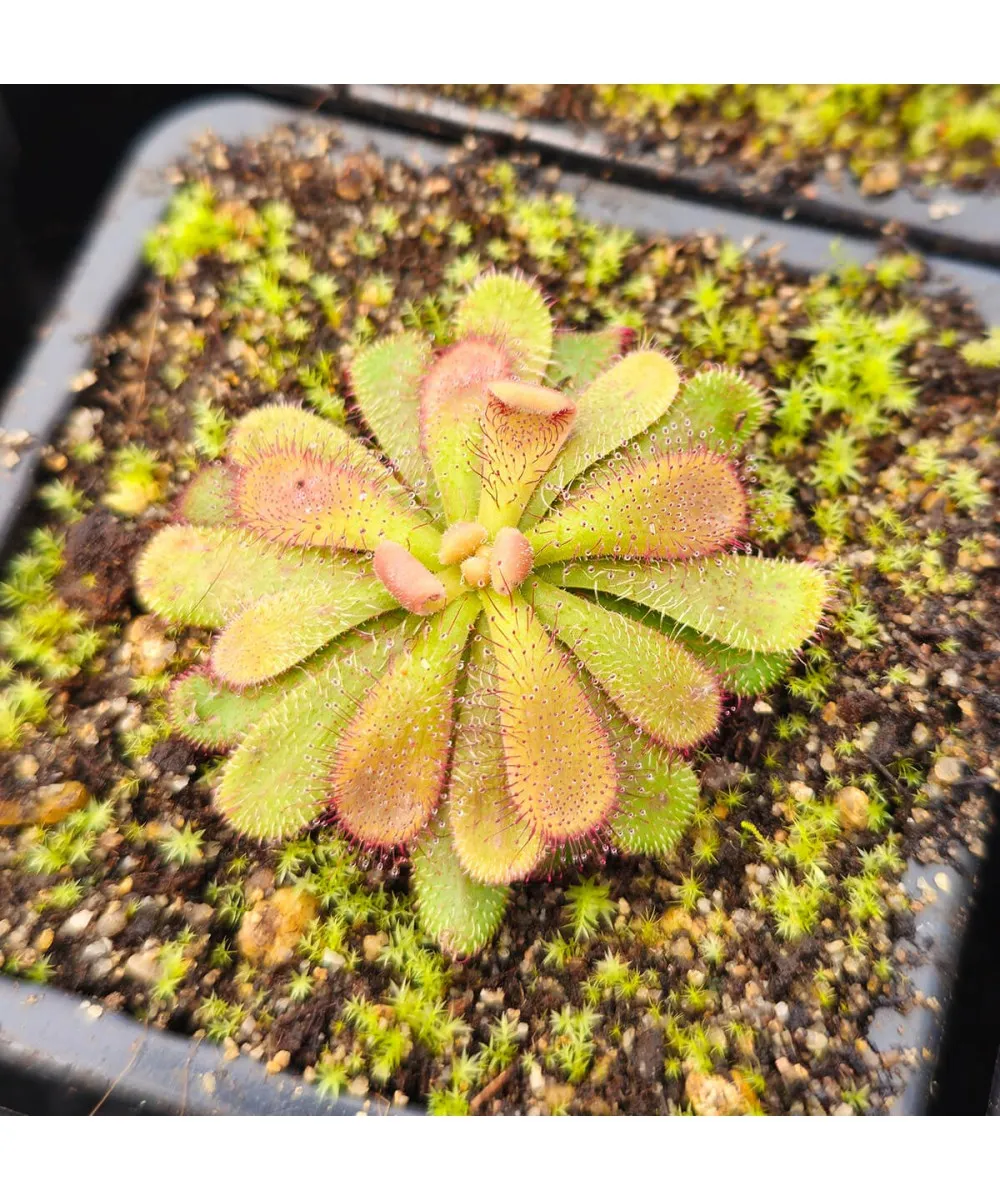
Photo of the mature mother plant: you receive a plant of the same clone, in the size you choose.

Photo of the mature mother plant: you receive a plant of the same clone, in the size you choose.
Drosera hamiltonii

Delivery policy

Minimum order: €18
Drosera hamiltonii, also known as the “Rosy Sundew”, is a fascinating and relatively rare carnivorous plant from a small coastal area of south-western Australia
Main features:
➜ Learn more about this species: Drosera hamiltonii, in our encyclopedia
Data sheet
These plants share its growing conditions: you can grow them together.
This plant is a cross between Nepenthes spathulata and ampullaria 'burgundy speckle'. It is produced by Borneo Exotics (reference BE-3881), our partner nursery specialising in Nepenthes. It is a versatile intermediate Nepenthes, well suited to indoor growing: bright light, high humidity, 21-30 °C by day.
Utricularia reniformis 'Big sister' is part of our Utricularia selection. It is a tropical bladderwort with delicate flowers: bright light, 20-28 °C and constantly moist soil.
Three plants for indoors, behind a bright window: Drosera capensis, the beginners' champion, a Drosera binata and an intermediate Nepenthes. Water with rainwater or demineralised water, never any fertiliser. The Nepenthes likes a humid room, such as a bathroom with a window.
Nepenthes sibuyanensis x merrilliana -- best selected clone: BE-4026
Drosera capensis 'Velu' is part of our Tropical and subtropical Drosera selection. It is a sundew with no dormancy that grows all year: bright light, 20-30 °C and feet in pure water.
Drosera prolifera is part of our Tropical and subtropical Drosera selection. It is a sundew with no dormancy that grows all year: bright light, 20-30 °C and feet in pure water.
Drosera binata forme multifida is part of our Tropical and subtropical Drosera selection. It is a sundew with no dormancy that grows all year: bright light, 20-30 °C and feet in pure water.
Drosera latifolia is part of our Tropical and subtropical Drosera selection. It is a sundew with no dormancy that grows all year: bright light, 20-30 °C and feet in pure water.
A question about this product or how to grow it? Ask it: the nursery answers, and the answer helps other growers too.
No questions yet: be the first to ask one!
Do you have this plant?
Share a photo of it from your My collection page: it will join our customers’ gallery.
Drosera hamiltonii


