
 Français
 Español
 Deutsch
 Italiano



Encyclopedia: the genus Philcoxia


The genus Philcoxia
Philcoxia from Brazil, found to be carnivorous in 2012, which trap worms under the sand.
At a glance
Genus
Philcoxia P. Taylor & V. C. Souza, 2000
Family
Plantaginaceae (tribe Gratioleae)
Number of species
77
Distribution
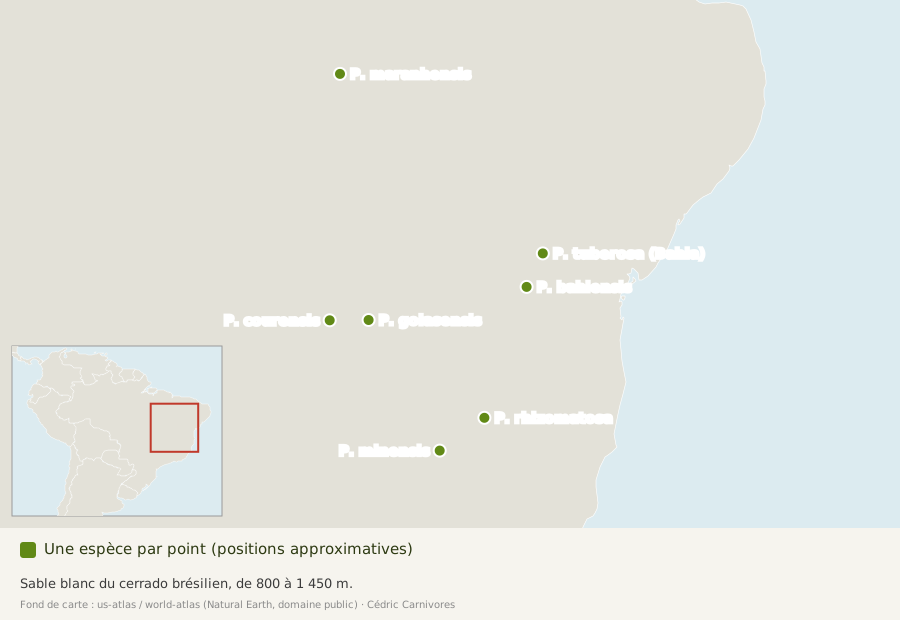
Brazil (Bahia, Goiás, Minas Gerais, Maranhão)
Habitat
Oases of deep white sand in the cerrado, from 800 to 1,450 m
Status
Rare species; P. courensis and P. maranhensis critically endangered
Etymology
Philcoxia: in honour of David Philcox (1926-2003), a botanist at Kew Gardens, specialist in tropical Scrophulariaceae.
History
- 1966: a team from the New York Botanical Garden collects the future P. goiasensis near Posse (Goiás); its description would wait more than twenty years.
- 1981: the future P. minensis is collected in the Serra do Cabral (Minas Gerais); its site would only be found again in 2007.
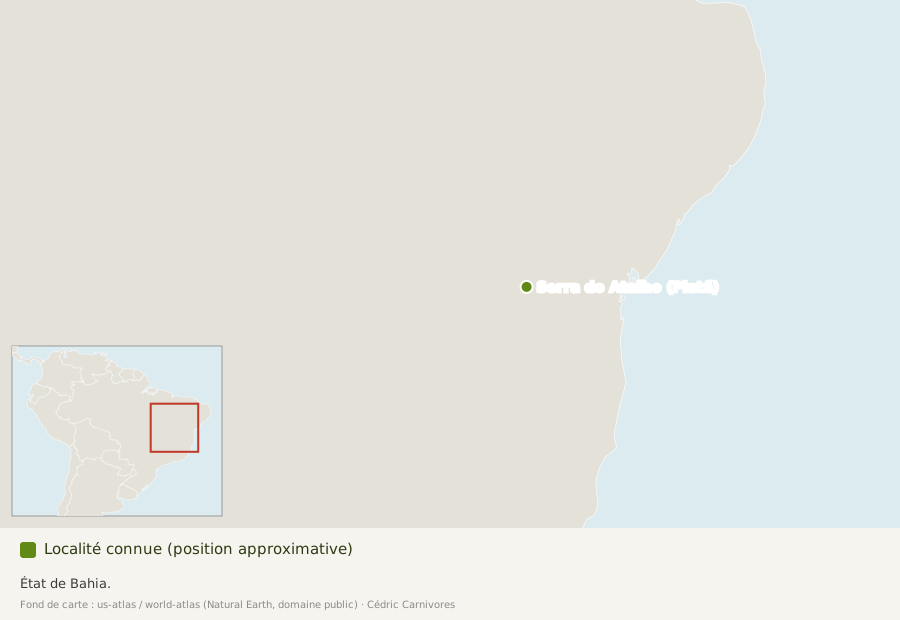
- August 1992: Wilson Ganev collects P. bahiensis in the Serra do Atalho (Piatã, Bahia) and sends it to Kew.
- 1994: Ray Harley recognises that the 1966 plant belongs to the same genus.
- 2000: description of the genus, with three species.
- 2014-2017: four new species (P. tuberosa, P. rhizomatosa, P. courensis, P. maranhensis).
Description (how to recognise them)
- Tiny herbs, perennial or annual, up to 26 cm including the flower stalk.
- Underground stems and 5 to 10 shield-shaped leaves, lying flush with the sand or buried beneath it, covered with sticky glands.
- Flowers pale blue to lilac (yellow tube in P. goiasensis), on leafless zigzag racemes.
Ecology: traps under the sand
- 1996-2007: carnivory is suspected because of their resemblance to bladderworts and sundews, but neither prey nor enzymes are found.
- Phosphatases are then detected on the leaves.
- 2012: Pereira and colleagues feed P. minensis with nematodes labelled with nitrogen-15 and prove that it digests these microscopic worms and absorbs their nitrogen.
- All the species are assumed to be carnivorous, as they have the same structure.
- It is one of the rare cases of carnivorous plants that trap below the soil surface.
The species
| Species | Authors and year | Distribution | Profile |
|---|---|---|---|
| P. bahiensis | 2000 (authors, not confirmed) | Serra do Atalho, Bahia | profile |
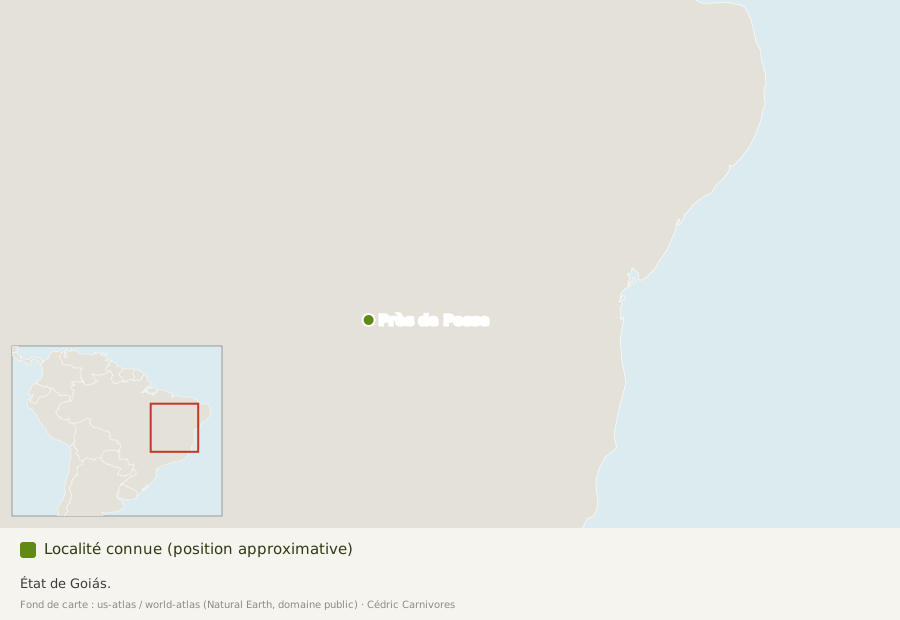
| P. goiasensis | 2000 (authors, not confirmed) | near Posse, Goiás | profile |
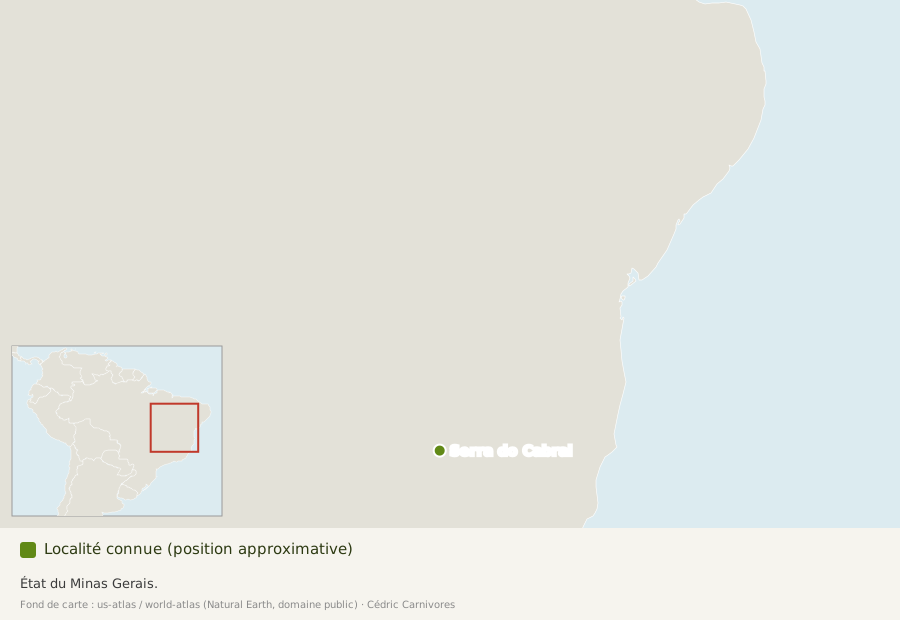
| P. minensis | 2000 (authors, not confirmed) | Serra do Cabral, Minas Gerais | profile |
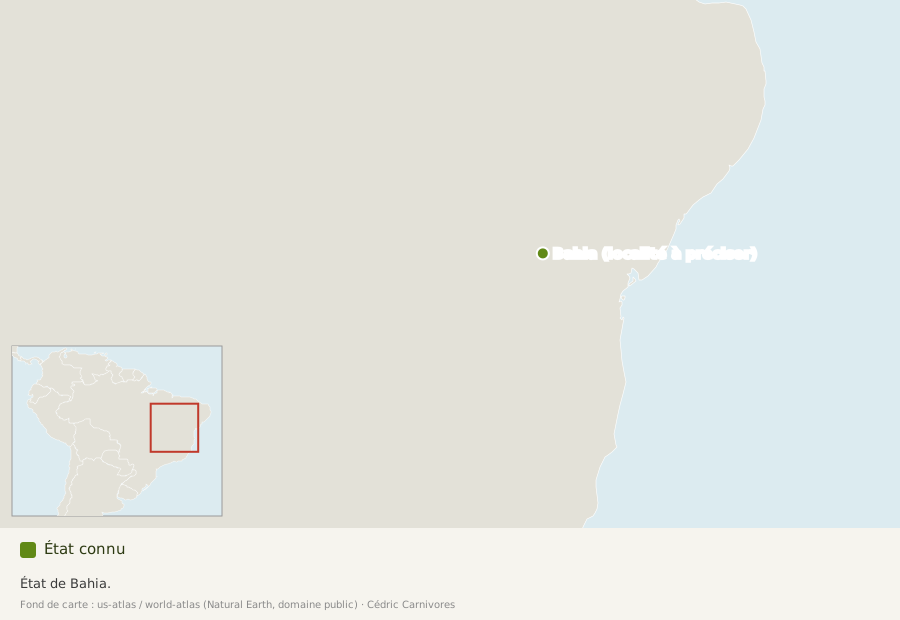
| P. tuberosa | Carvalho & Queiroz, 2014 | Bahia | profile |
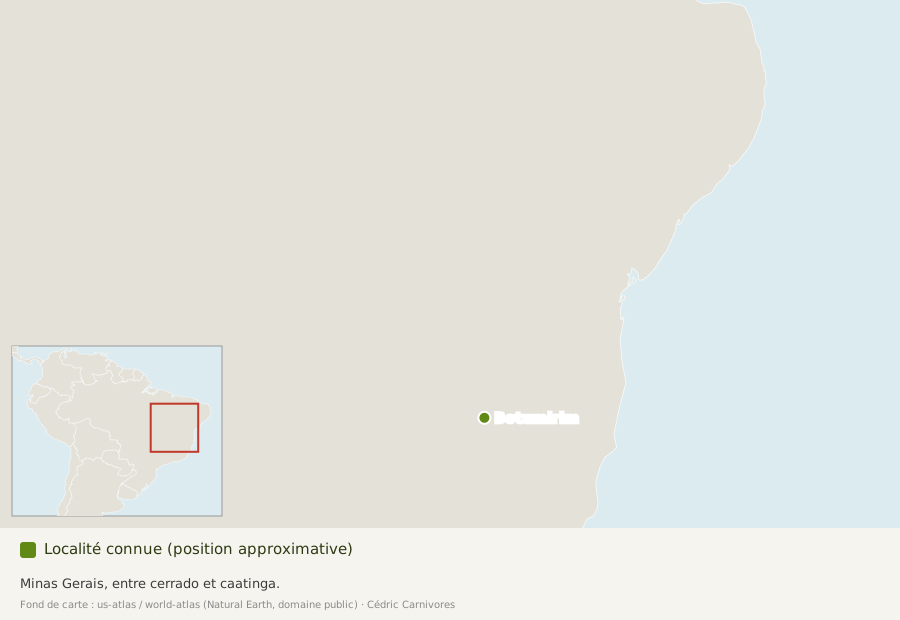
| P. rhizomatosa | Scatigna et al., 2015 | Botumirim, Minas Gerais | profile |
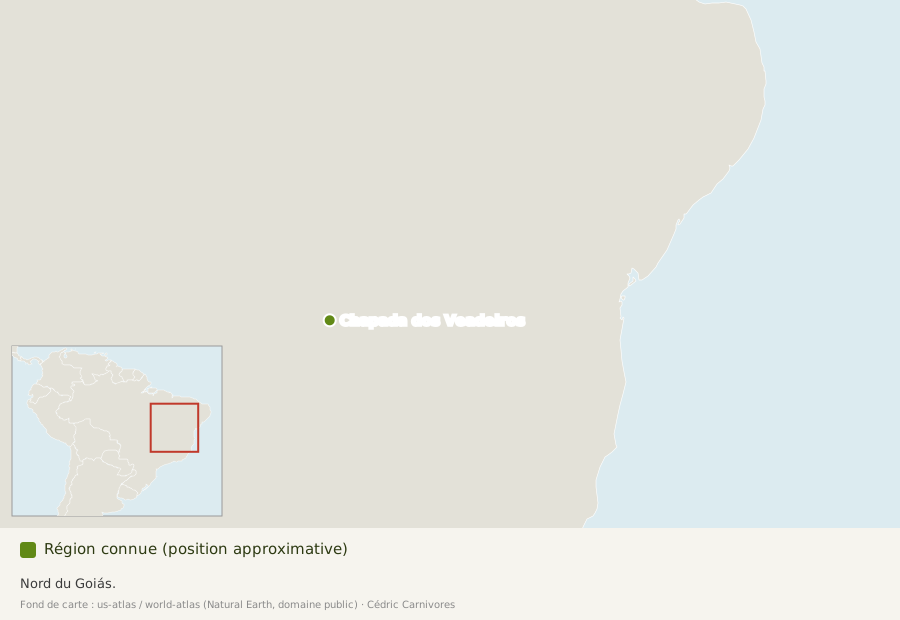
| P. courensis | Scatigna et al., 2017 | Chapada dos Veadeiros, Goiás | profile |
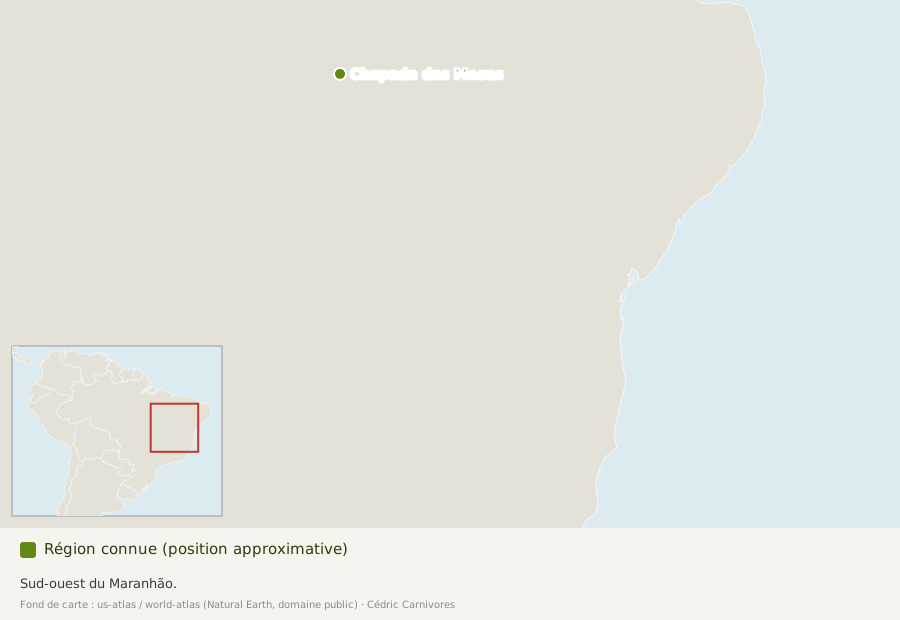
| P. maranhensis | Scatigna et al., 2017 | Chapada das Mesas, Maranhão | profile |
Distribution
Classification
First placed in the Scrophularieae (1996), then near Gratiola (2000), the genus is now in the tribe Gratioleae, family Plantaginaceae (the plantain family). In 2018, Scatigna and colleagues suggested that P. minensis may include several species.
Sources
- Wikipedia (English), Philcoxia: etymology, species, description, habitat, altitude, history of the collections, carnivory (Fritsch 2007, Pereira 2012, Scatigna 2018), classification.
- Scatigna et al. 2017, Systematic Botany 42(2): P. courensis and P. maranhensis, status.
- FAPESP, Philcoxia rhizomatosa: locality of P. rhizomatosa.
All the species (7)
Each profile presents the species in the wild: origin of the name, history, description, distribution map, habitat and sources. To search by name or by growing method: search for a species.
Thumbnail photo: Philcoxia rhizomatosa, Minas Gerais (Brazil), © william_hoyer on iNaturalist, licence CC BY.
Share this article:


Similar posts

Encyclopedia: the small genera (Venus flytrap, Cephalotus…)
Venus flytrap, waterwheel plant, Cephalotus, Darlingtonia, Drosophyllum, Roridula, Triphyophyllum and Brocchinia: the genera with one or two carnivorous species.

Encyclopedia: the genus Byblis
Byblis from Australia and New Guinea, the sundew-like “rainbow plants”.