Français
 Español
 Deutsch
 Italiano

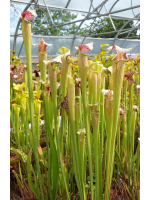
Sarracenia flava: portrait of the yellow-flowered pitcher plant


Sarracenia flava
The majestic type species
It is the best-known Sarracenia, and one of the most imposing. Easy, affordable, spectacular: ideal for beginners and collectors alike. Its name, flava, is Latin for “pale yellow” or “yellowish”: that is the colour of its flower, not of the plant. Its pitchers, however, vary from one variety to another.
This article comes from “Les sarracenia en images”, the book Cédric wrote from his experience at the nursery, and from our growing guide. All photos are ours.
Pitchers over a metre tall
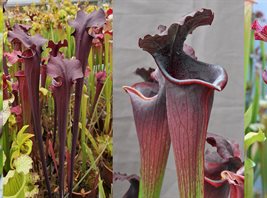
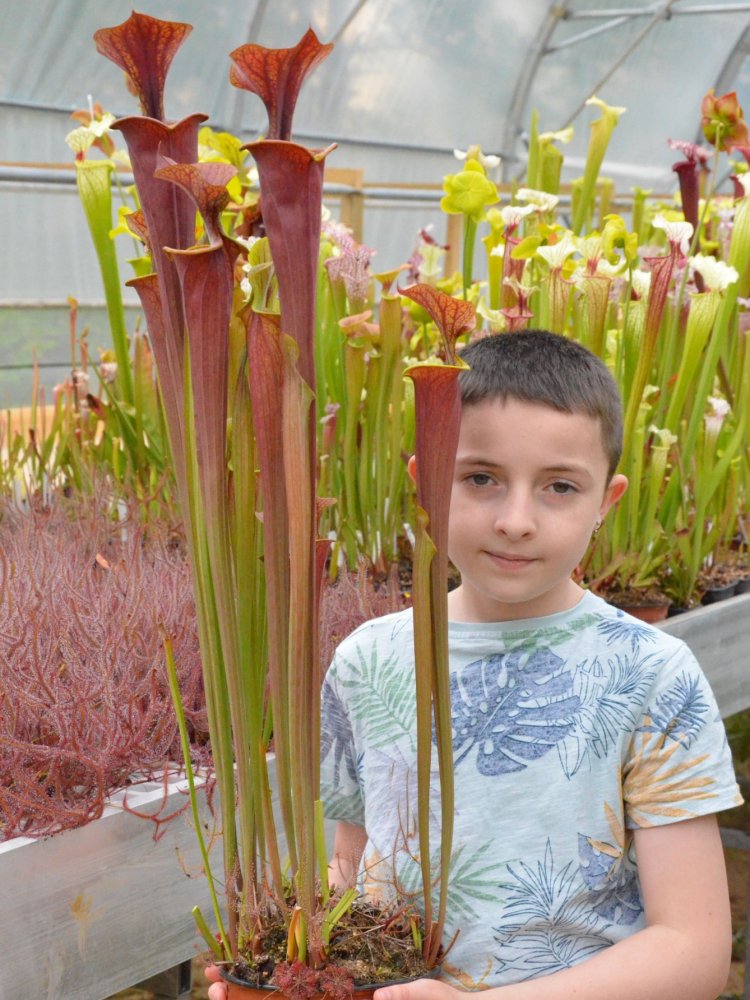
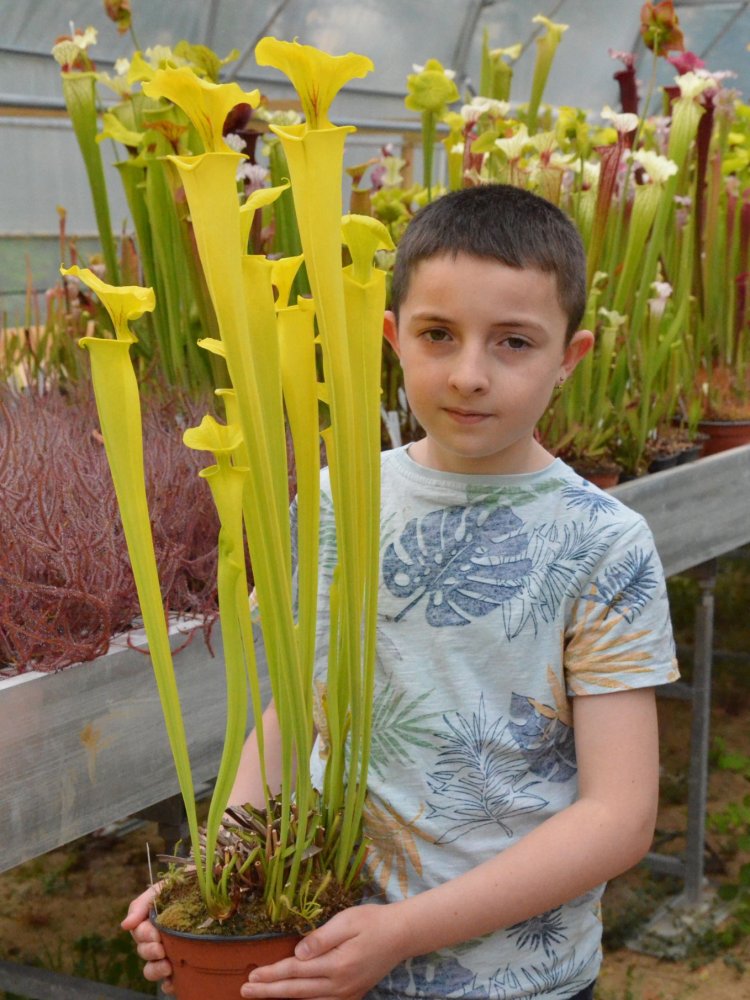
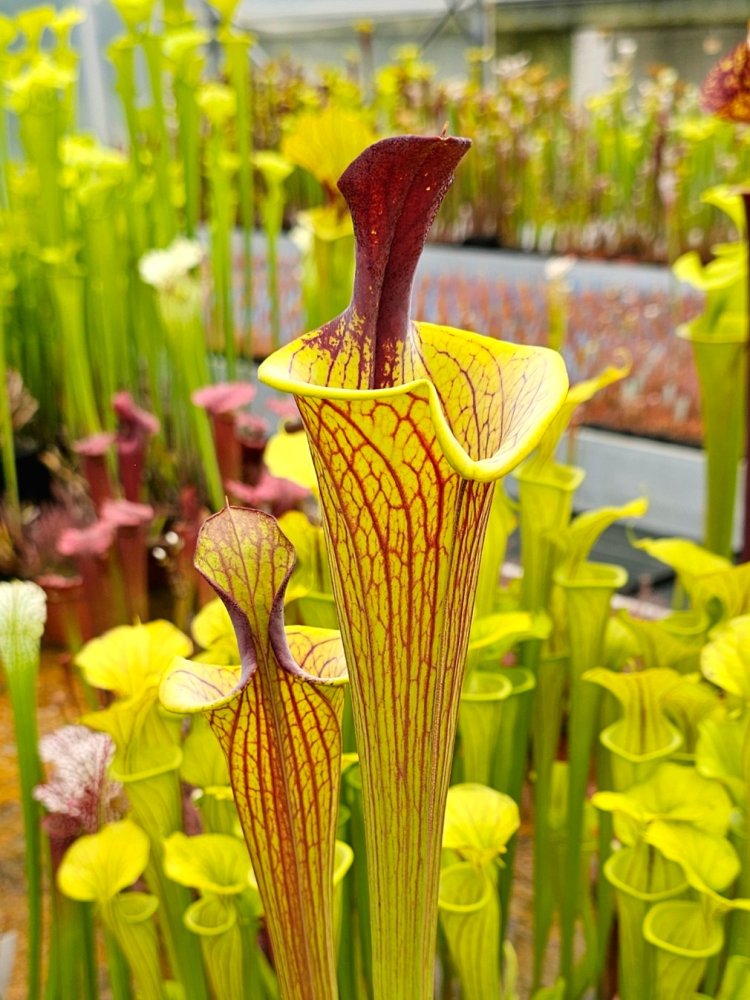
The pitcher of S. flava is 60 to 90 cm tall and regularly exceeds 1 m, especially in S. flava var. flava. The leaf base is 5 mm to 1 cm wide (the sturdiest are those of var. rugelii), then widens fairly quickly up to the peristome, 5 to 10 cm across.
On some specimens, the front of the opening takes the shape of a pouring spout, which makes it even more beautiful. The leaf ends in a large lid, round, and wavy in some plants.
A powerful rhizome
The rhizome is 3 to 5 cm wide and grows horizontally. It branches fairly quickly, but it takes a few years to get a fine clump: choose a large pot, or even a bog garden.
The largest flowers of the genus
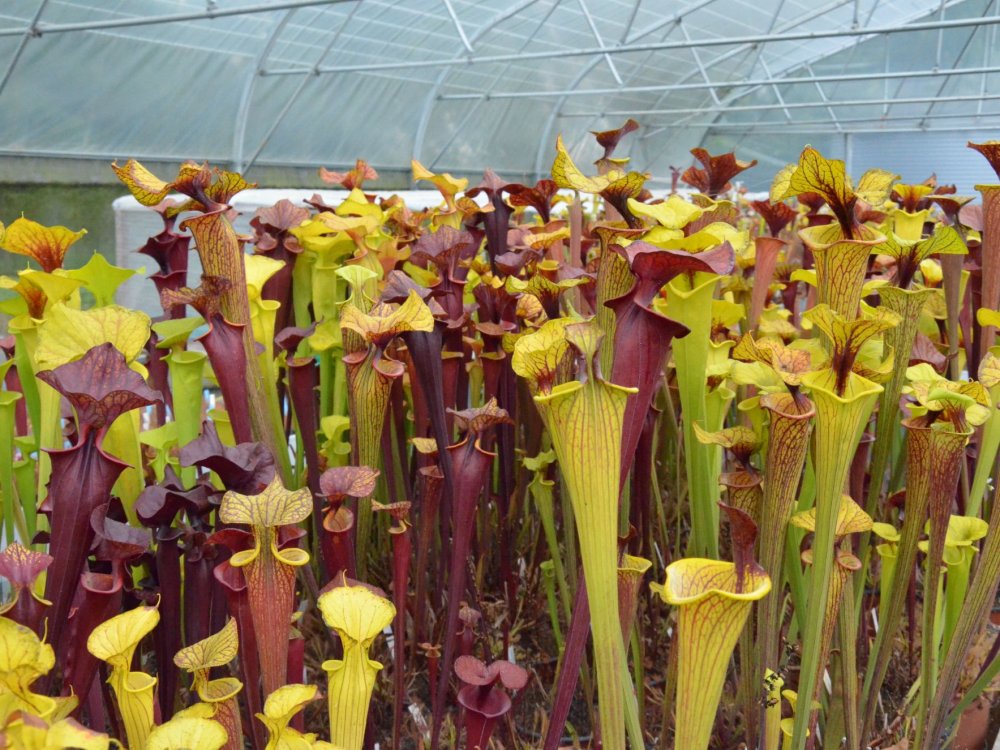
Flowering is spectacular: the stalks are 60 to 80 cm tall and the flower 6 to 8 cm across. S. flava is among the first to flower, from late February, and its leaves grow at the same time as its flowers. The bracts are often yellow, with orange or red tints in var. atropurpurea, whose sepals are sometimes speckled.
Its scent is frankly reminiscent of cat pee! In a greenhouse, it sometimes flowers again at the end of summer: just cut these often malformed flowers. All about blooming: Sarracenia flowers.
Varieties
S. flava has many varieties: f. viridescens, var. atropurpurea, var. cuprea, var. maxima, var. ornata, var. rubricorpora and var. rugelii. Crossed, it gives wonderful hybrids, such as S. x moorei with S. leucophylla.
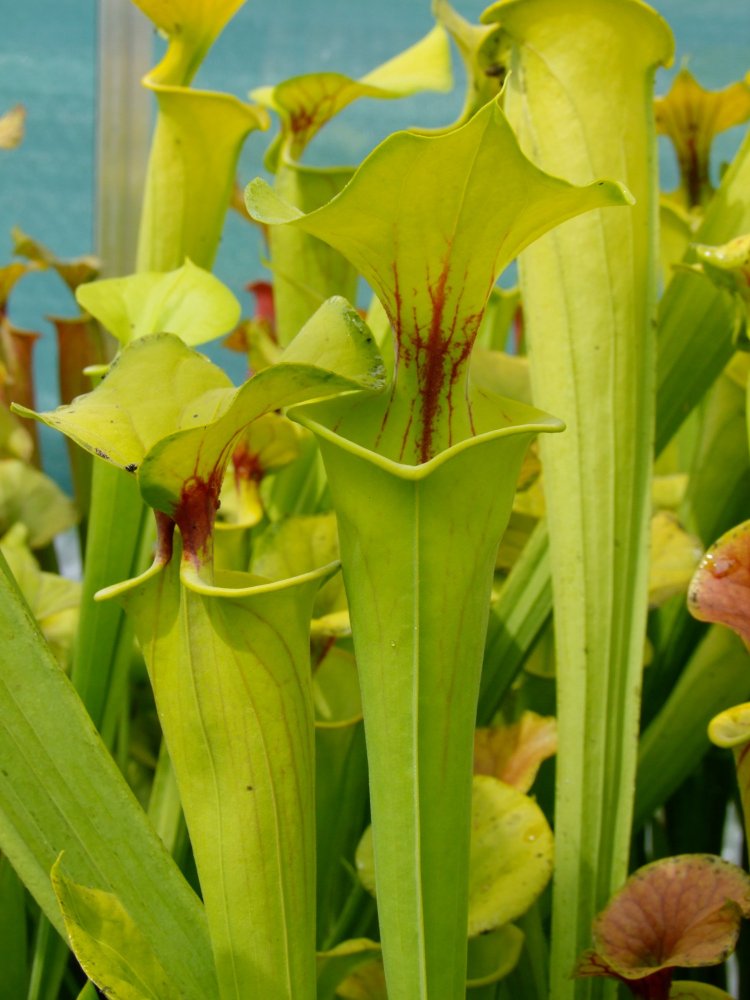
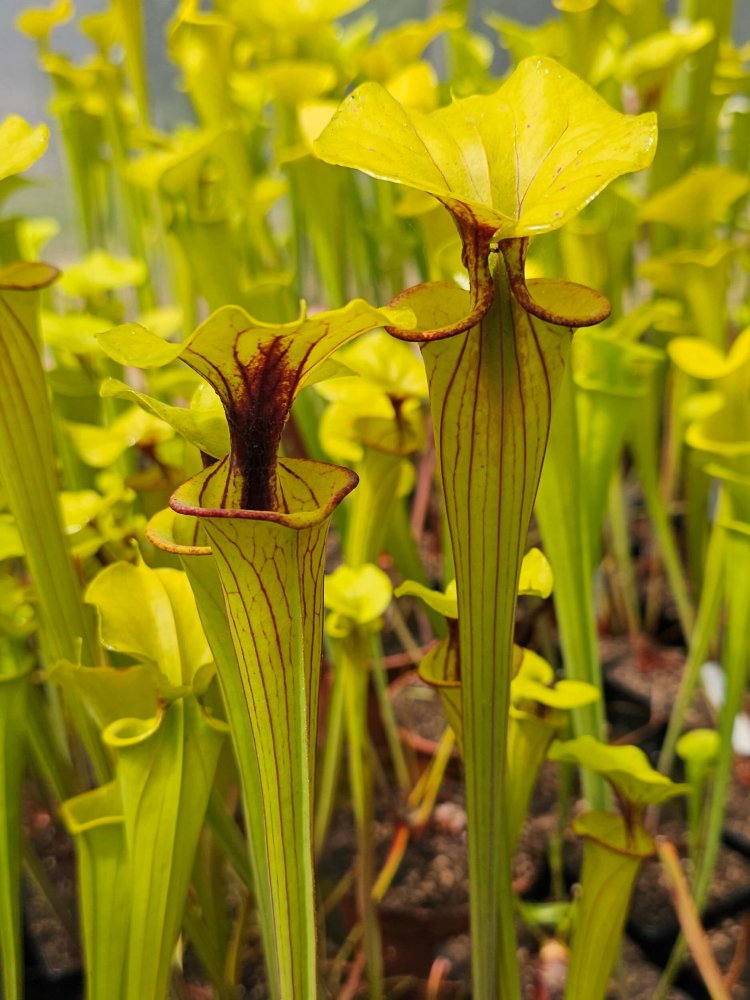
S. flava var. flava
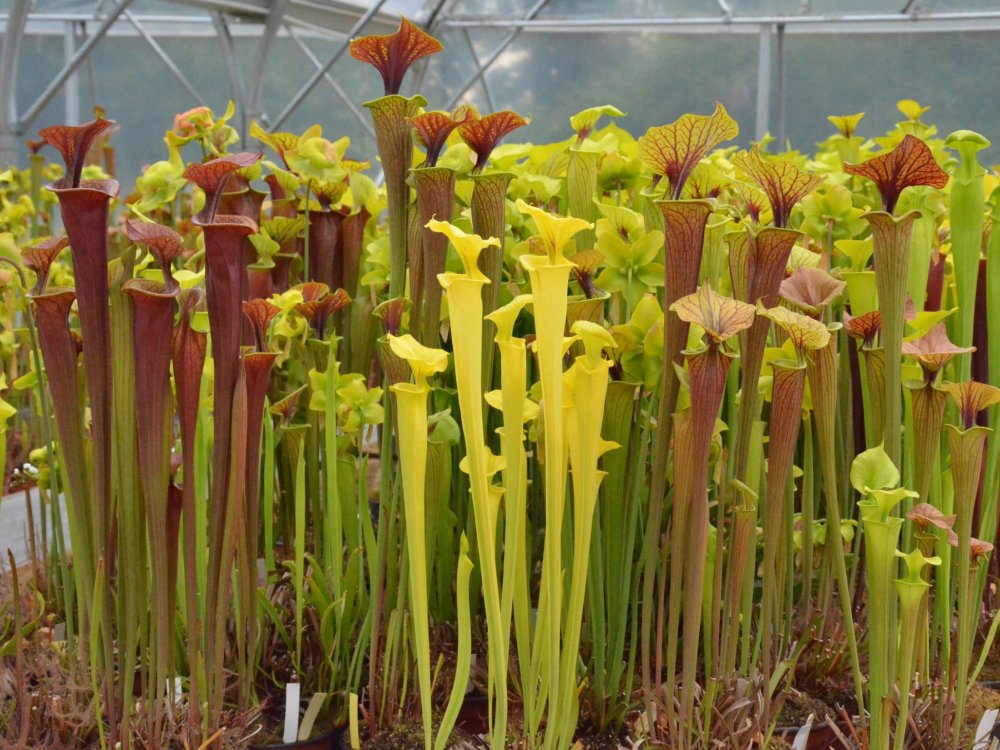
The reference form of the species, the most common in the bogs of the south-eastern United States, with tall yellow-green pitchers. Our var. flava.
S. flava var. atropurpurea
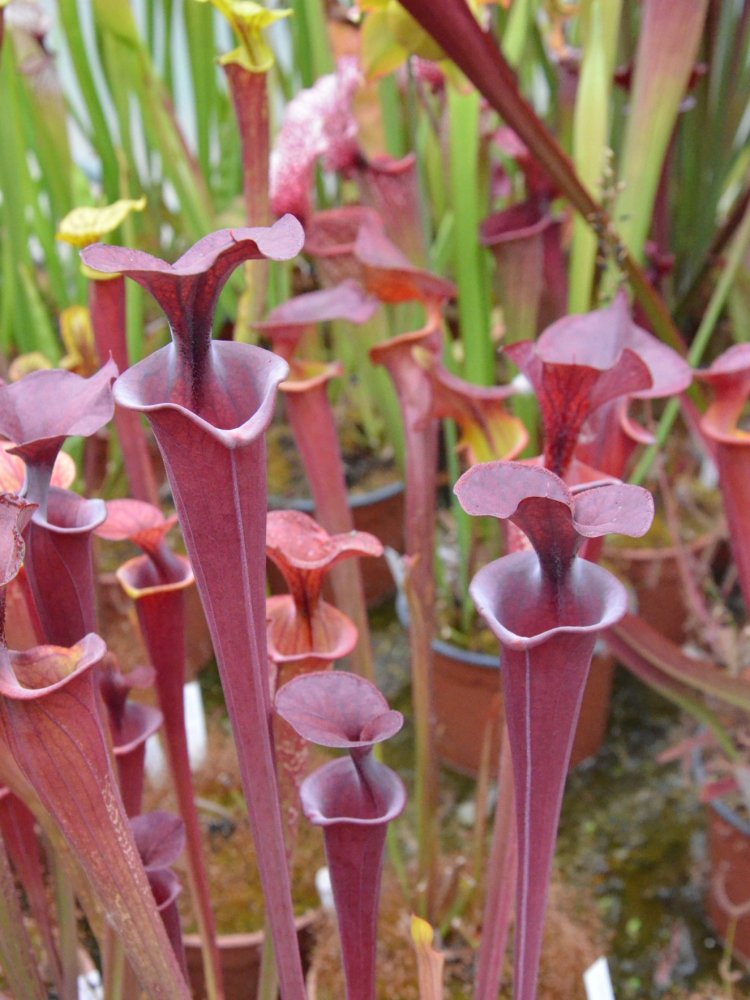
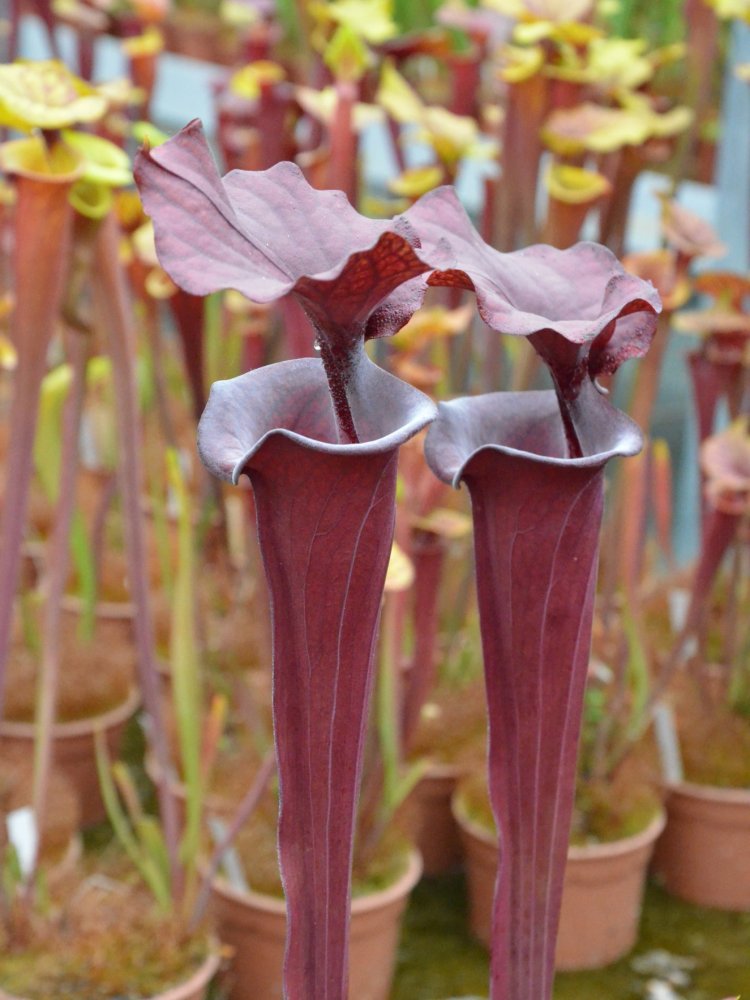
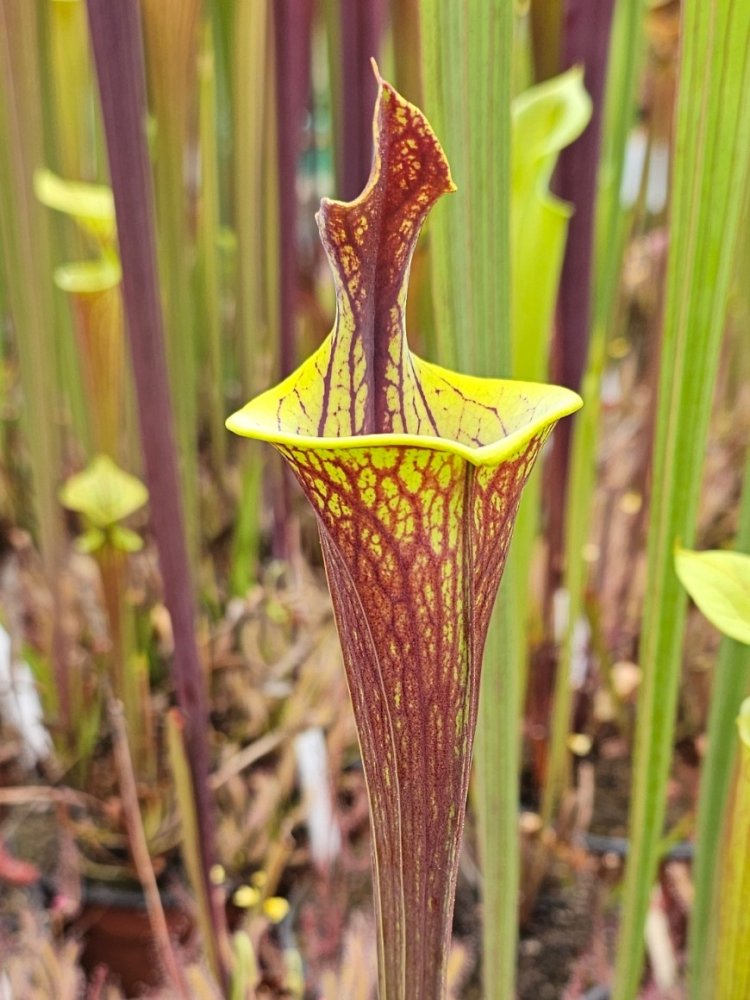
Its pitchers are entirely burgundy to very dark purple, almost black in full sun: its name means “very dark purple”. It is one of the most sought-after varieties. Our var. atropurpurea.
S. flava var. cuprea
Its lid takes on a coppery tint, from bronze to coppery red (from the Latin cuprum, copper), while the pitcher stays yellow-green. Our var. cuprea.
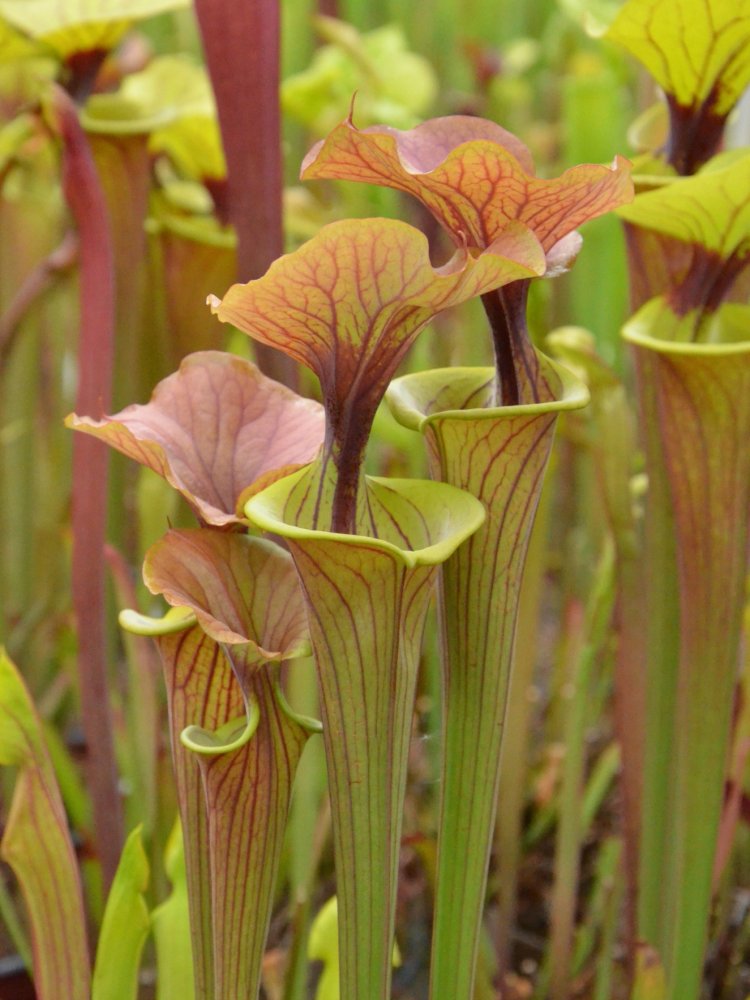
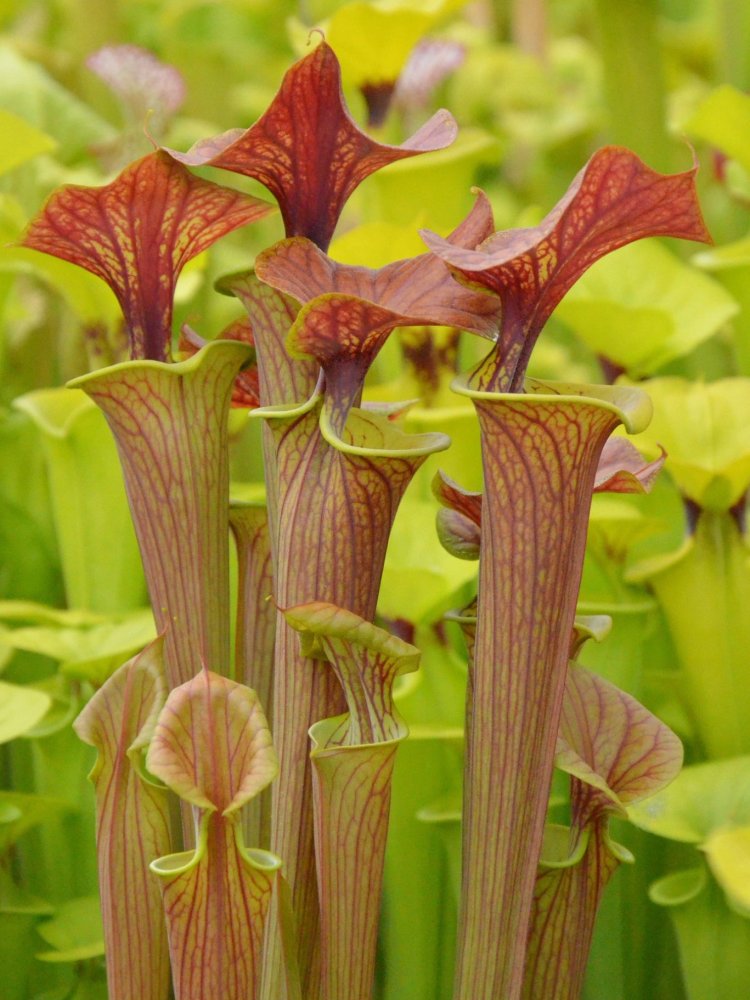
S. flava var. maxima
Not a trace of red: the plant is entirely green or yellow-green. Its pitchers can become very large, hence its name. Our var. maxima.
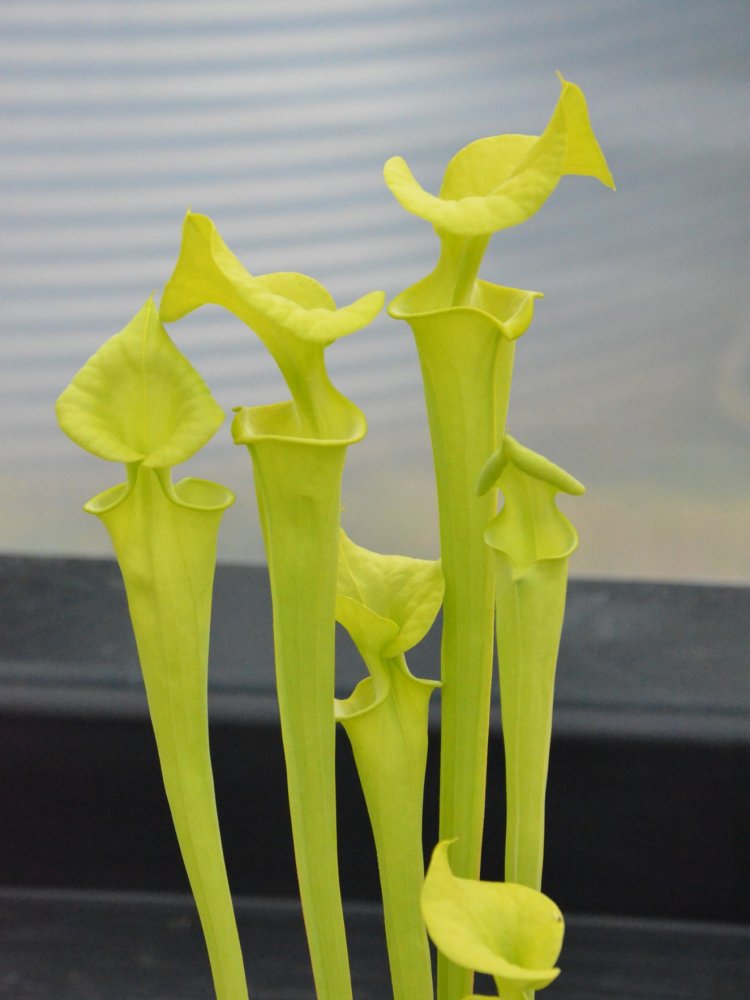
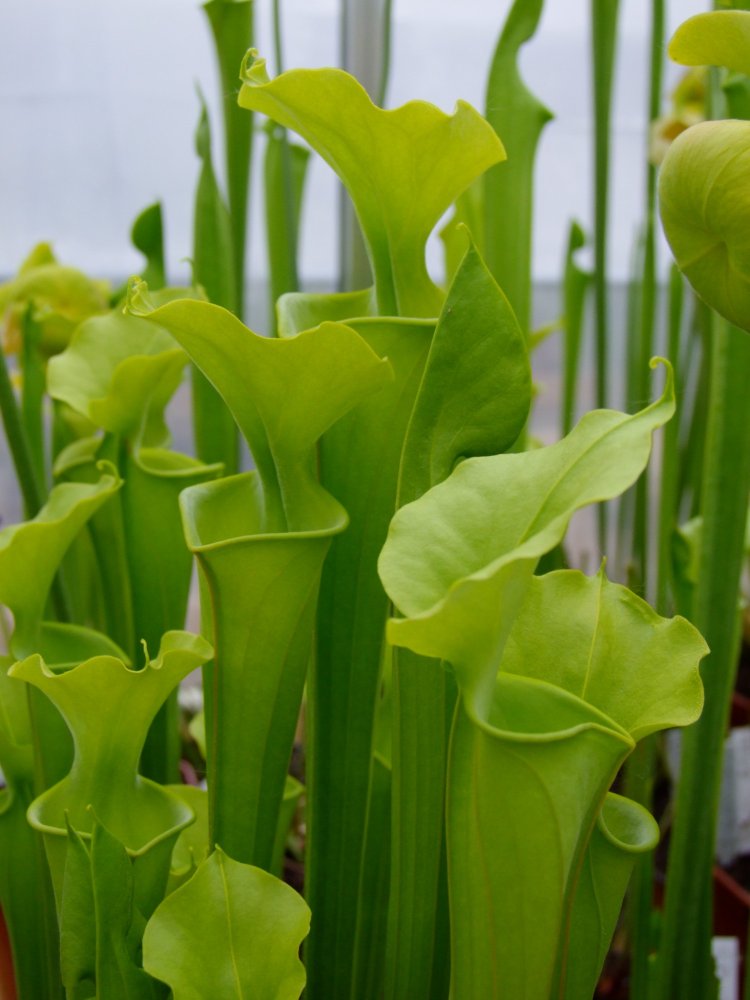
S. flava var. ornata
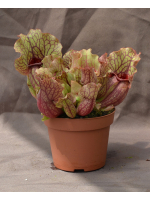
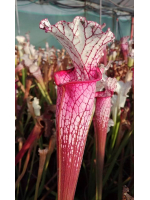
Its name means “ornate”: a dense network of red veins covers the top of the pitcher and the lid. Its density varies greatly from one plant to another. Our var. ornata.
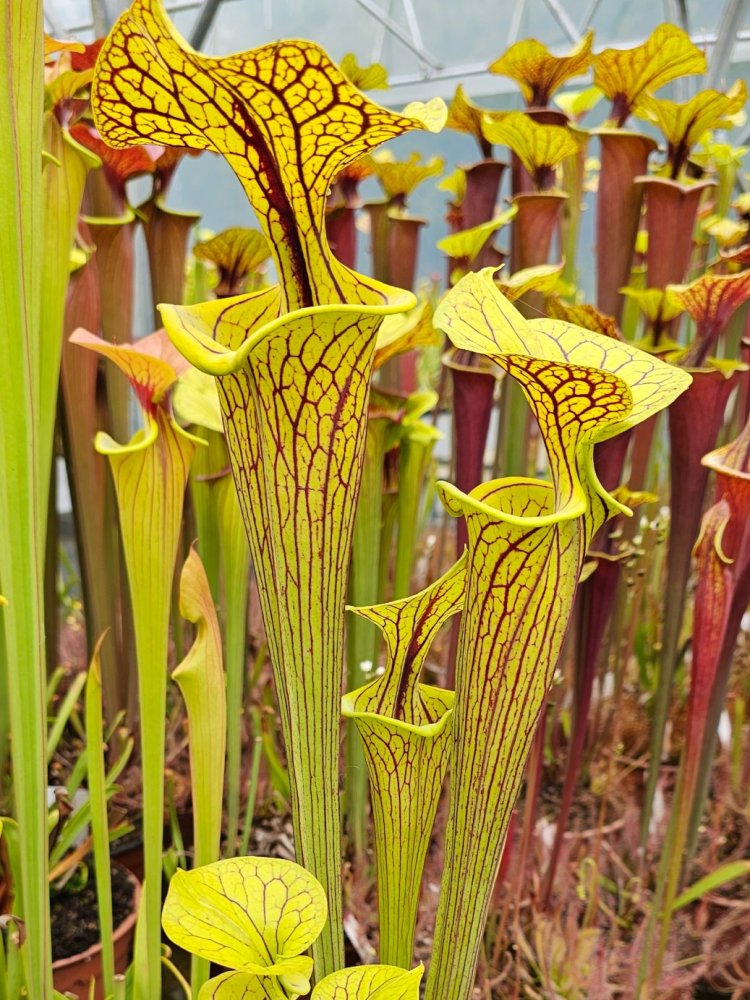
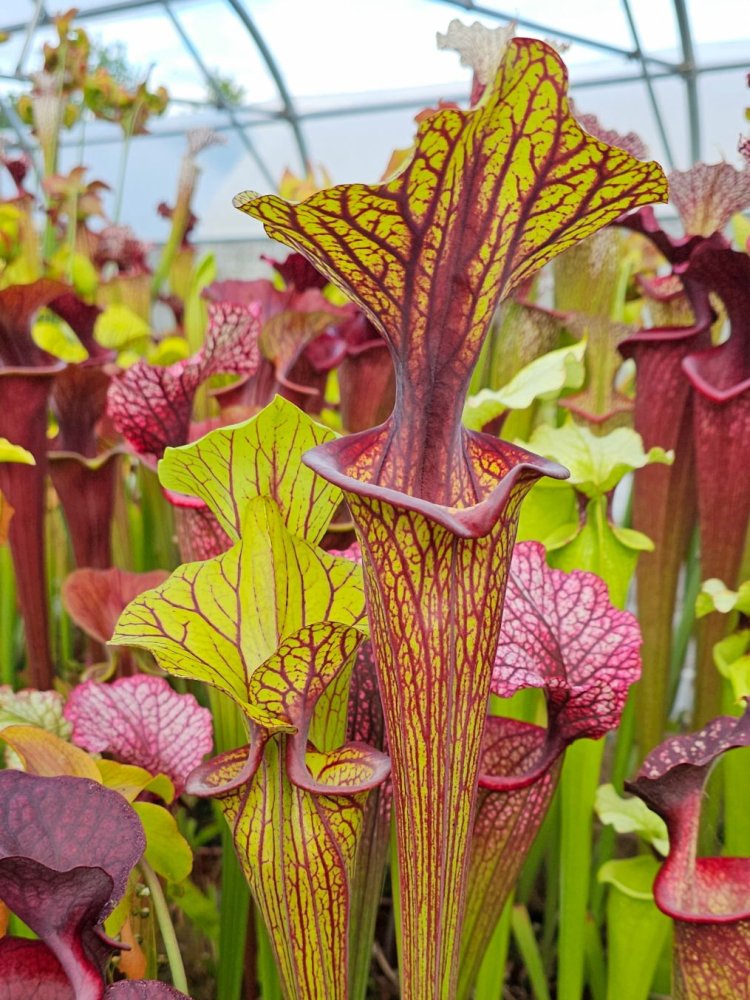
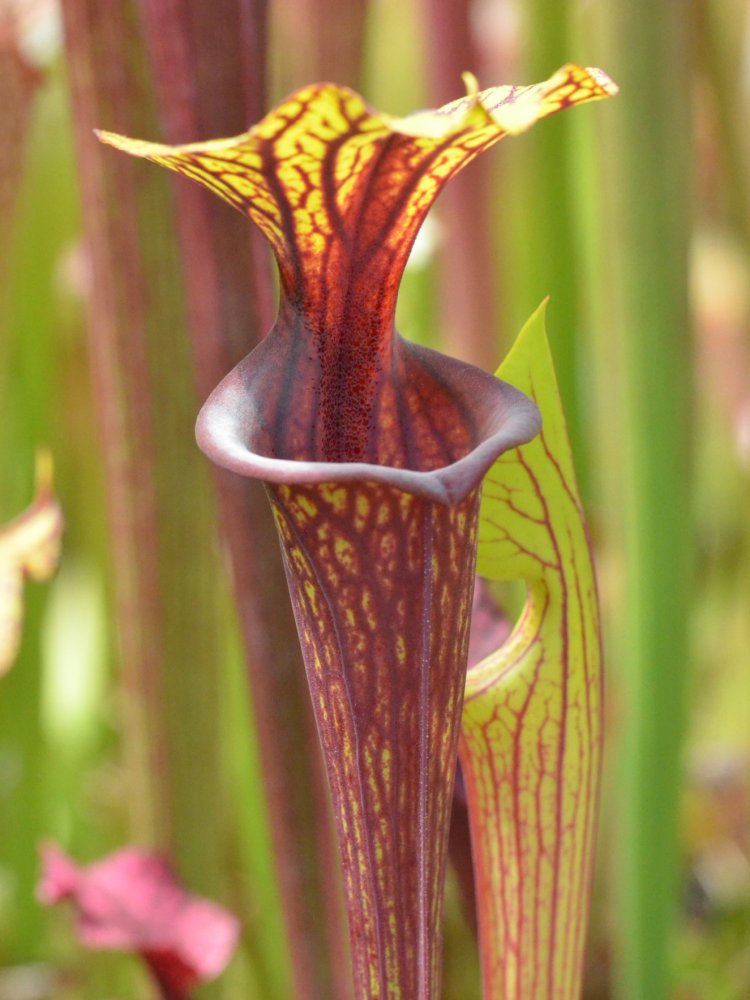
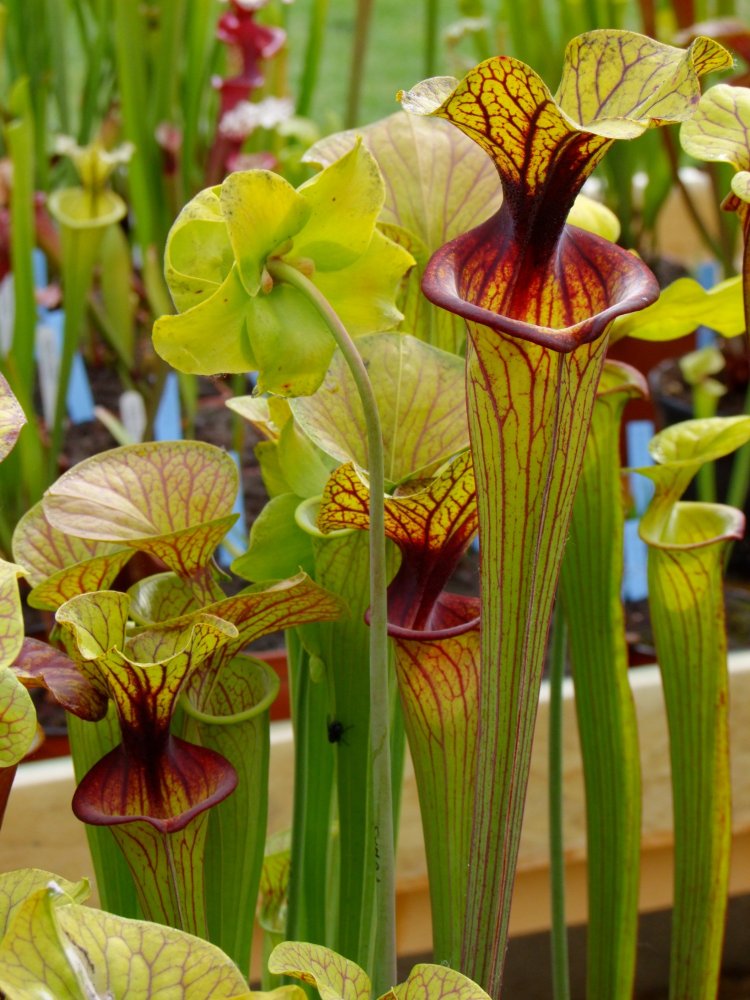
S. flava var. rubricorpora
Its name means “red body”: the pitcher is bright red to burgundy, but the lid stays green or yellow, often veined with red. It is often confused with atropurpurea. Our var. rubricorpora.
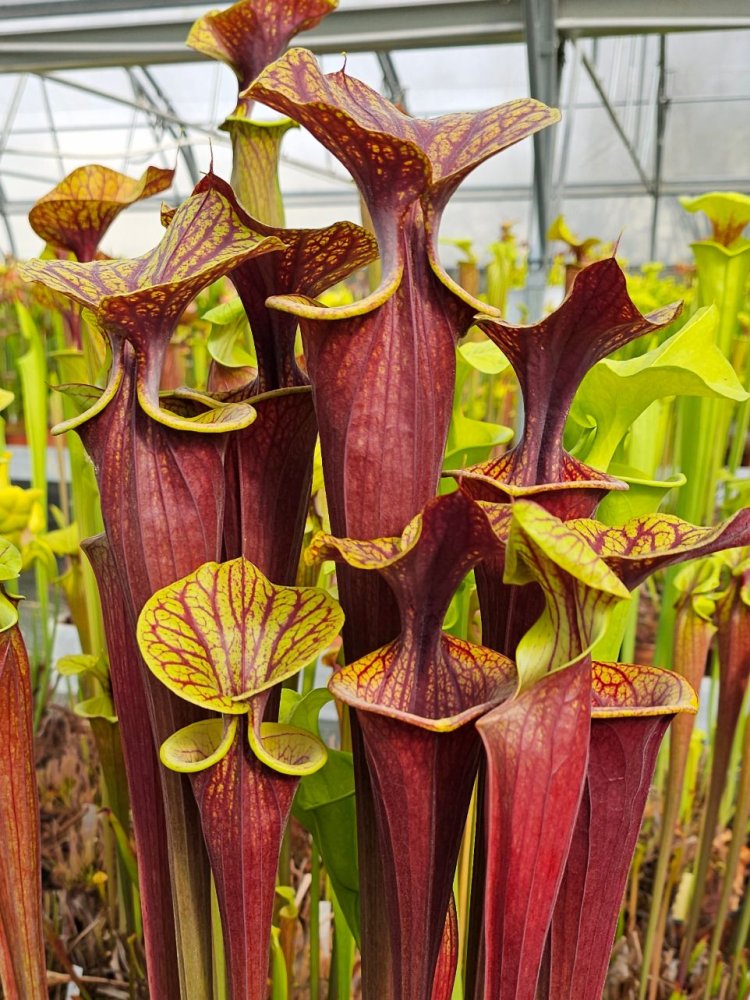
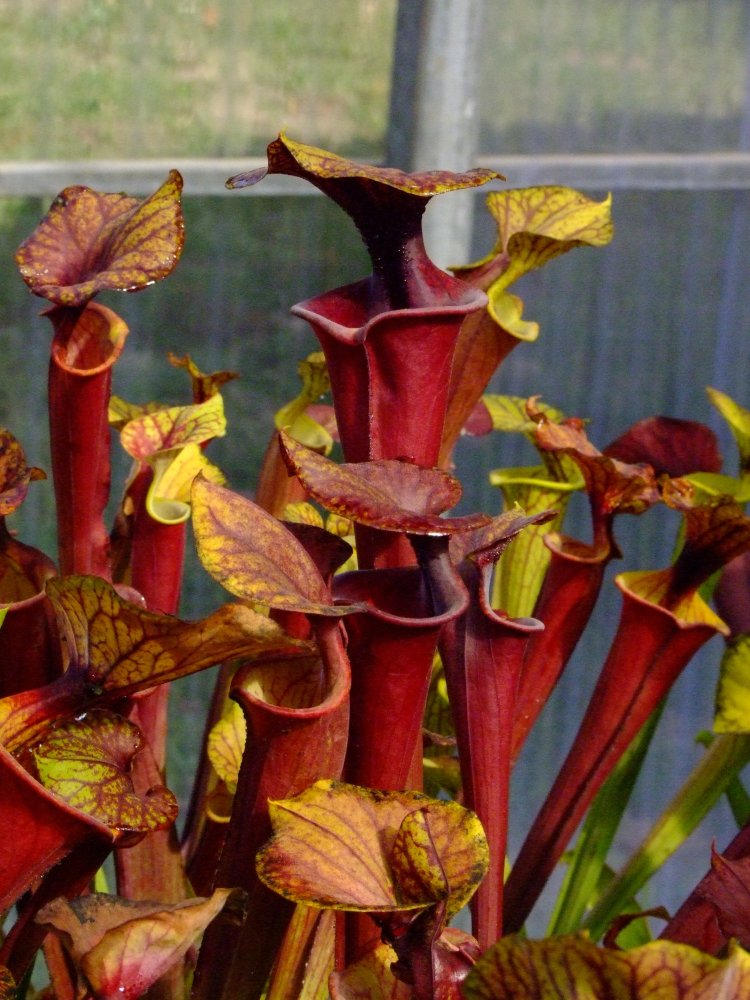
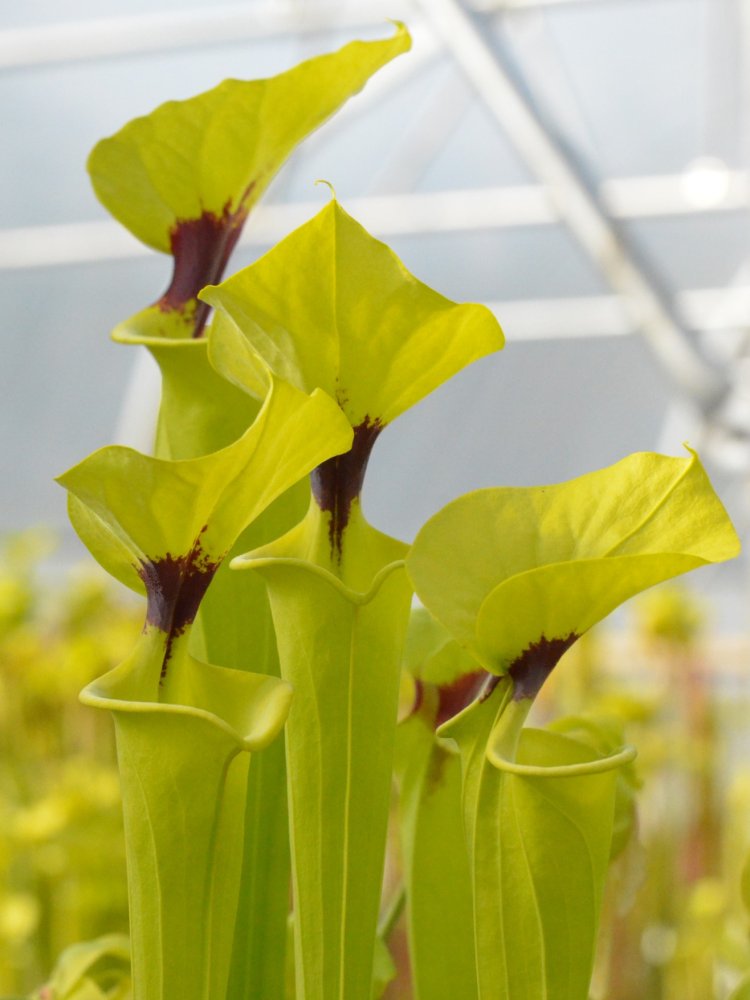
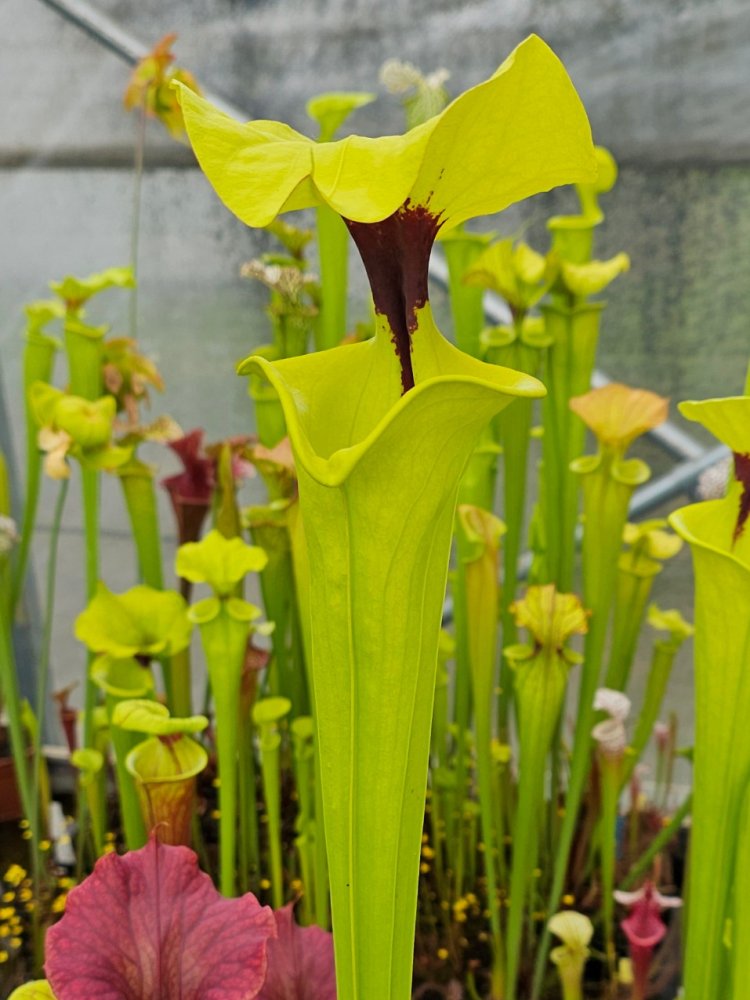
S. flava var. rugelii
A large dark red, almost black blotch just below the lid, on a plain yellow-green pitcher. It is also the sturdiest of the varieties. Our var. rugelii.
Miscellaneous
Not a botanical variety: collectors group under this name the S. flava that fit no classic variety, with intermediate or unique features. Our “miscellaneous” flava.
In cultivation
- Its large phyllodes, the flat winter leaves, appear early: do not cut them while they are green.
- Large pot (20 L or more) or bog garden, full sun, rainwater and our No. 1 mix.
- In autumn, it is one of the first to get its big clean-up.
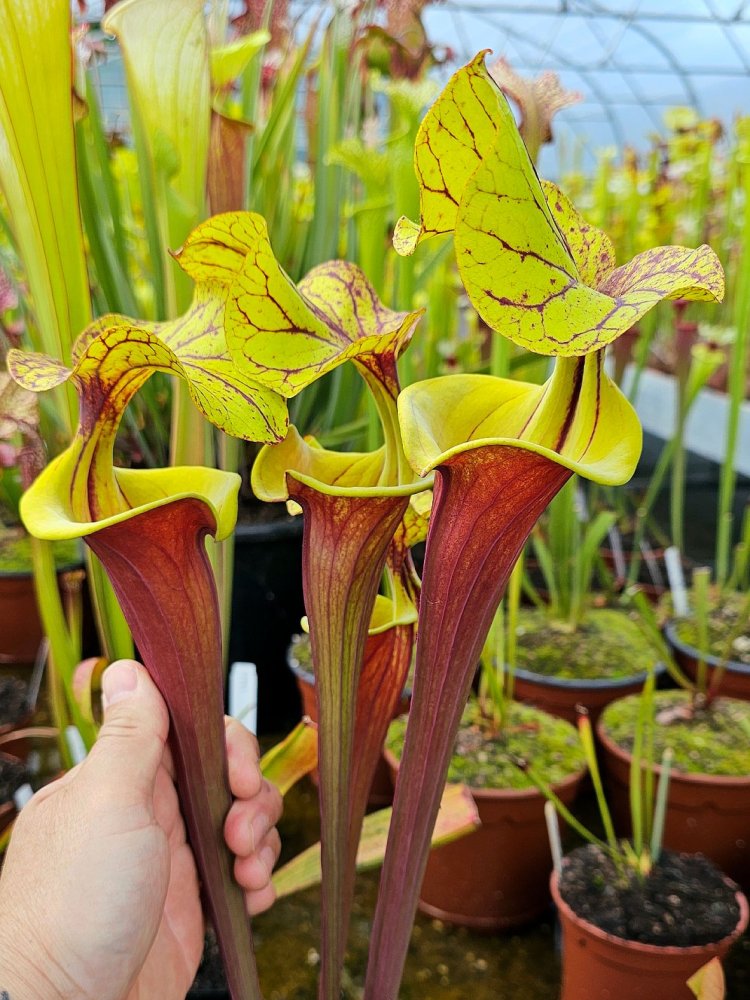
Discover our Sarracenia flava, more than 200 clones and varieties.
A question about your Sarracenia?
✉ Contact us© 2026 Cédric Carnivores - Carnivorous plant nursery since 2012
Share this article: