
 Français
 Español
 Deutsch
 Italiano


- Out-of-Stock
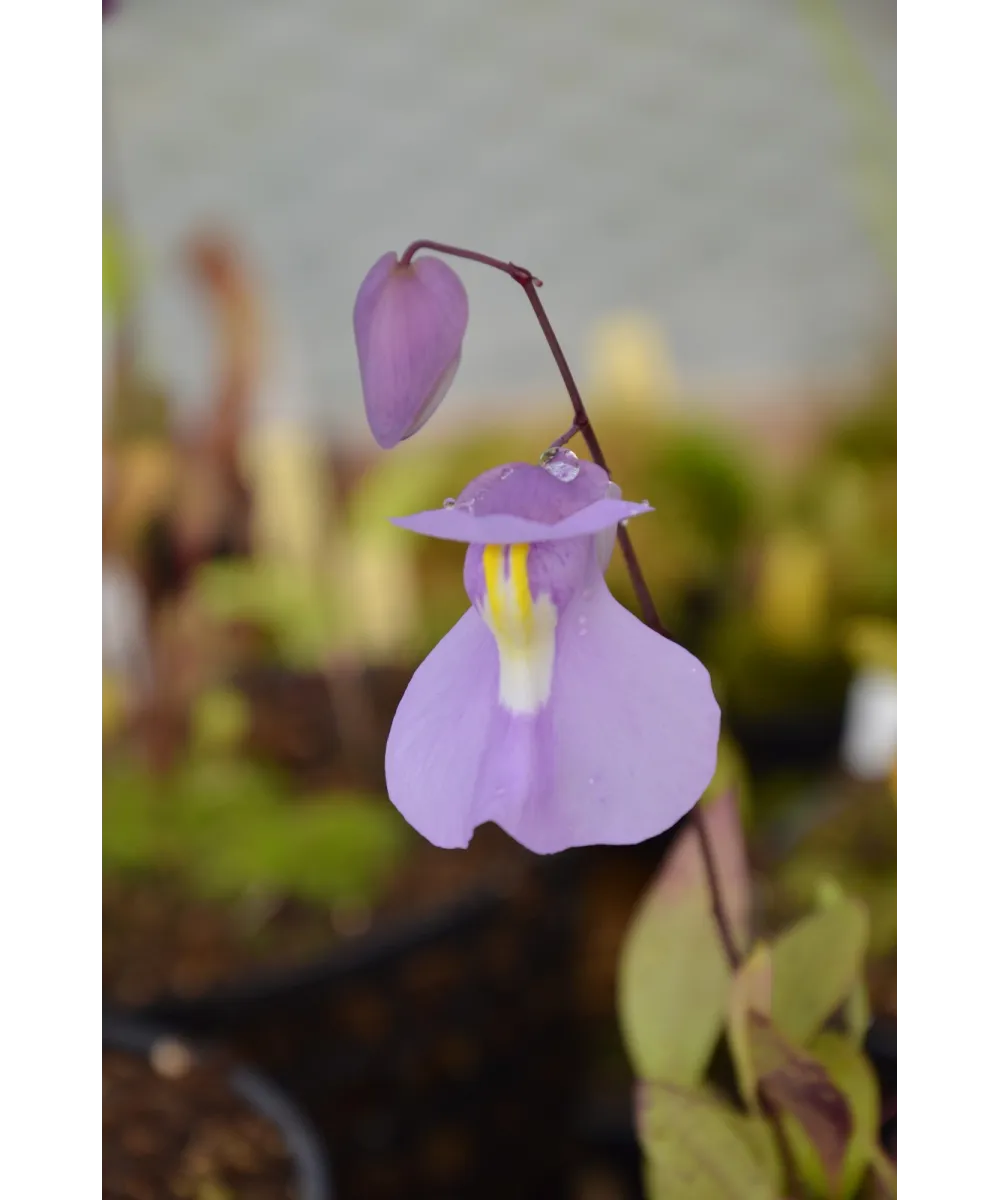

Photo of the mature mother plant: you receive a plant of the same clone, in the size you choose.

Photo of the mature mother plant: you receive a plant of the same clone, in the size you choose.


This plant is a cross between Utricularia humboldtii and quelchii. It is a tropical bladderwort with delicate flowers: bright light, 20-28 °C and constantly moist soil.

Delivery policy

Minimum order: €18
Utriculaires tropicaux are fascinating carnivorous plants. Unlike Drosera or Nepenthes, they have no visible traps: their microscopic traps, called utricules, are found in the soil or in water and suck in tiny prey (protozoa, rotifers, small invertebrates).
They are often epiphytic or terrestres plants from tropical and subtropical regions, highly prized for their delicate, colourful flowers.
*Ideal duration: 12 to 14 hours of bright light per day.
*Type of light: Gentle morning or late-afternoon sun. Horticultural LED lighting is excellent for encouraging flowering.
*Location: East or south-east window with filtered light; a bright terrarium is recommended.
*Good light: dense, healthy foliage and regular flowering.
*Lack of light: etiolated foliage, little or no flowering.
*Ideal: 20–28 °C constants.
*Night: no particular need for a drop in temperature.
*Tolerance: avoid going below 12 °C.
*Water: rainwater, demineralised water or reverse osmosis water only.
*Method: The substrate must stay constantly moist, even waterlogged. Keep a saucer of water at all times (1–2 cm). Some species even like having water up to the crown.
*Ideal: 60–80 %.
*How to achieve it: Terrarium or mini greenhouse. Some species (e.g. U. sandersonii, U. livida) tolerate normal household humidity if the substrate is moist enough.
*Recommended mix: 50% blond sphagnum peat, 50% quartz sand or perlite.
*Épiphytes (ex. U. jamesoniana, U. alpina): A more airy mix with live sphagnum, fine pine bark and perlite.
*Avoid: enriched or heavy substrates.
*Food: The bladders catch their micro-prey in the substrate on their own → no need to feed them artificially.
*Repotting: Every 1–2 years, to refresh the substrate.
*Easy division: bladderworts spread quickly.
*The flowers are their greatest asset: they look like tiny miniature orchids.
*Conditions for flowering: enough light + constant humidity + a slightly cramped pot.
*Abundant flowering is possible all year round in well-managed indoor cultivation.
*Utricularia sandersonii → robust, flowers almost continuously (blue or white flowers).
*Utricularia livida → forgiving, beautiful purple flower spikes.
*Utricularia longifolia → larger, with spectacular mauve flowers.
➜ Learn more about these species: Utricularia humboldtii and Utricularia quelchii, in our encyclopedia
Data sheet
These plants share its growing conditions: you can grow them together.
Drosera prolifera is part of our Tropical and subtropical Drosera selection. It is a sundew with no dormancy that grows all year: bright light, 20-30 °C and feet in pure water.
This plant is a cross between Nepenthes spathulata and ampullaria 'burgundy speckle'. It is produced by Borneo Exotics (reference BE-3881), our partner nursery specialising in Nepenthes. It is a versatile intermediate Nepenthes, well suited to indoor growing: bright light, high humidity, 21-30 °C by day.
Three plants for indoors, behind a bright window: Drosera capensis, the beginners' champion, a Drosera binata and an intermediate Nepenthes. Water with rainwater or demineralised water, never any fertiliser. The Nepenthes likes a humid room, such as a bathroom with a window.
Drosera regia or royal Sundew . It is among the largest in the world drosera, these leaves are 50cm and flowers are a beautiful purple.
Utricularia reniformis 'Big sister' is part of our Utricularia selection. It is a tropical bladderwort with delicate flowers: bright light, 20-28 °C and constantly moist soil.
Utricularia alpina is part of our Utricularia selection. It is a tropical bladderwort with delicate flowers: bright light, 20-28 °C and constantly moist soil.
Utricularia humboldtii is part of our Utricularia selection. It is a tropical bladderwort with delicate flowers: bright light, 20-28 °C and constantly moist soil.
A question about this product or how to grow it? Ask it: the nursery answers, and the answer helps other growers too.
No questions yet: be the first to ask one!
Do you have this plant?
Share a photo of it from your My collection page: it will join our customers’ gallery.
This plant is a cross between Utricularia humboldtii and quelchii. It is a tropical bladderwort with delicate flowers: bright light, 20-28 °C and constantly moist soil.


