
 Français
 Español
 Deutsch
 Italiano



Sarracenia in spring: waking up, flowers and the last repotting


Sarracenia in spring
The big awakening
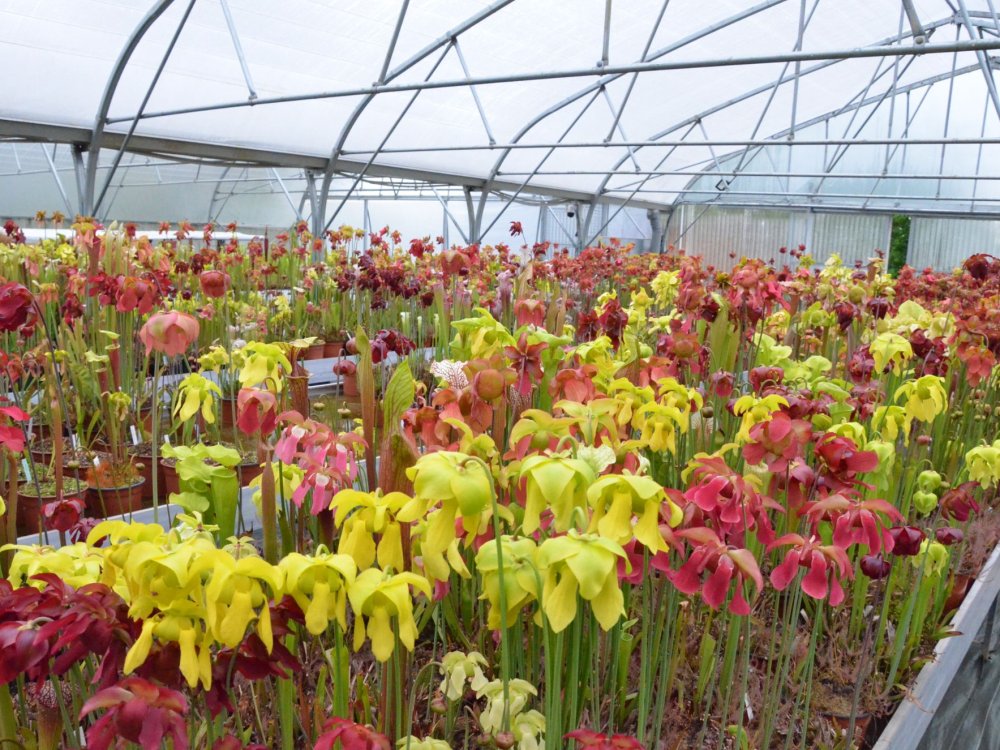
From the end of winter, the flowers come out first, then the pitchers follow. It is the busiest season, in the garden as in the greenhouse.
This article comes from “Les sarracenia en images”, the book Cédric wrote from his experience at the nursery, and from our growing guide. All photos are ours.
Flowers first
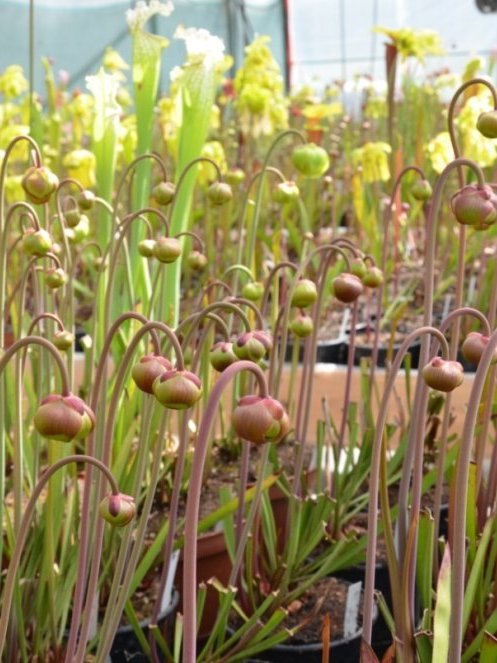
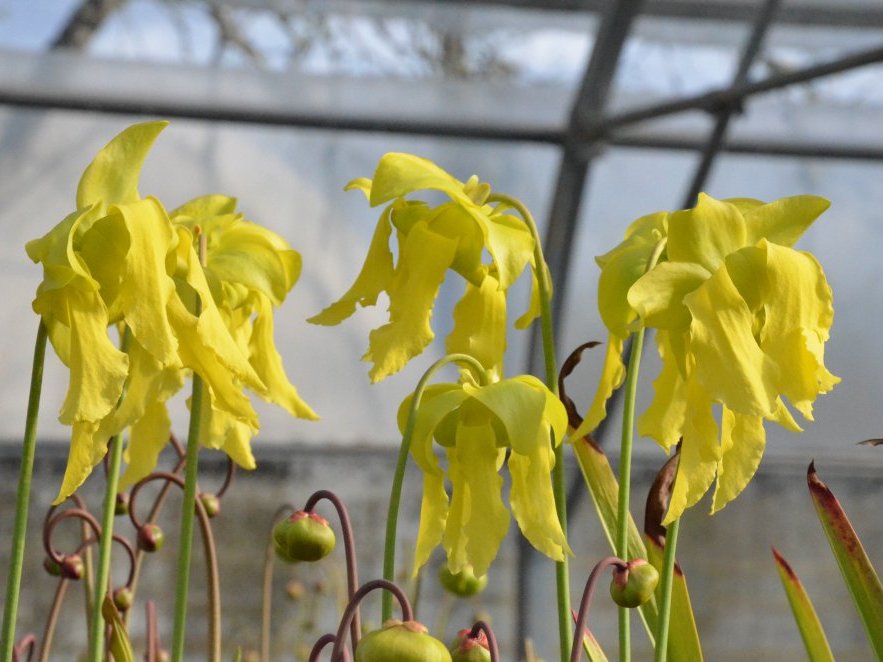
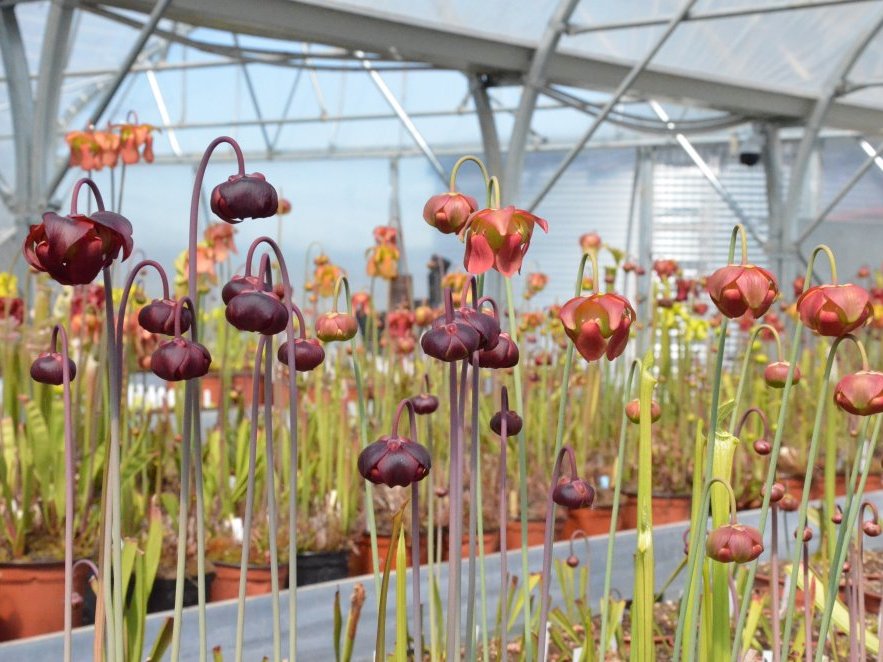
From late February, the scales of the rhizome open and the flower buds emerge, even before the pitchers. S. flava and S. oreophila lead the way. In these species, flowers and leaves grow at the same time: with a shorter growing season than the others, S. oreophila has no time to lose. All about blooming: Sarracenia flowers.
Watering resumes
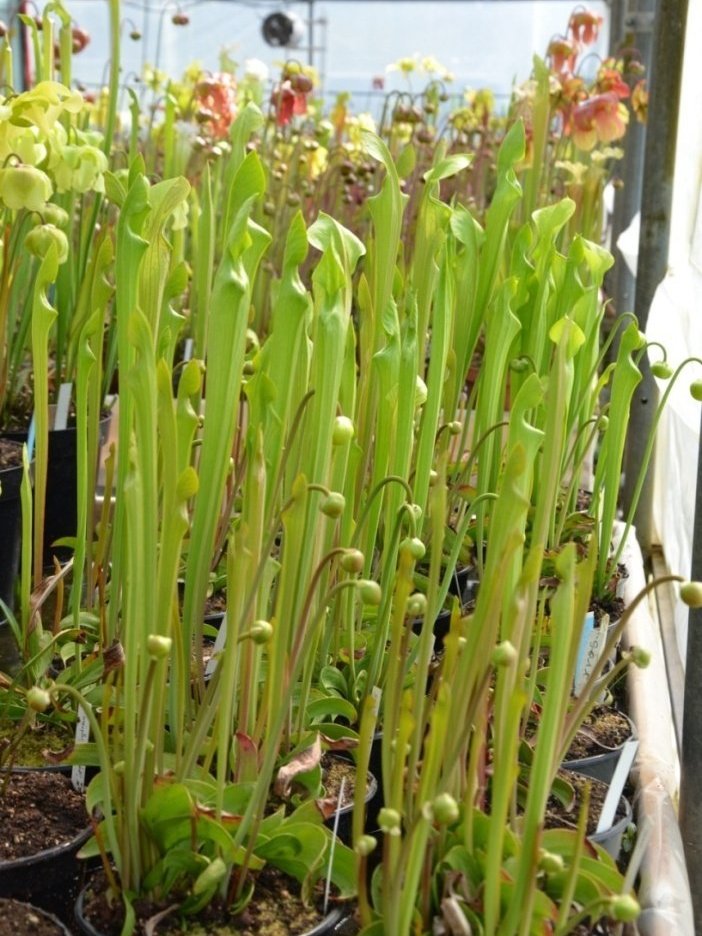
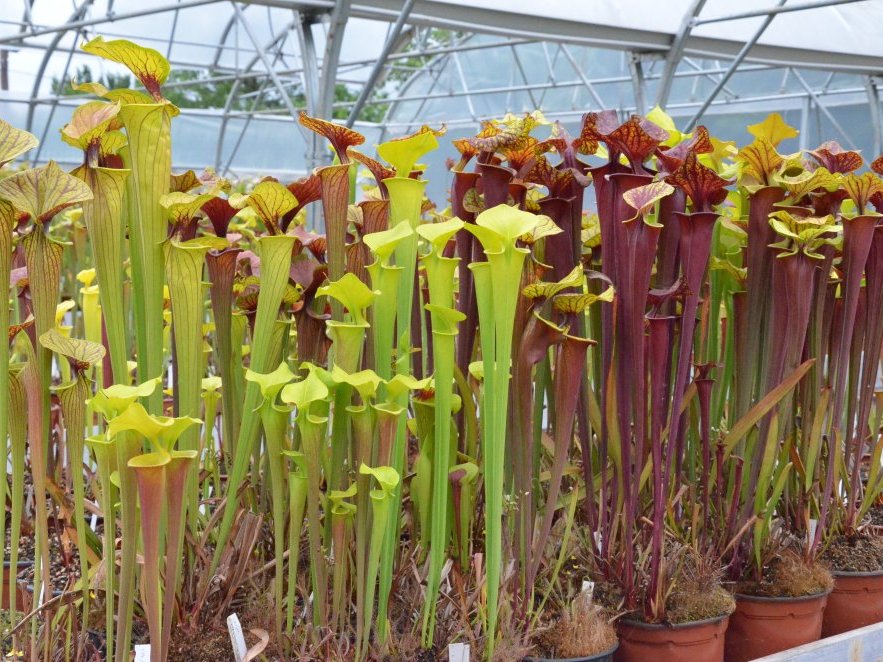
Growth runs from April to September, as soon as the fine days return. Gradually increase watering with rainwater in March, then, from April, keep the substrate soaked, with water under the pots.
The end of repotting
Repotting is best done in winter, during dormancy. In spring, only the last repotting is finished: when the plants start growing again, avoid disturbing them. Old substrate can trigger diseases: renew it with our No. 1 mix. The methods are in Propagating Sarracenia.
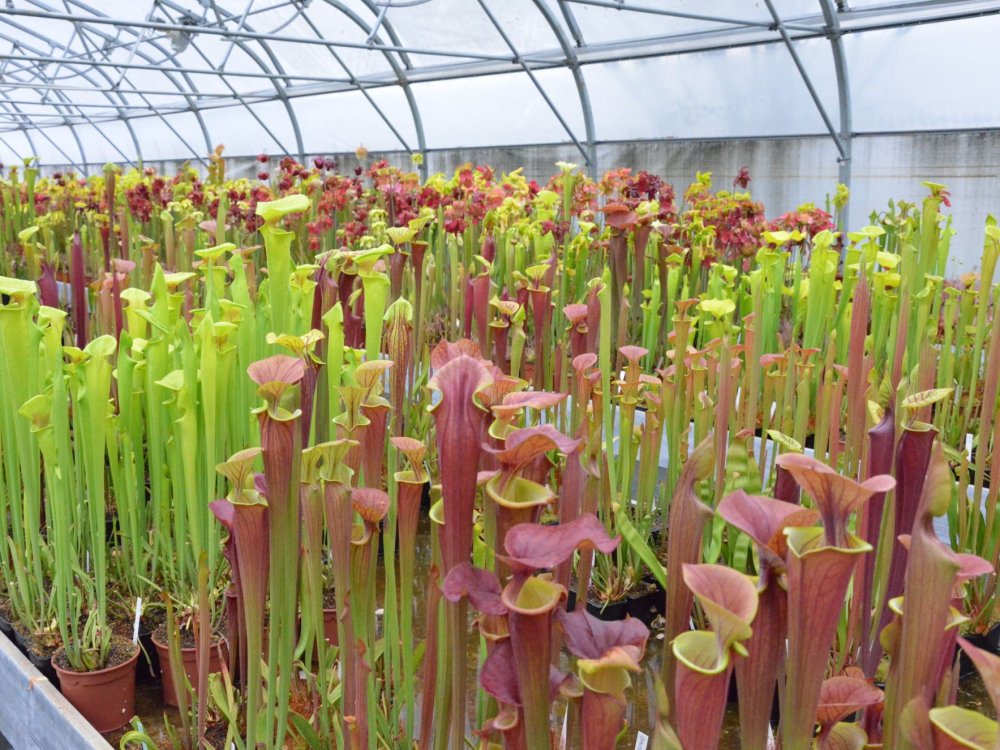
It is also the season for classic sowings (Sowing Sarracenia) and, in April, for pollination (Pollinating Sarracenia).
Beware of botrytis
Botrytis, or grey mould, appears mainly between March and late May, when warmth and humidity suit it. Growing under glass increases the risk: ventilate as much as possible at this time. See Sarracenia diseases and pests.
Next in the series: Sarracenia in summer.
A question about your Sarracenia?
✉ Contact us© 2026 Cédric Carnivores - Carnivorous plant nursery since 2012
Share this article:


Similar posts

Sarracenia in winter: rest, frost and the big clean-up
Rest from October to March, watering, frost hardiness down to -20 °C, greenhouse ventilation and the end-of-winter clean-up: Sarracenia in winter.

Fertiliser for Nepenthes and Heliamphora: our advice
Yes, Nepenthes and Heliamphora need fertiliser, but not just any way: Osmocote, Liquid Ocean, doses and the right moments.