
 Français
 Español
 Deutsch
 Italiano
- -20%
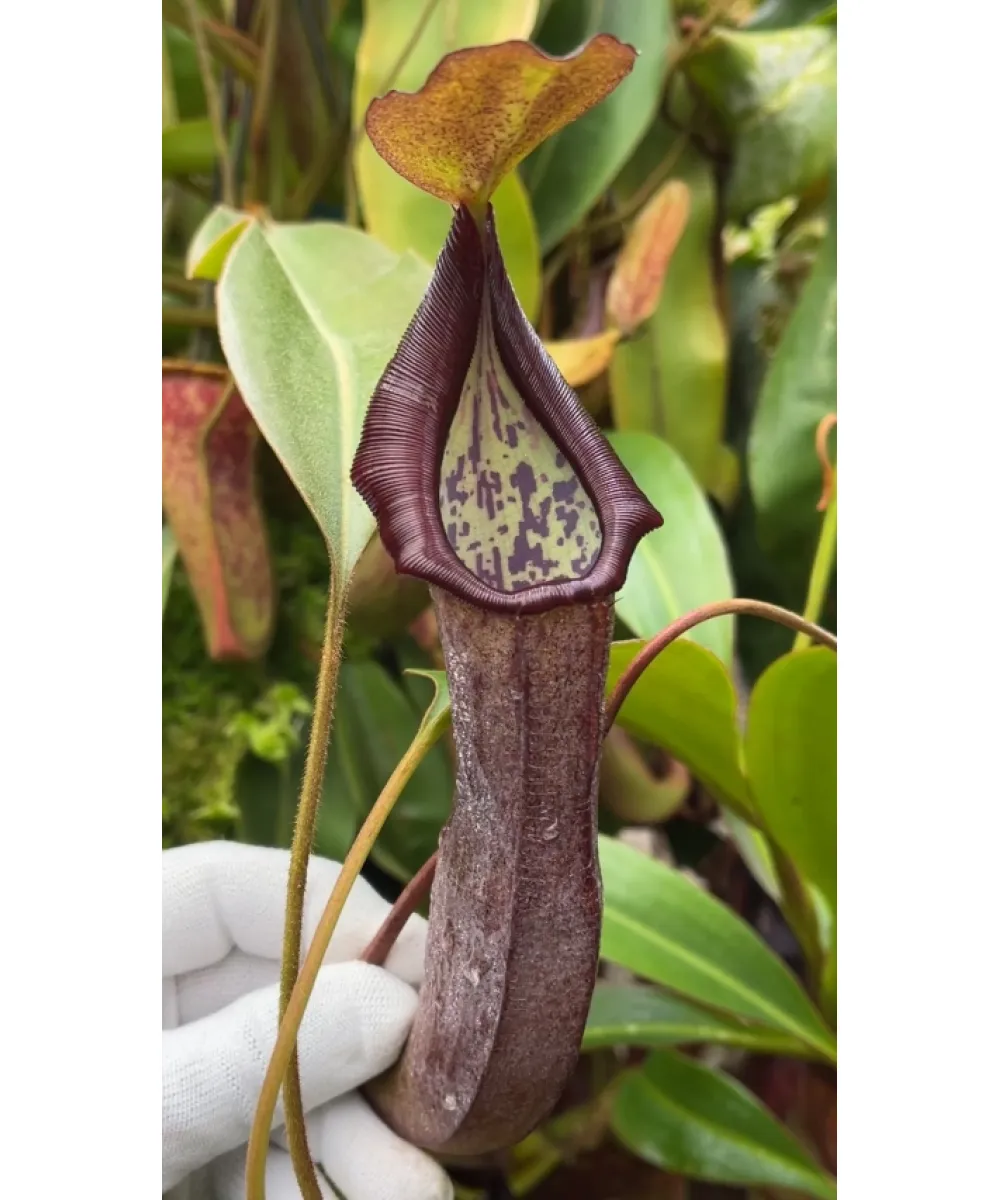


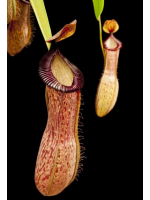
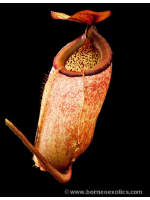
Photo of the mature mother plant: you receive a plant of the same clone, in the size you choose.

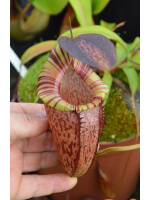
Photo of the mature mother plant: you receive a plant of the same clone, in the size you choose.


Nepenthes burkei x maxima

Delivery policy

Minimum order: €18
This plant is a cross between Nepenthes maxima and ramispina. It is produced by Borneo Exotics (reference BE-3740), our partner nursery specialising in Nepenthes.
The parents: N. maxima comes from Sulawesi and New Guinea. N. ramispina comes from the mountains of Peninsular Malaysia.
Mother: N. maxima from Gunung Tangokom; father: a selected N. ramispina. A clone kept after years of trials for its vigour and even dark colour, introduced in 2017; its pitchers outgrow those of both parents. Borneo Exotics classes it as a highland Nepenthes (grown at about 26 °C by day and 12 °C at night).
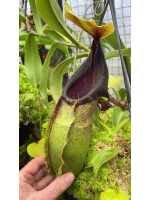
In the photo: a speckled purple pitcher with an orange lid. Colours vary with the season, the age of the plant and its exposure.
It is a versatile intermediate Nepenthes, well suited to indoor growing: bright light, high humidity, 21-30 °C by day.
Cédric's tip: intermediate Nepenthes are the best choice for growing these plants indoors without specialised equipment.
➜ Complete Nepenthes growing guide (interactive guide)
➜ Learn more about these species: Nepenthes maxima and Nepenthes ramispina, in our encyclopedia
Data sheet
These plants share its growing conditions: you can grow them together.
A hybrid of two Heliamphora from the South American tepuis: plenty of light, cool temperatures (18 to 24 °C by day), high humidity and lime-free water.
Hybrid made at our nursery between Heliamphora collina and Heliamphora parva. A tepui plant: plenty of light, cool conditions, high humidity and lime-free water.
Hybrid made at our nursery between Heliamphora folliculata and Heliamphora exappendiculata (Bubble giant). A tepui plant: plenty of light, cool conditions, high humidity and lime-free water.
Nepenthes spathulata – best selected clone: BE-3175 is part of our Highland Nepenthes selection. It is produced by Borneo Exotics (reference BE-3175), our partner nursery specialising in Nepenthes. It is a highland Nepenthes that needs cool nights (12-16 °C), high humidity and bright light without direct sun.
This plant is a cross between Nepenthes veitchii and ephippiata. It is produced by Borneo Exotics (reference BE-4708), our partner nursery specialising in Nepenthes. It is a highland Nepenthes that needs cool nights (12-16 °C), high humidity and bright light without direct sun.
Nepenthes x alisaputrana – assorteds clones: BE-3931 is part of our Highland Nepenthes selection. It is produced by Borneo Exotics (reference BE-3931), our partner nursery specialising in Nepenthes. It is a highland Nepenthes that needs cool nights (12-16 °C), high humidity and bright light without direct sun.
Nepenthes x alisaputrana – best selected clone: BE-4657 is part of our Highland Nepenthes selection. It is produced by Borneo Exotics (reference BE-4657), our partner nursery specialising in Nepenthes. It is a highland Nepenthes that needs cool nights (12-16 °C), high humidity and bright light without direct sun.
This plant comes from a cross between (N. ventricosa x sibuyanensis) and N. × trusmadiensis 'EP'. It is a highland Nepenthes that needs cool nights (12-16 °C), high humidity and bright light without direct sun.
A question about this product or how to grow it? Ask it: the nursery answers, and the answer helps other growers too.
No questions yet: be the first to ask one!
Do you have this plant?
Share a photo of it from your My collection page: it will join our customers’ gallery.
Nepenthes burkei x maxima


