
 Français
 Español
 Deutsch
 Italiano



Carnivorous plant substrate: our raw materials and our 4 mixes


The substrate of carnivorous plants
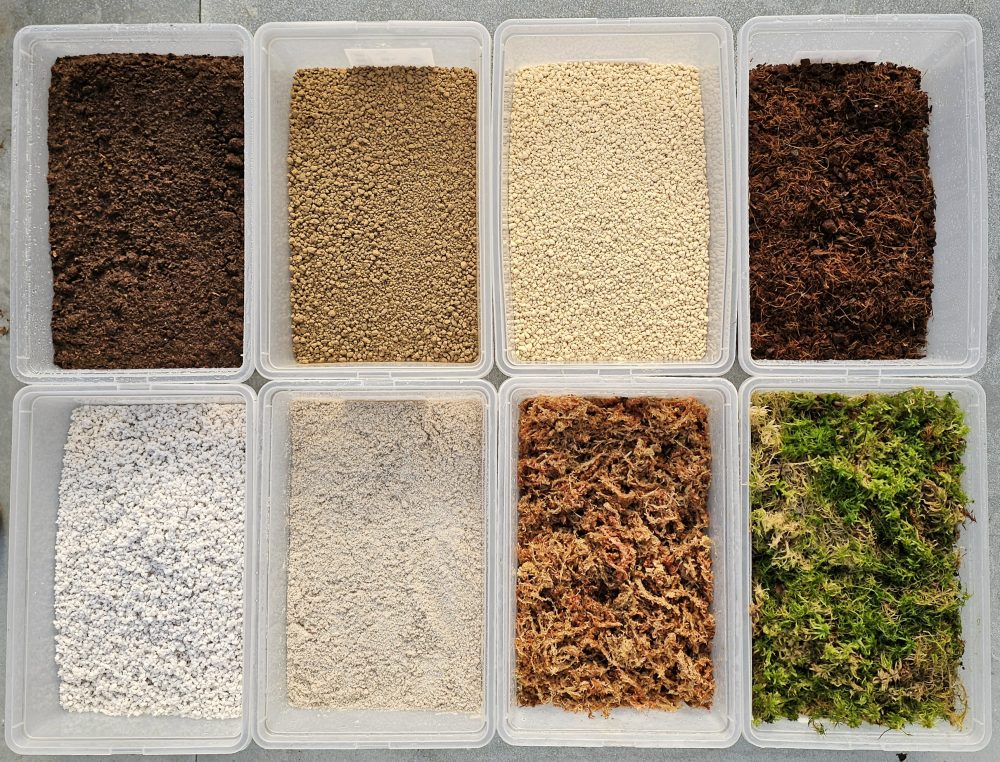
Our eight raw materials and our four home-made mixes
What goes in the pot matters as much as light and water. Here, in pictures, is what we use at the nursery and why.
A carnivorous plant is never grown in potting compost. In the wild, it grows in peat bogs, leached sands or cushions of moss: soils that are poor, acidic and always airy. At Cédric Carnivores, we prepare our own substrates from eight raw materials, weighed and mixed in our workshop. This article shows you each of them, our four mixes, and how to choose the right one for your plant.
Why a special substrate?
Carnivorous plants have learned to live where other plants starve. Their soil gives them almost nothing: their prey supplies the nitrogen and minerals. In return, their roots have become very sensitive to mineral salts and lime.
- No potting compost, garden soil or compost: they are too rich and burn the roots.
- No fertiliser, neither in the soil nor in the watering water.
- No lime: an acidic substrate, and lime-free water (rainwater, demineralised or reverse-osmosis water).
- Air around the roots: the substrate stays moist but must never turn into compact mud.
Our eight raw materials
Each one has a job: holding water, letting air in, draining or acidifying. Their proportions make the mix.
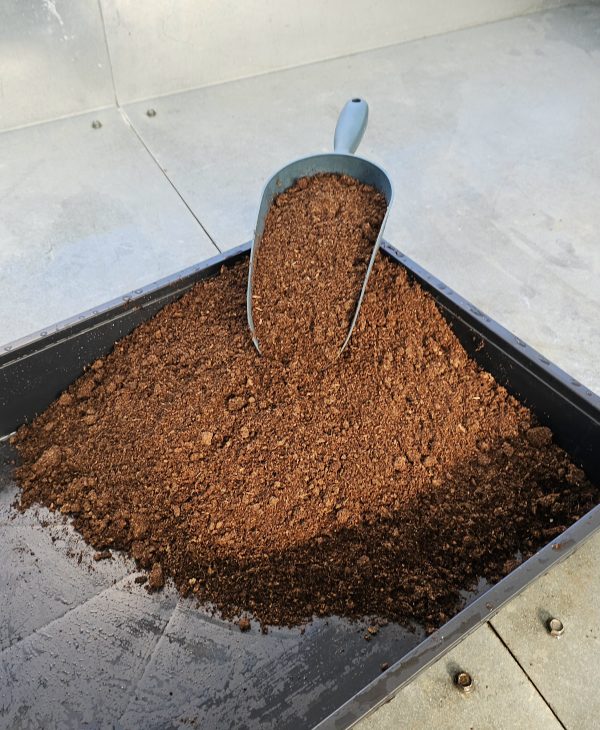
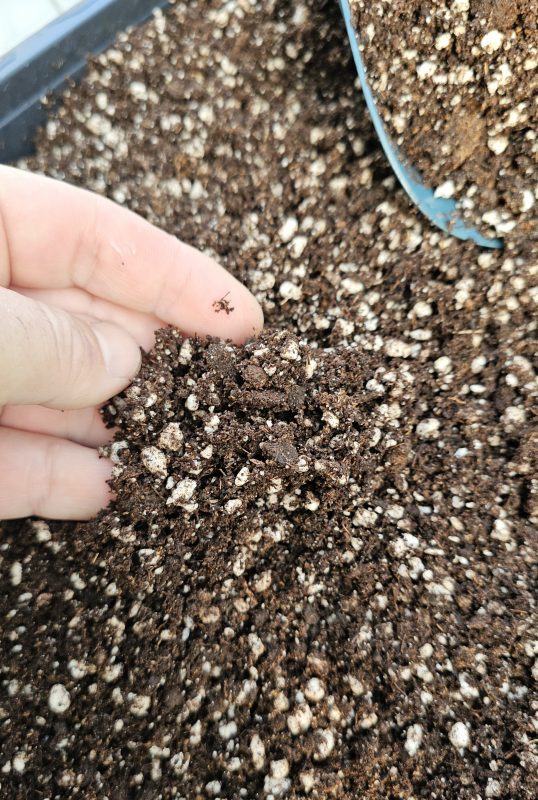
Blond peat
Sphagnum moss slowly decomposed in peat bogs. Very acidic and very poor, it holds water for a long time. It is the base of the mixes for bog plants.
In: No. 1, No. 2
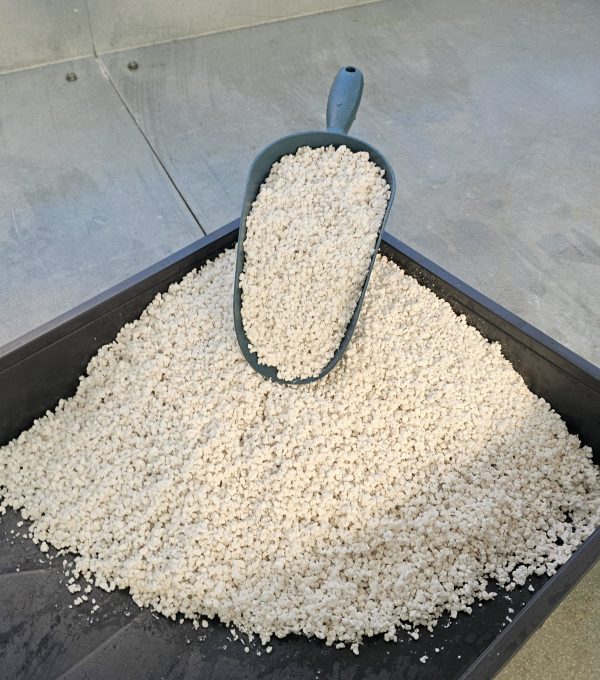
Perlite
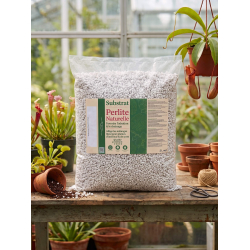
A volcanic rock heated until it pops like popcorn. Light and sterile, it does not rot and gives nothing to the plant: it lets air into the mix and stops it from compacting.
In: No. 1, No. 3
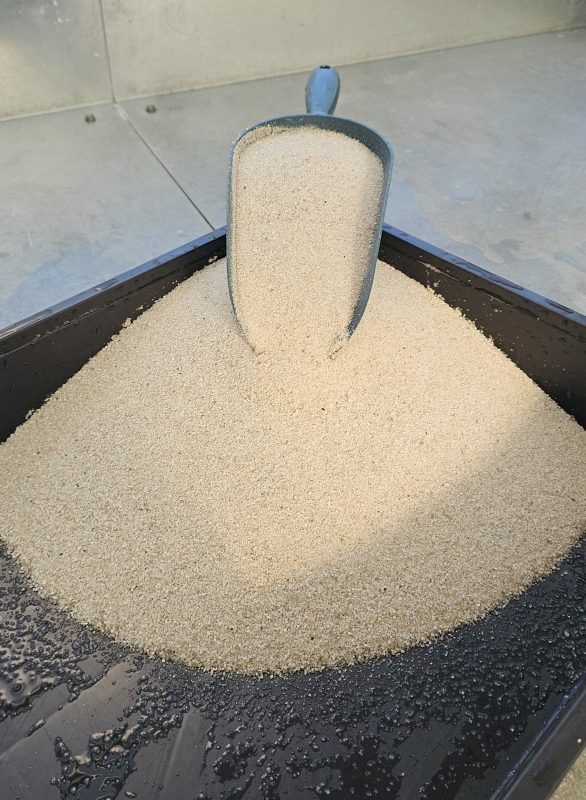
Quartz sand
A washed silica sand, free of lime. It drains, adds weight and keeps the mix firm around small roots. Never use sea, river or builder's sand: they contain salt or lime.
In: No. 2
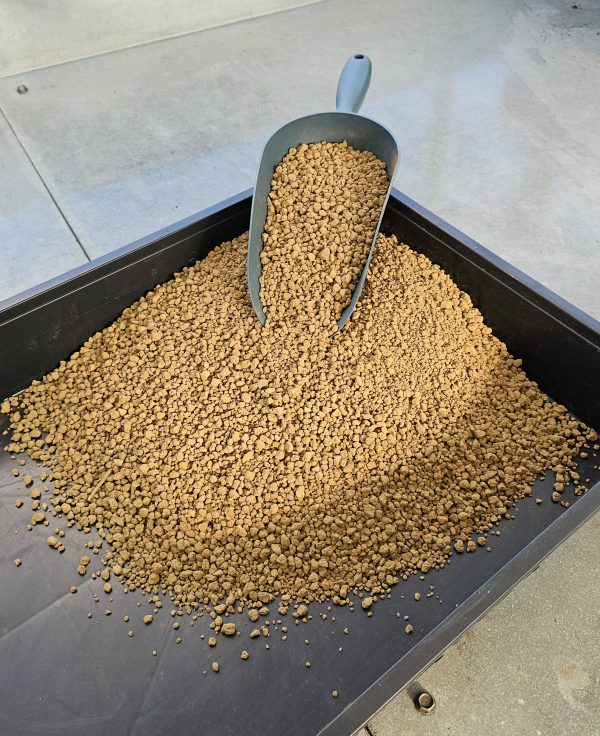
Akadama
A volcanic clay from Japan, fired into granules, well known to bonsai growers. Each grain holds water inside and lets air pass between the grains.
In: No. 4
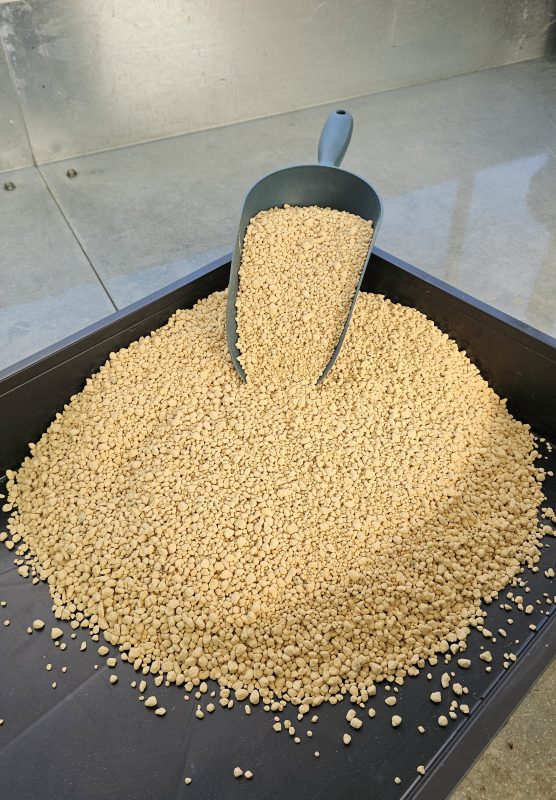
Kanuma
A light, acidic Japanese volcanic pumice, usually used for azaleas. It drains, lets air in and holds a little moisture.
In: No. 4
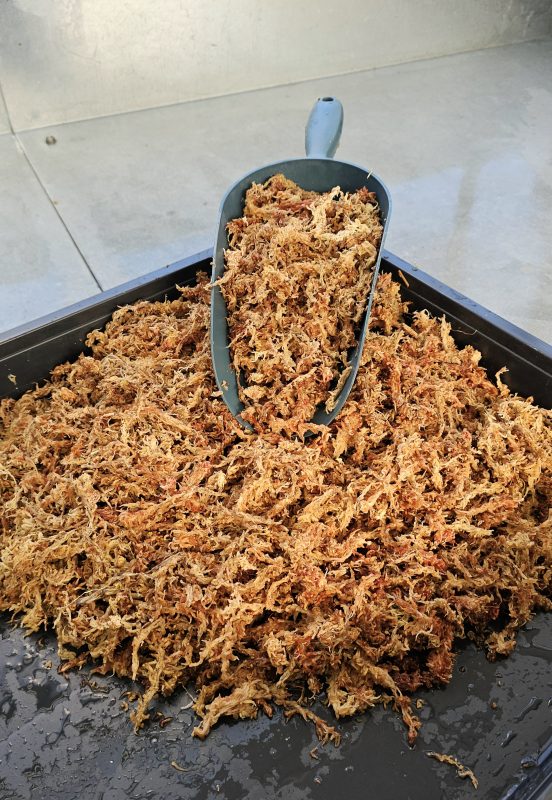
Dried sphagnum
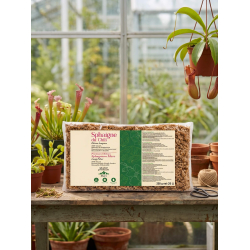
A dried moss with long fibres. It holds several times its weight in water while staying airy and acidic: ideal for Nepenthes roots.
In: No. 3, No. 4
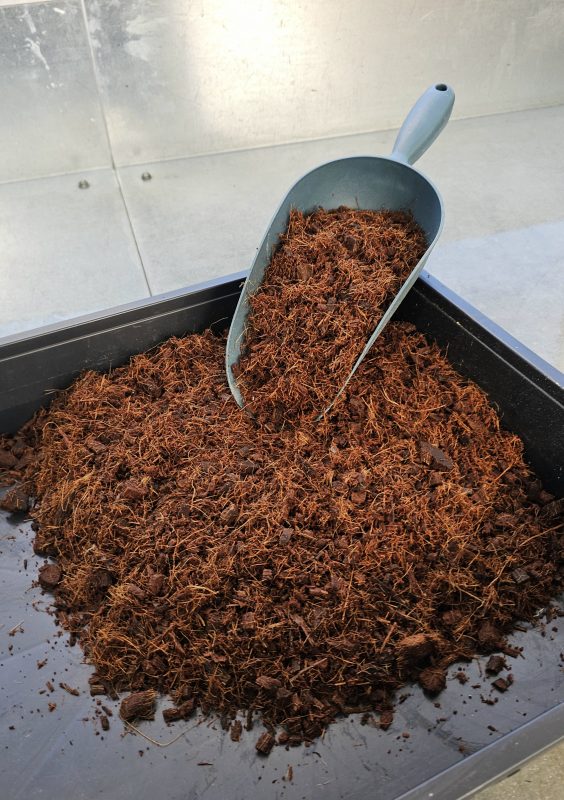
Coco chips
Pieces of coconut husk. They create large air pockets and break down very slowly. If you buy some for your own mixes, choose it rinsed: coco can contain salt.
In: No. 3, No. 4
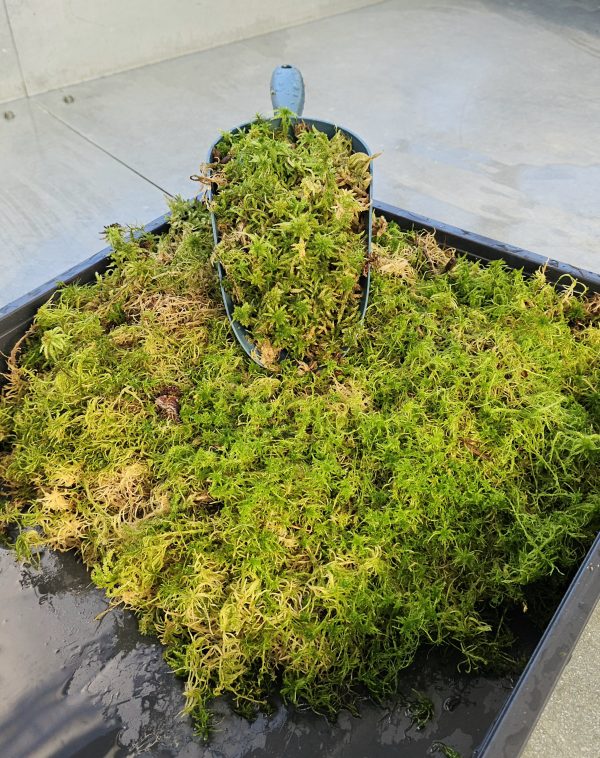
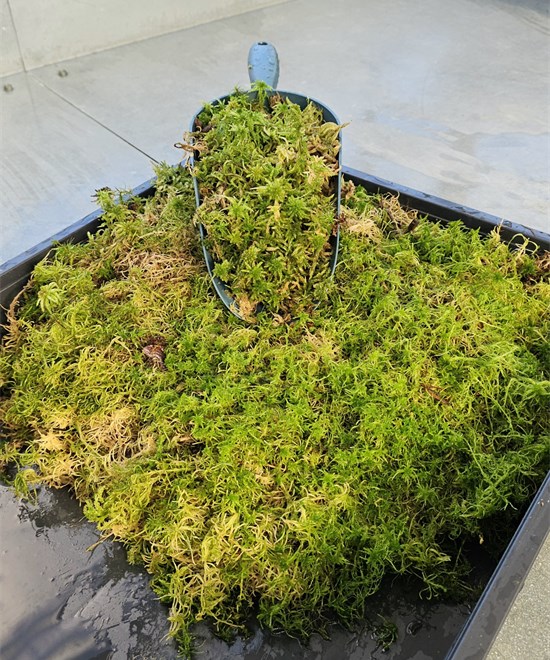
Living sphagnum
The only living material: it is not part of our mixes. Laid on top of the pot, it keeps moisture in and makes a pretty green carpet.
In: on the surface
Our four home-made mixes
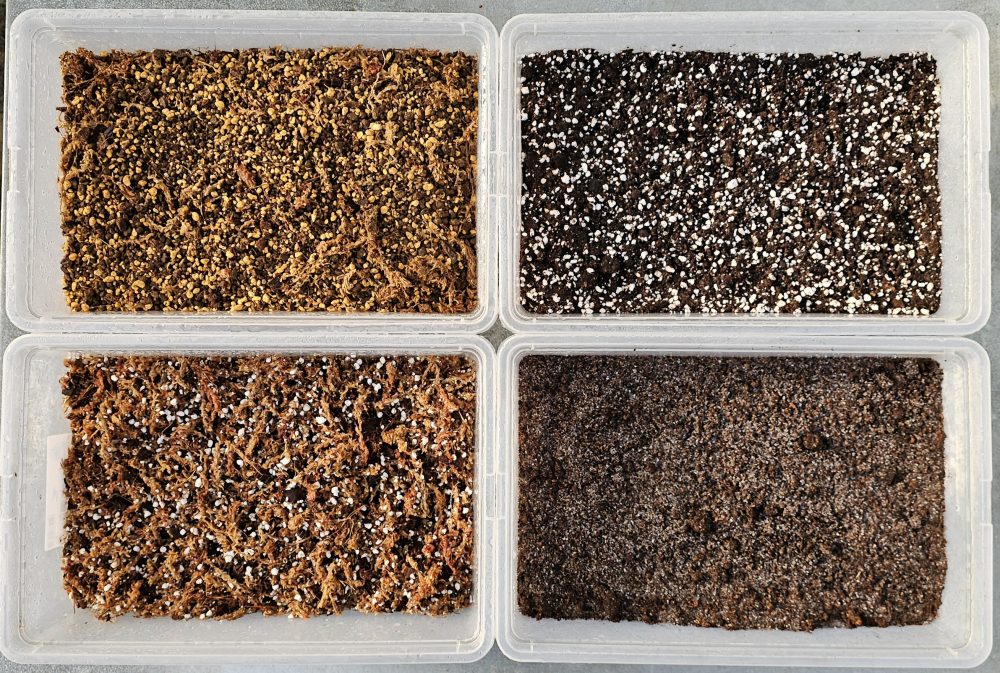
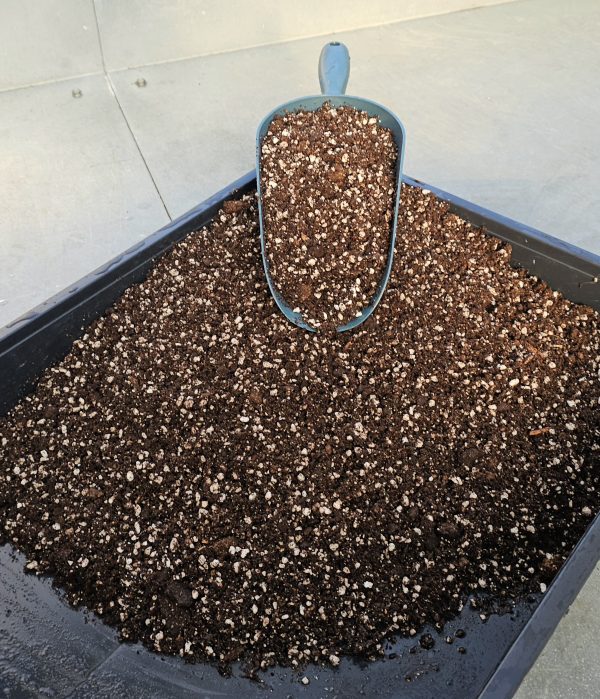
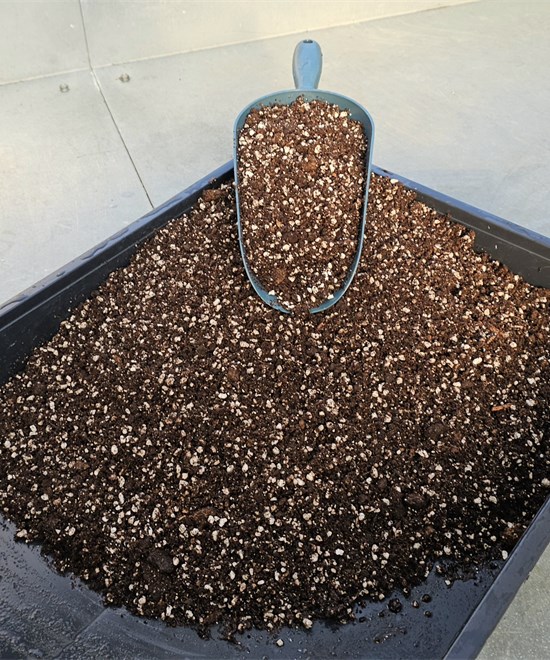
No. 1 · Peat and perlite
Blond peat 70 %, perlite 30 %. The great classic: moist, acidic and airy.
For: Venus flytraps, Sarracenia, temperate Drosera, tropical Drosera.
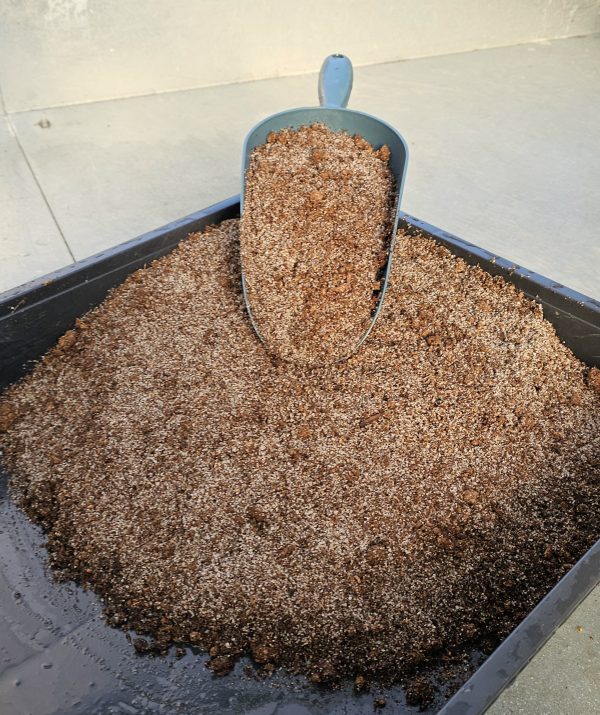
No. 2 · Peat and sand
Blond peat 50 %, quartz sand 50 %. Heavier and more mineral: it drains well and holds small plants in place.
For: miniature (pygmy) Drosera, tuberous Drosera, annual Drosera, Drosera of the Petiolaris complex, Cephalotus.
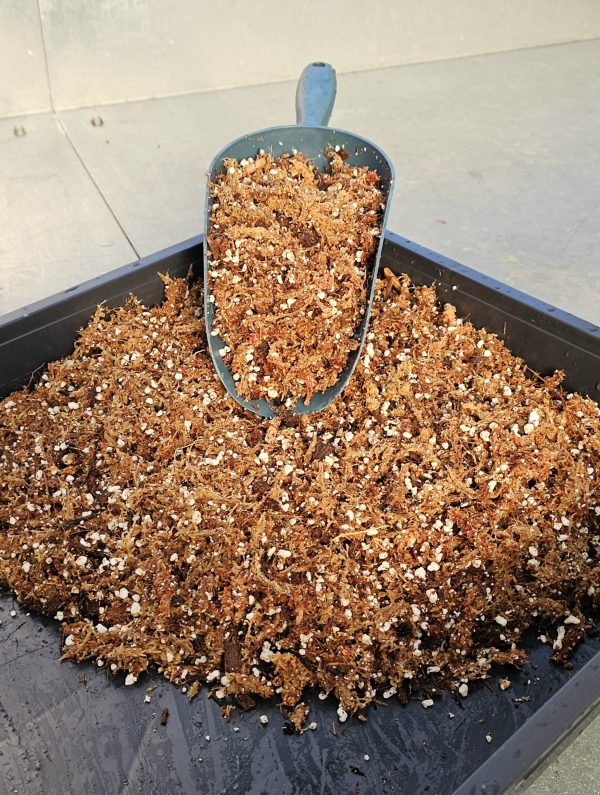
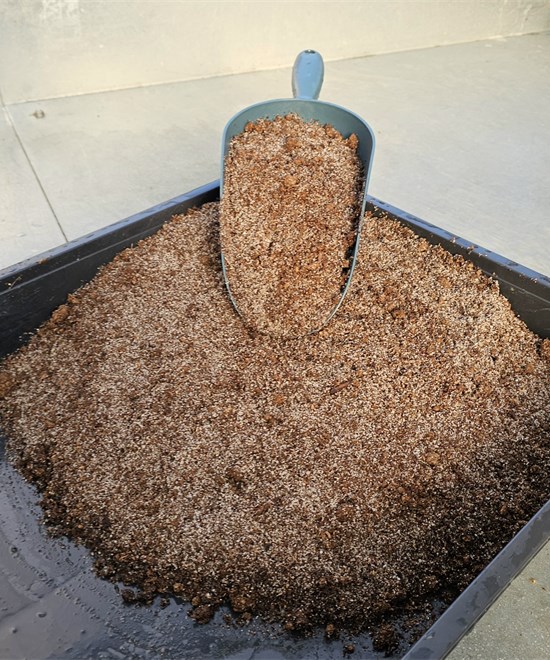
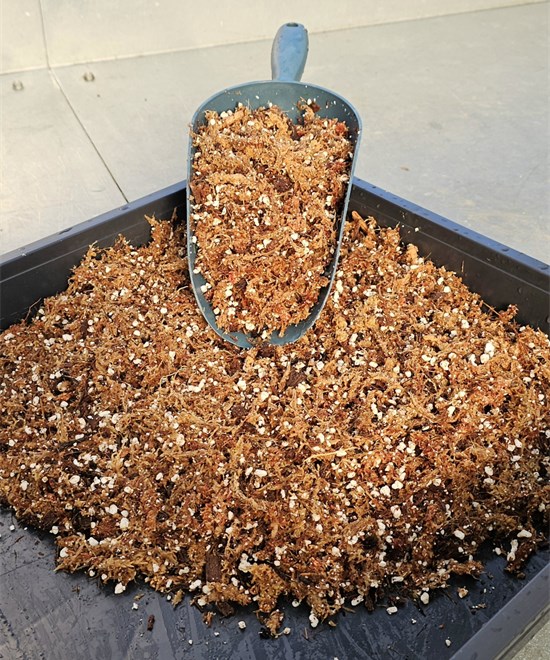
No. 3 · Semi-epiphytic Nepenthes
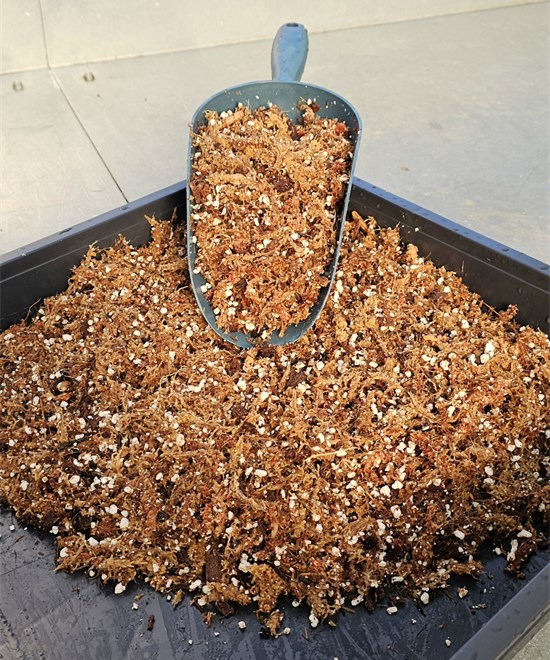
Dried sphagnum 50 %, coco chips 30 %, perlite 20 %. The most fibrous and the lightest.
For: all Nepenthes, tropical bladderworts.
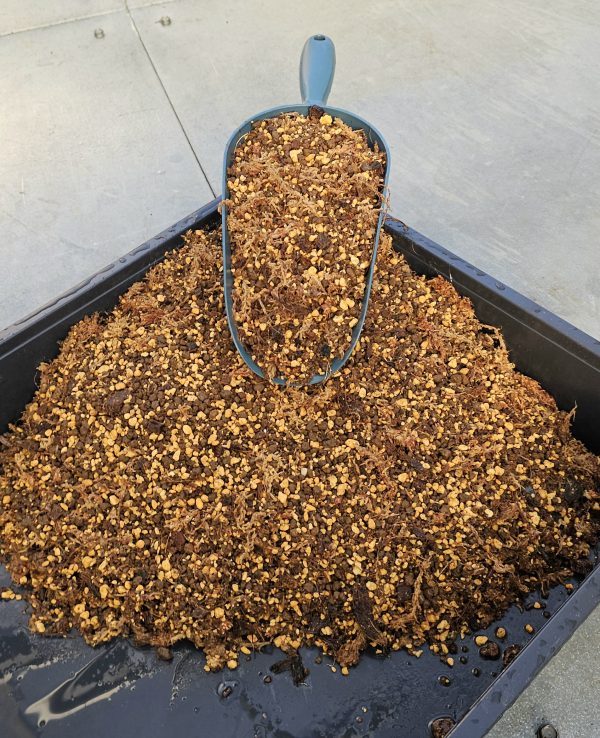
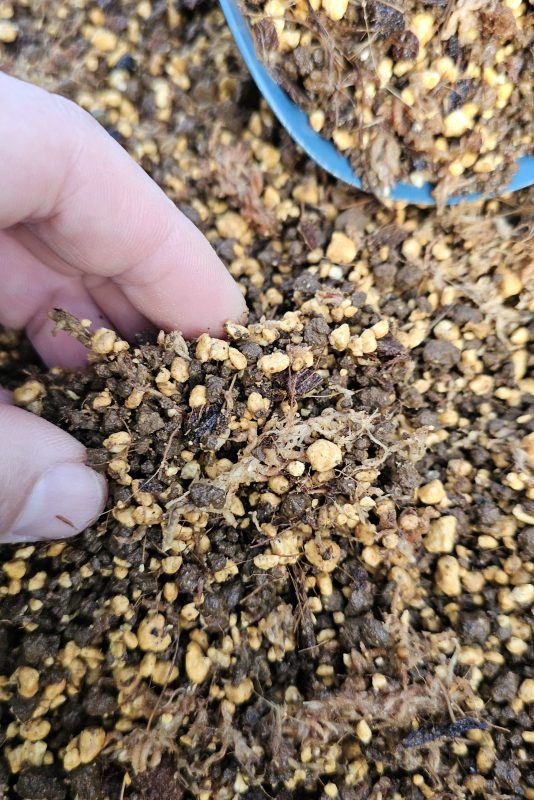
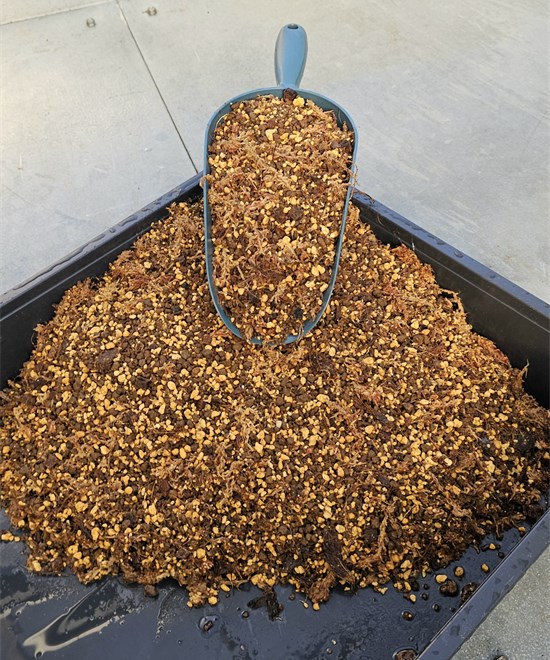
No. 4 · Terrestrial Nepenthes
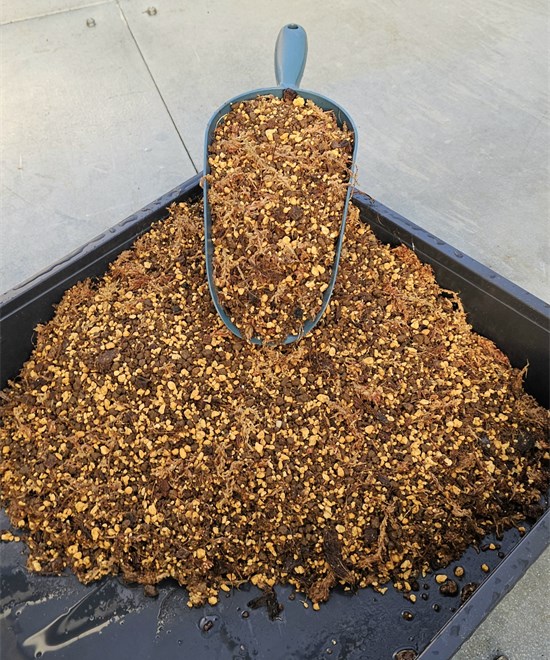
Akadama 50 %, kanuma 20 %, dried sphagnum 20 %, coco chips 10 %. The most mineral, made of granules.
For: all Nepenthes.
Both Nepenthes mixes suit all Nepenthes: No. 3 is more fibrous (sphagnum and coco), No. 4 more mineral (akadama and kanuma).
Which mix for which plant?
| Plant | Mix | Growing guide |
|---|---|---|
| Venus flytrap (Dionaea) | No. 1 Peat and perlite | Read the guide |
| Sarracenia | No. 1 Peat and perlite | Read the guide |
| Temperate Drosera | No. 1 Peat and perlite | Read the guide |
| Tropical Drosera | No. 1 Peat and perlite | Read the guide |
| Tropical bladderworts | No. 3 Sphagnum, coconut and perlite | Read the guide |
| Miniature (pygmy) Drosera | No. 2 Peat and sand | Read the guide |
| Tuberous and annual Drosera | No. 2 Peat and sand | Read the guide |
| Drosera of the Petiolaris complex | No. 2 Peat and sand | Read the guide |
| Cephalotus | No. 2 Peat and sand | Read the guide |
| Nepenthes | No. 3 Semi-epiphytic or No. 4 Terrestrial | Read the guide |
Another plant, or not sure? Ask us for advice.
Repotting step by step
1 | Choose the right time Sarracenia are repotted during their winter rest, preferably in autumn or at the very start of winter: when they start growing again, it is best not to disturb them (see Propagating Sarracenia). Venus flytraps and temperate Drosera are repotted at the end of winter, just before they start growing again. Tropical plants are best repotted in spring. |
2 | Moisten the mix first Wet the substrate with lime-free water and mix it by hand. Dry peat repels water: it should be as damp as a wrung-out sponge. |
3 | Use a pot with holes A plastic pot with drainage holes, slightly larger than the root ball. Avoid terracotta: it releases mineral salts over time. |
4 | Plant without packing it down Set the plant at the same depth as before, fill around it with the mix and press lightly with your fingertips. A substrate packed too tight drives out the air the roots need. |
5 | Water and get back to the routine Water with lime-free water, then return to the plant's usual watering: in a saucer for bog plants, from above for Nepenthes. Its growing guide tells you everything. |
Mistakes to avoid
- All-purpose compost, ericaceous compost or orchid compost: they almost always contain fertiliser.
- "Enriched" or "improved" peat: buy pure blond peat.
- Sea, river or builder's sand: too salty or too limey.
- Tap water: its lime builds up in the pot, even in the best substrate.
- Keeping an old, compacted, decomposed substrate for years: the roots end up short of air.
Made in our workshop
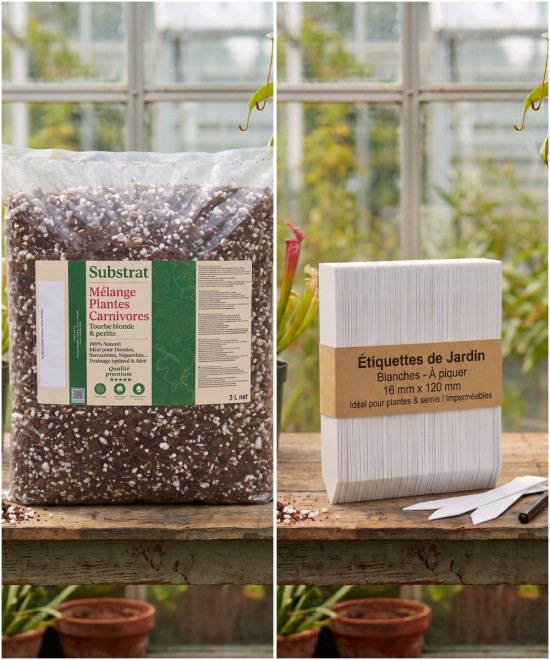
Our mixes are prepared by Cédric at the nursery, in Lot-et-Garonne (south-west France), with the same materials we use for our own plants. They are sold in 3-litre bags, carry the "Atelier Cédric Carnivores" label and are shipped in a parcel separate from the plants.
A closed bag keeps for several months, away from sun and frost. If it has dried out, moisten it before use.
To repot several plants, our repotting kits combine 2 bags of 3 litres and 10 labels:
- Kit for Venus flytraps, Sarracenia and Drosera
- Kit for semi-epiphytic Nepenthes
- Kit for terrestrial Nepenthes
Prefer to make your own mixes? We also sell perlite, peat, Chilean sphagnum and living sphagnum.
Recommended products
Frequently asked questions
Yes: the recipes of our four mixes are above. Use pure materials, with no fertiliser or additives, and mix them moist.
Usually every 2 to 3 years, or sooner if the substrate compacts, breaks down or smells bad.
Both suit them. No. 3, fibrous, holds moisture well; No. 4, made of granules, is more mineral. Choose according to your watering habits, or ask us for advice.
Share this article:


