
 Français
 Español
 Deutsch
 Italiano



The carnivorous plant calendar: what to do, month by month


The carnivorous plant calendar
What to do, month by month
Not all carnivorous plants rest at the same time. Some rest in winter, others in summer, others never. Here is the whole year of our plants at a glance.
This calendar brings together the advice from our growing guides, written from our experience at the nursery. For each group of plants, you will find the details in the matching guide, at the bottom of this article. All photos are ours.
Three different rhythms
❄️ Cold rest in winter
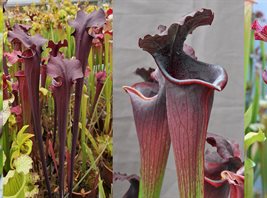
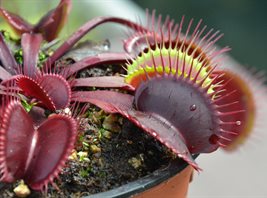
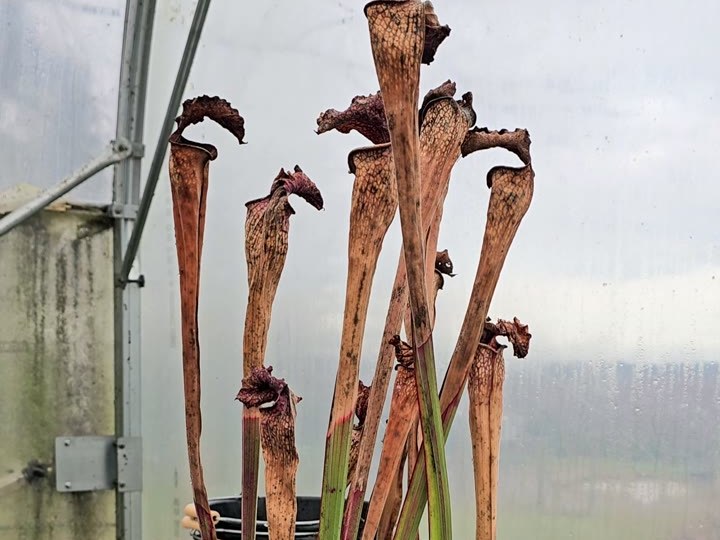
Sarracenia, Venus flytrap, temperate Drosera. They come from bogs that have real winters, with frost and sometimes snow. They rest in the cold, between 0 and 10 °C, from October-November to March.
☀️ Rest the other way round
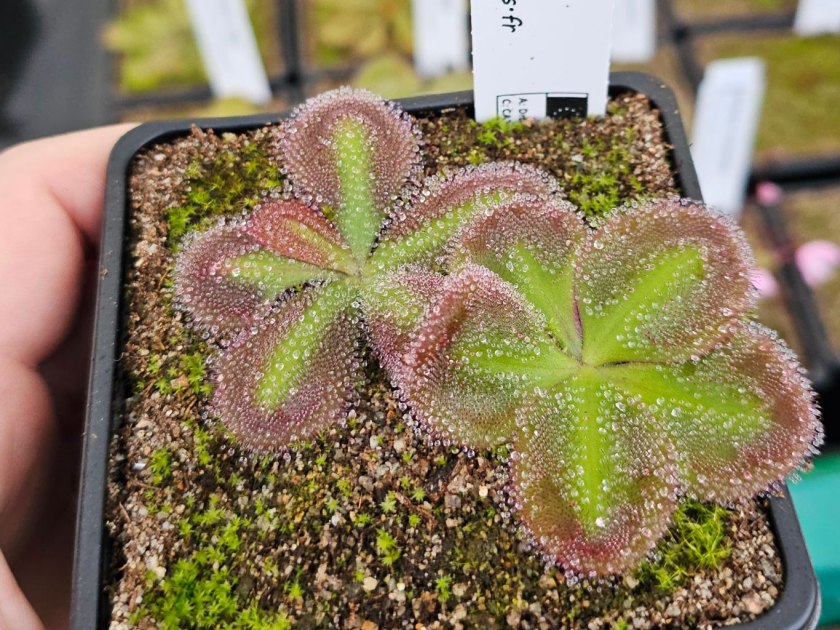
Tuberous Drosera and pygmy Drosera grow during the cool season and rest in summer. Petiolaris Drosera, on the other hand, rest warm and dry during our winter.
🌴 No rest
Nepenthes, tropical Drosera, Cephalotus, tropical Utricularia. They grow all year round. In winter, only light is lacking: that is what you need to add.
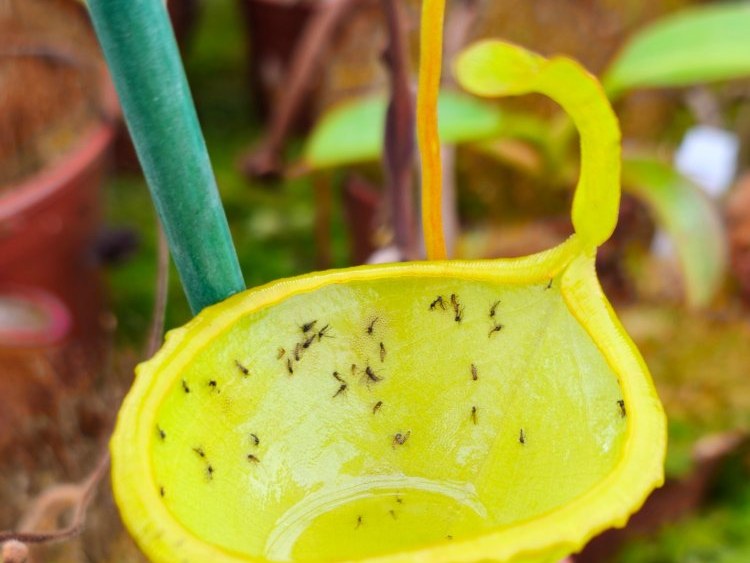
The biggest risk is treating one plant like another. A Venus flytrap brought into a heated living room does not go dormant: without this rest, it wears itself out and dies. A tuberous Drosera watered in midsummer rots. A lowland Nepenthes left in the cold suffers. Hence this calendar.
The year at a glance
| Plants | J | F | M | A | M | J | J | A | S | O | N | D |
|---|---|---|---|---|---|---|---|---|---|---|---|---|
| Sarracenia | 🌸 | 🌸 | 🌸 | |||||||||
| Venus flytrap | 🌸 | |||||||||||
| Temperate Drosera | 🌸 | |||||||||||
| Tuberous Drosera | 🌸 | |||||||||||
| Pygmy Drosera | ✨ | ✨ | ||||||||||
| Petiolaris Drosera | 🌸 | |||||||||||
| Cephalotus | 💡 | 🌸 | ||||||||||
| Nepenthes, tropical Drosera, tropical Utricularia | 💡 |
Growth Growth, extra light needed 💡 Transition Cold rest Dry or warm rest 🌸 Flowers ✨ Gemmae
On a phone, swipe the table to the left to see the whole year.
The saucer rule
For plants that rest in the cold, watering follows the seasons:
- In growth (April to September): the pot stays permanently in a saucer of pure water, 2 to 3 cm for the Venus flytrap and temperate Drosera, 2 to 5 cm for Sarracenia.
- At rest (October-November to March): saucer removed. The substrate stays moist, but never soggy, to prevent rot.
All year round, only rainwater, demineralised or reverse-osmosis water, never tap water or fertiliser. Careful: Cephalotus never likes wet feet, and tuberous Drosera get not a single drop of water during their summer rest.
Month by month
❄️ January
- Sarracenia, Venus flytrap, temperate Drosera: full rest, between 0 and 10 °C, outdoors, in a cold greenhouse or an unheated conservatory. Empty saucer.
- Frost: it is thirst that kills. When the substrate stays frozen for several days, the plant can no longer drink. A large volume of substrate protects it.
- Tuberous Drosera: in full growth, frost-free. This is the time to feed them: the energy goes down to build the future tuber.
- Petiolaris Drosera: warm and almost dry rest. Never wet feet during this rest.
- Tropical plants: little mucilage on Drosera is a lack of light, not a disease.
✂️ February
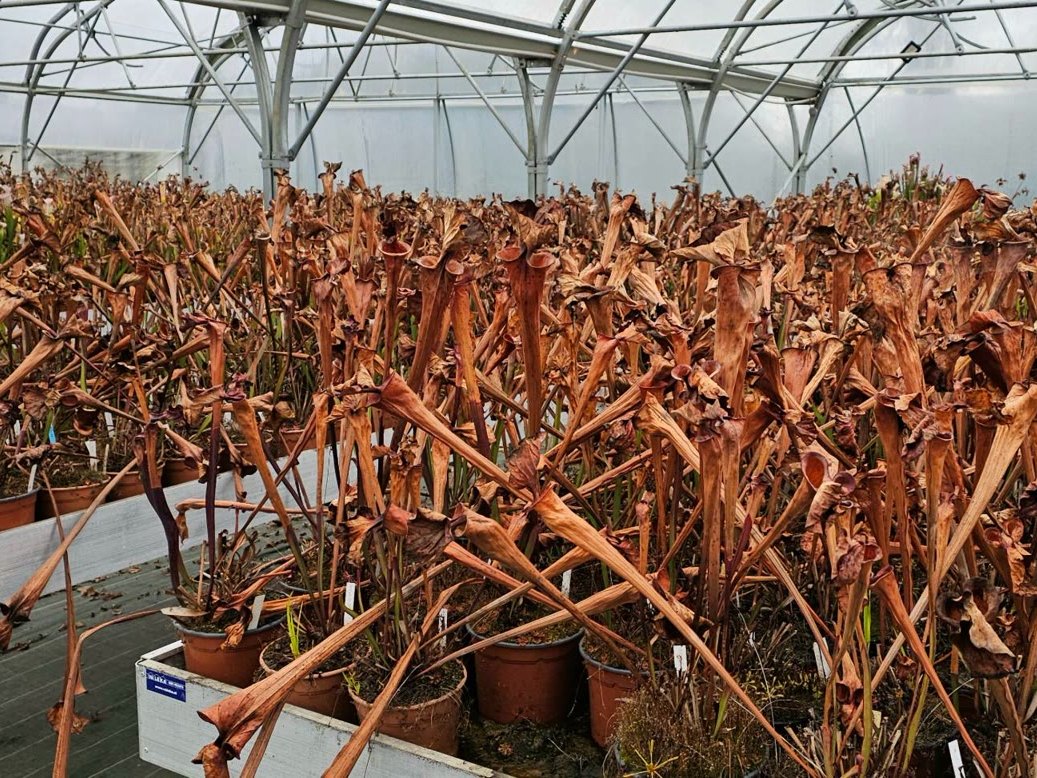
- Sarracenia: the big clean-up. Remove the brown leaves and cut the foliage that is still green to 10 cm above the rhizome, except on S. purpurea and S. psittacina. From late February, the flower buds come out before the pitchers.
- Venus flytrap: the end of winter is the best time to repot and divide, just before growth starts again.
- Temperate Drosera: get blond peat and perlite ready for the March repotting.
- Tuberous Drosera: many species flower. Their flowers only open fully in bright light.
🌱 March
- Venus flytrap: waking up. Put 1 to 2 cm of rainwater back in the saucer and move it into full sun.
- Sarracenia: the flower stalks rise. This is the time to divide, take rhizome cuttings and sow.
- Temperate Drosera: still dormant, this is the ideal time to repot (every 2 to 3 years) and divide the clumps.
- Petiolaris Drosera: waking up. As soon as new traps appear, add 1 cm of lukewarm water again.
- Cephalotus: only repot if it is really necessary. It hates having its roots disturbed.
🌸 April
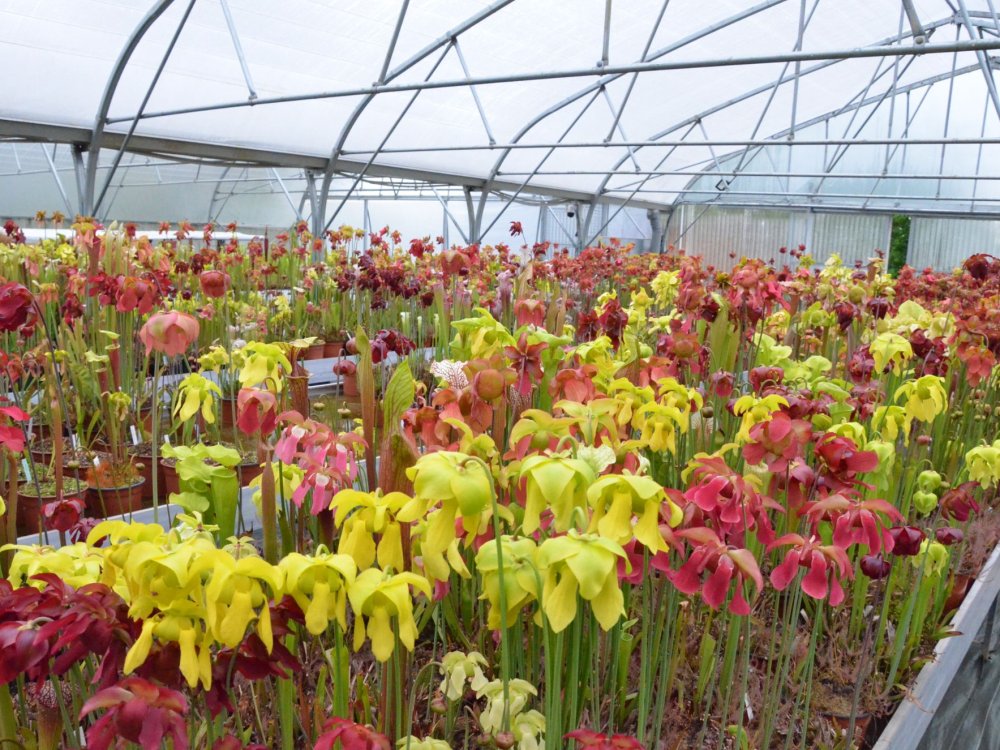
- Sarracenia: the flowers open, it is pollination season. Start of the growing season: water in the saucer until September.
- Temperate Drosera: the first leaves come out of the hibernaculum. The pot goes back into its saucer of pure water.
- Tuberous Drosera: the foliage turns yellow and loses its glue. This is normal: stop the water in the saucer, and do not cut a stem that is still green.
- Tropical Utricularia: repot every 1 to 2 years, and divide the clump.
- Cephalotus: it mostly makes flat leaves in spring. This is normal.
🌿 May
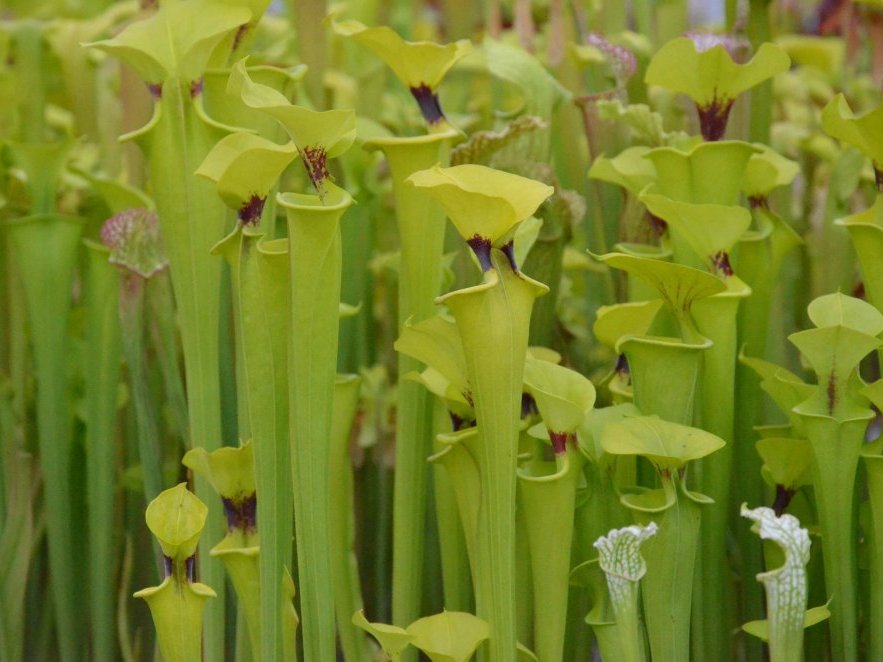
- Sarracenia: an explosion of new pitchers, which colour up in the sun.
- Venus flytrap: it puts up its flower stalk. On a young plant, cut it off; on an adult, let it flower if you want seeds.
- Tuberous Drosera: everything dries up above ground. Stop watering altogether.
- Pygmy Drosera: with the heat, they will soon go into rest.
- Cephalotus: the first pitchers form at the heart of the rosette.
☀️ June
- Venus flytrap: white flowers. Early summer is the best time to take a leaf cutting with its white base.
- Temperate Drosera: flower stalks. The seeds often self-sow.
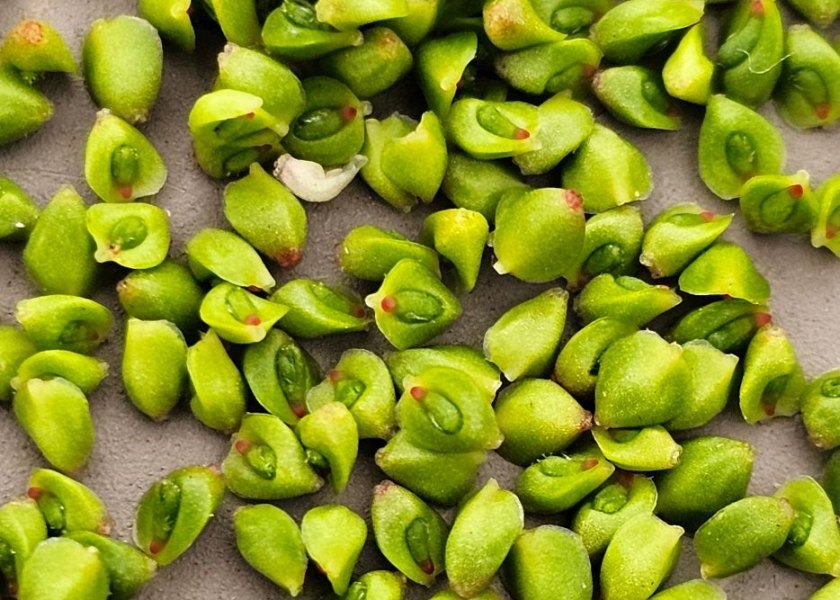
- Pygmy Drosera: summer rest. Saucer removed, occasional watering from above. The small white ball in the centre is not mould: it is the stipules protecting the bud.
- Tuberous Drosera: bone dry. Most losses come from watering by mistake in summer.
🔥 July
- Heatwave: Sarracenia can take up to 45 °C if their roots sit in water and the air circulates. Check the saucers often, evaporation is very strong.
- Sarracenia oreophila: it often makes its phyllodes from midsummer. That is its normal cycle.
- Venus flytrap: each trap only closes 3 to 4 times before turning black, while new ones grow in the centre.
- Tropical Drosera: above 35 °C, some curl up to protect themselves.
💧 August
- All plants in saucers: this is the month when water disappears fastest.
- S. leucophylla and S. alata: they are preparing their finest generation of pitchers of the year.
- Tuberous Drosera: the ideal time to repot and divide, dry, before the fragile stolon grows longer. Wait until September to water.
- Cephalotus: small white flowers on a stalk, well above the pitchers.
🤍 September
- S. leucophylla: September and October bring its widest and whitest pitchers. Sarracenia seeds ripen: keep them cool and dry until the March sowing.
- Venus flytrap: growth slows down, new leaves stay short.
- Pygmy Drosera: they wake up with the cooler weather, the water tray comes back.
- Tuberous Drosera: moisten little by little from above, without flooding the pot as long as nothing has come up.
- Tropical Drosera and Utricularia: bring them in before the first cool nights (never below 12 °C for Utricularia).
🍂 October
- Sarracenia: they make their phyllodes, flat leaves without traps for the winter. Start of the rest: remove the water under the pot. Do not cut the pitchers yet, the plant is taking back their energy.
- Venus flytrap: the traps turn black, this is not a disease. Let the saucer empty at the end of October.
- Temperate Drosera: they start forming their winter bud.
- Tuberous Drosera: they come up out of the soil. Start regular watering again, 1 cm of rainwater.
- Tropical plants: the light is falling, think about extra lighting.
🌙 November
- Venus flytrap and temperate Drosera: going dormant. Empty saucer, peat just moist. No garage: outdoors, in an unheated conservatory or a cold greenhouse.
- Sarracenia: the top of the summer pitchers turns brown, this is normal. S. purpurea takes on a deep burgundy colour with the first cold.
- Pygmy Drosera: the gemmae season begins, until December. Each gemma gives a clone of the mother plant.
- Drosera binata: it disappears from the surface in winter. Its fleshy roots stay alive under the peat.
☃️ December
- Temperate plants: strict rest. Substrate cool and moist, never dry, never waterlogged.
- Small pots: the root ball freezes through quickly. Below -8 °C, protect them with a frost fleece.
- Tuberous Drosera: they are the stars of winter, with blazing colours in the bright cold.
- Sarracenia seedlings in a heated terrarium: they keep growing all winter, while the adults sleep outdoors.
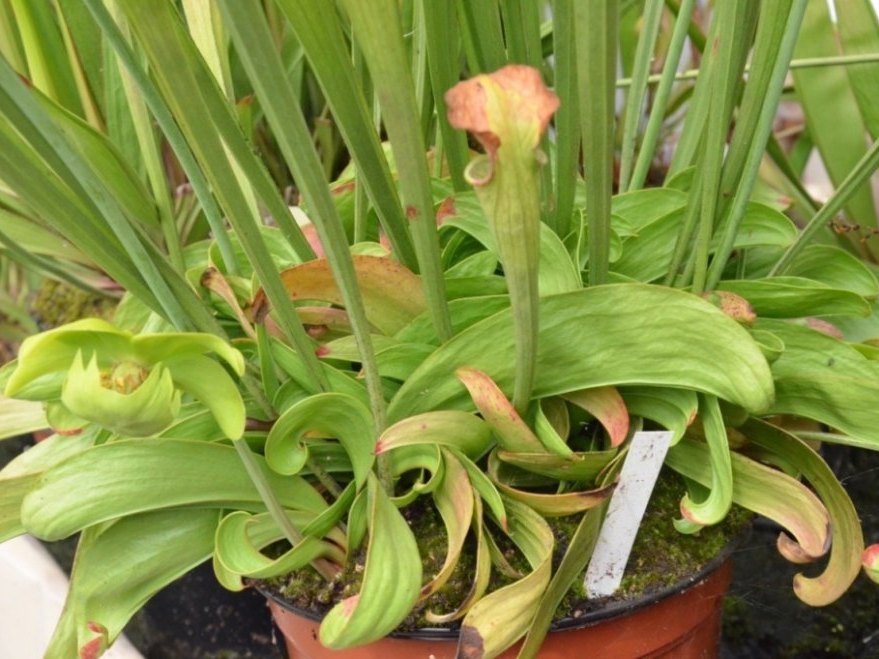
In pictures: a year of Sarracenia
Is it normal?
- My Venus flytrap's traps are turning black in autumn. Yes. As long as the rhizome stays white and firm, the plant is fine. Only cut the parts that are completely black and dry.
- My temperate Drosera pot looks empty in winter. Yes. Look in the centre: a small compact bud, the hibernaculum, is sleeping at soil level. Do not throw the pot away.
- My tuberous Drosera is turning yellow in spring. Yes. It is moving its reserves into its tuber before summer.
- My pygmy Drosera has a white ball in summer. Yes. It is the stipules protecting the bud during the rest.
- My Cephalotus only makes flat leaves in spring. Yes, in spring. If it makes nothing else all year, it lacks light.
- My Sarracenia are making flat leaves in autumn. Yes. These are the phyllodes, which work for the plant during the winter.
📦 Ordering in winter?
Our plants are grown at the natural pace of the seasons. Between November and March, temperate plants are delivered in winter rest:
- a Venus flytrap that is small and flat against the peat, with tiny traps: its rhizome is full of reserves for spring;
- a temperate Drosera whose pot looks almost empty: the winter bud or the fleshy roots are sleeping in the centre;
- a Sarracenia often trimmed before shipping, to prevent mould during transport: a big healthy rhizome, with its phyllodes.
A plant that is very green and huge in the middle of January has usually come from forced growing under artificial light. Rest, on the contrary, is a sign of good health.
The details, plant by plant
Each growing guide has its own interactive calendar, month by month:
Sarracenia Venus flytrap Temperate Drosera Tuberous, Petiolaris & annual Drosera Pygmy Drosera Tropical Drosera Nepenthes Cephalotus Tropical Utricularia
See also: Active summer, winter rest, to recognise the rest of the Venus flytrap, Drosera and Sarracenia, and our 4 substrate mixes for end-of-winter repotting.
Unsure about the state of your plant? Send us a photo!
✉ Contact us© 2026 Cédric Carnivores - Carnivorous plant nursery since 2012
Share this article:


